Manasarovar lies in a high, dry landscape between the Gangdise range and the western Himalaya. China’s National Forestry and Grassland Administration describes the internationally important wetland as a system centered on two contrasting lakes: freshwater Manasarovar and saline Lhanag-tso. The wetland profile gives the system an area of about 100,000 hectares and identifies mountain snow and ice melt as its main water supply, alongside groundwater and rain. These details shift the view from a blue lake framed by peaks to a connected wetland whose rivers, marshes, and water bodies sustain life in an arid region.
From the journal
Lake Manasarovar: Ecology and Pilgrimage
Manasarovar belongs at once to a high-altitude wetland system and to a living pilgrimage landscape. Government ecological records distinguish its freshwater from nearby saline Lhanag-tso, while accounts of pilgrimage show how people approach the water through particular religious practices.
In the same city · Ngari ↗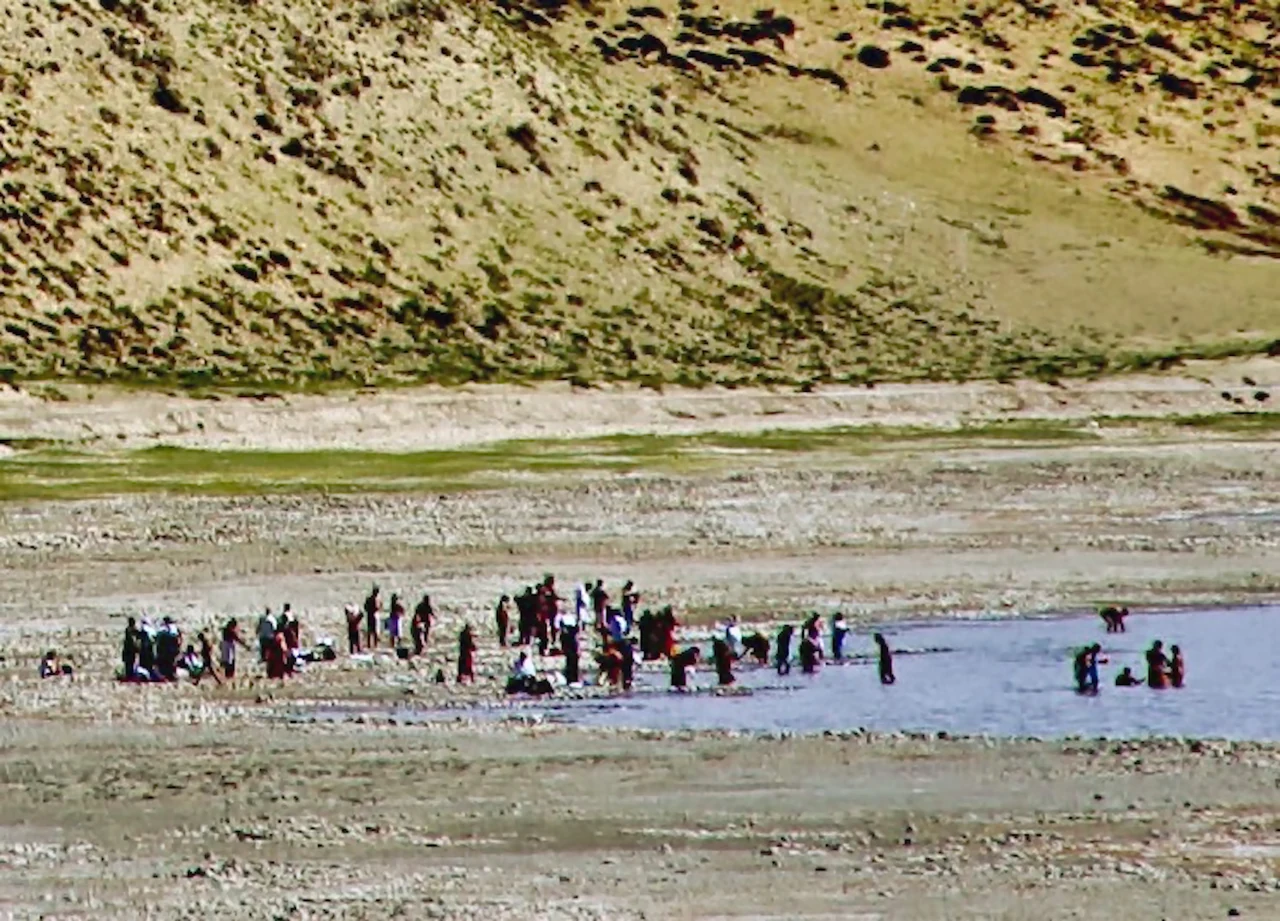
Freshwater in an arid highland
Two lakes, two conditions
The difference between Manasarovar and Lhanag-tso matters. The government profile describes Manasarovar as a high-altitude freshwater lake and Lhanag-tso as saline; the larger designated wetland includes both, as well as smaller lakes, marshes, meadows, and river wetlands. The profile lists 254 vascular plant species and records protected wildlife such as black-necked cranes, golden eagles, and Tibetan argali. These are ecological records for the wetland, not a promise that a visitor will see a particular animal. The lake’s life is distributed across habitats and seasons, much of it beyond the view of a single shoreline stop.
Water on a pilgrimage
Manasarovar also belongs to a sacred geography shared across traditions, though the meanings differ. An AP account of Kailash pilgrimage notes that some Hindu pilgrims bathe in the lake as a ritual of spiritual purification. The same report describes Mount Kailash as sacred in Hindu, Buddhist, Jain and Tibetan Bon traditions; it does not say that each tradition approaches the lake in the same way. Setting the practice beside the wetland record reveals two dimensions of the same water: a habitat supplied largely by mountain melt and rain, and a place encountered through ritual, belief, and inherited story.
A living wetland
The wetland is not only a backdrop to pilgrimage. Its springs, streams, marshes, and lakes form a habitat system in a region where water is scarce and seasonal change is pronounced. The government profile describes ecological support for local life and the regional economy, while its species list makes clear how many forms of life share this landscape. Sacred meaning and conservation are not competing labels to place on Manasarovar; they are different ways people understand a place that is also an ecological system. To look closely is to notice that the lake’s color and scale are only the surface of a larger network.