In the early 1990s, a Chinese inscription carved into a cliff was found in Gyirong County. A 2007 report by the Tibet regional government dates it to 658, during the Tang dynasty, and identifies it as a record of an embassy travelling to India. The surviving inscription was described as about 1.5 metres wide and four metres high, with 311 characters arranged in 24 columns. Even in damaged sections, the carved writing anchors a broad history of cross-mountain movement to a particular place and a particular journey. It is evidence of an envoy’s passage, not a complete map of every route used through the valley.
From the journal
Gyirong’s Tang Inscription and Its Replica
A Tang-era cliff inscription in Gyirong preserves an envoy’s journey toward India; its original carving and a later replica tell complementary stories.
In the same city · Shigatse ↗A cliff inscription from 658
The journey preserved in the inscription
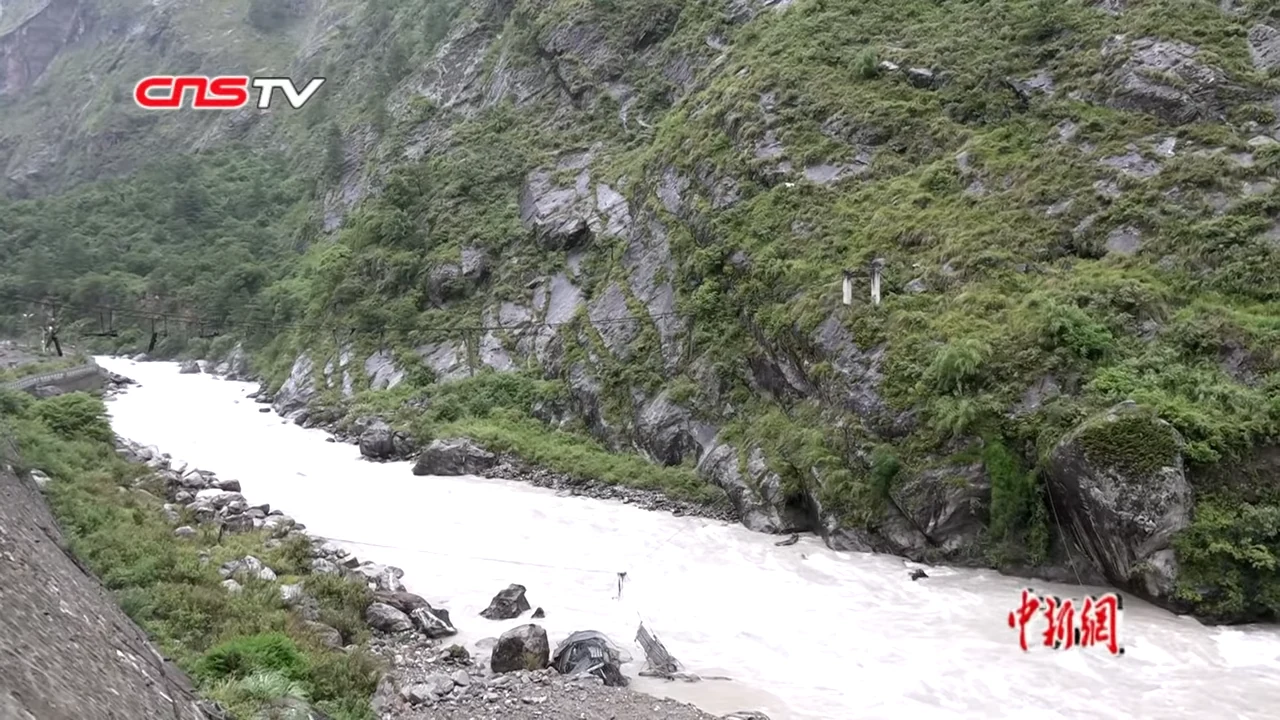
The 2007 government report summarizes the inscription as an account of Tang officials travelling to Tianzhu, the historical Chinese name for India, after a difficult journey from Chang’an. It says the party praised the beauty of Gyirong’s mountains and rivers and cut lines into the cliff to commemorate reaching the place. The surviving text turns that passage into a local record of diplomacy and travel.
Its characters are written in regular-script Chinese and carved into the rock. Some have weathered away, while most were still legible when the report was published. The cliff preserves the route’s memory in a compact form: an official mission, a difficult crossing and a few lines left beside the mountain landscape.
Protecting the original, presenting its text
A conservation project completed in 2007 built a shelter to protect the cliff from rain and snow, reinforced the slope and improved the path. The project also placed a new stone in front of the original, copying the old inscription so visitors could read its characters more clearly.
The two surfaces have different roles. The cliff holds the historic carving; the replica presents its text in a more legible form. Protection and interpretation therefore meet at the site: one preserves the inscribed rock, while the other helps visitors encounter the words that record the Tang mission.