A form with three jobs
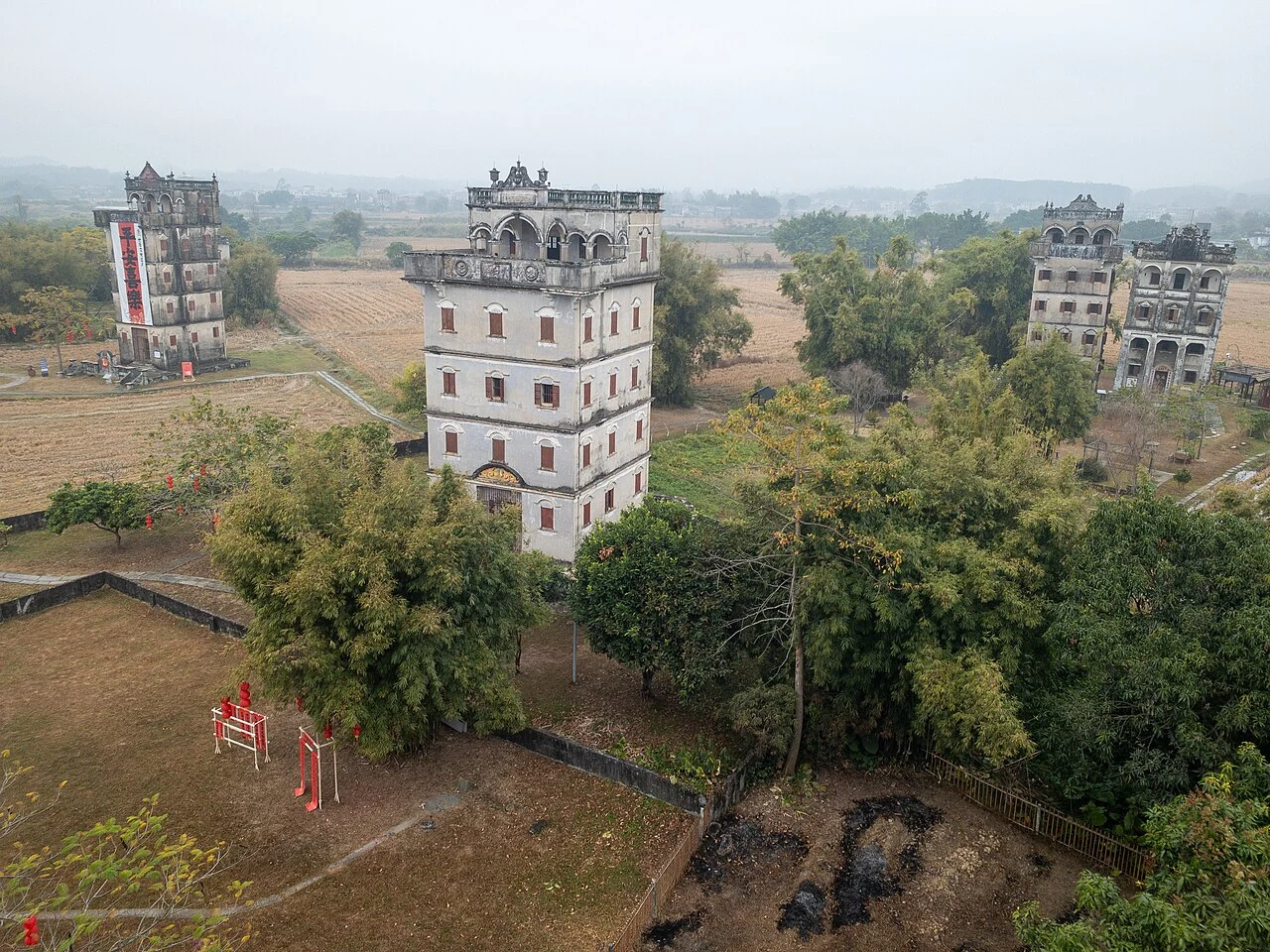
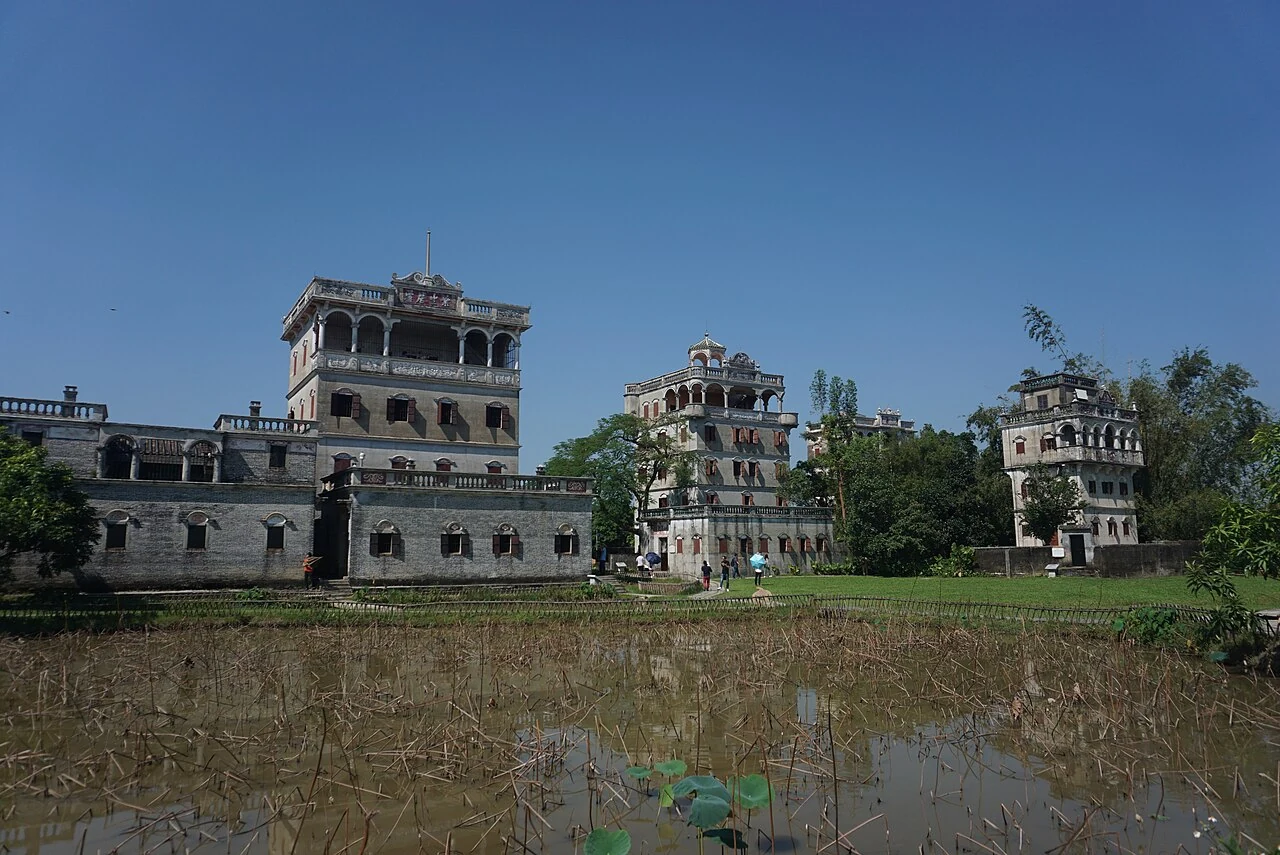
In Kaiping, a diaolou is not one building type with a single purpose. UNESCO describes communal towers used as temporary shelter, fortified residences built by wealthy families, and watchtowers. Seen from a village lane, the silhouettes may seem related; their social lives were not. One building gathered neighbors, another held a household, and another watched the approaches. The distinction turns a skyline into a record of what people needed from architecture. The tower’s role depended on who built it, who used it and what risks surrounded the settlement.
A shared refuge at Sanmenli
At Sanmenli, the low-lying landscape beside the Tan River gives the refuge story a physical setting. A Kaiping Library local-history account says neighboring villages relied on Ruiyunlou together when threatened by banditry or floods; as the community grew, Sanmenli built another tower, Yinglonglou. The account explains why a strong building could matter beyond the family that paid for it. In a flood-prone settlement, refuge was a shared resource, not simply an architectural feature. A communal tower made a local response visible in stone and brick.
A fortified home
Ming Shilou at Zili Village belongs to a different story. Kaiping government materials date its construction to 1925 and identify Fang Runwen, who had worked in the United States, as its builder. Its five storeys and roof pavilion make it unmistakable, but the key is that it was a family residence as well as a fortified structure. Rooms served domestic life; the exterior and defensive features answered insecurity. A tower could be a home without ceasing to be protection. The house and its protective shell were joined in the same walls.
A lookout in a larger landscape
A watchtower adds a third relation to the countryside: height becomes a way to observe paths, fields and approaching danger. The UNESCO-listed property is a serial landscape in Kaiping, combining representative towers with villages and agricultural surroundings; it is not a designation for every building in Jiangmen. That setting matters. A tower does not stand apart from the settlement that used it. Its purpose becomes legible through distance to homes, water, fields and neighboring structures. The three functions show how one architectural form could answer different local needs.