A tower before the famous towers
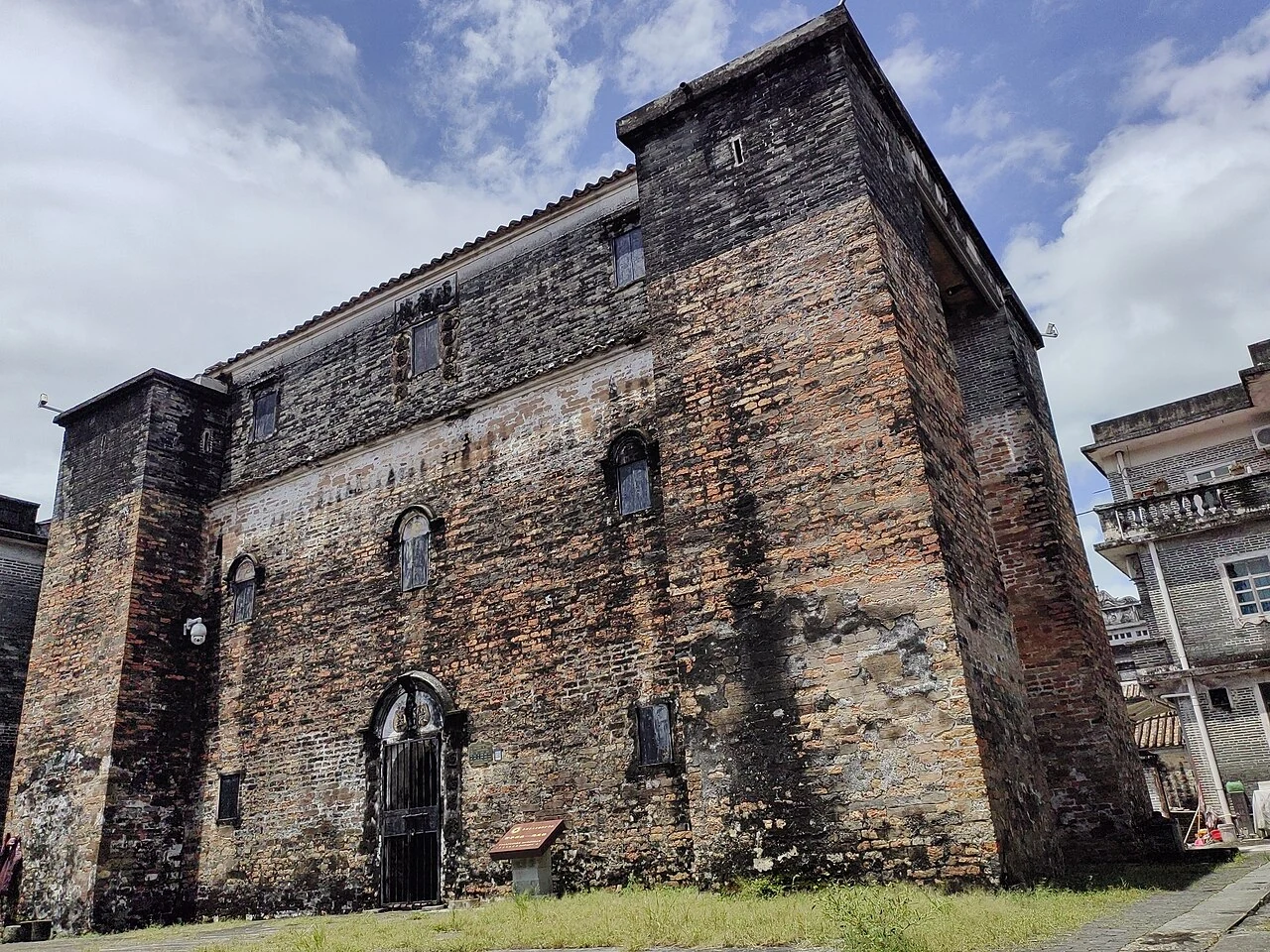
Kaiping’s best-known diaolou often belong to the early twentieth century, when overseas migration supplied resources for ambitious building. Yinglonglou at Sanmenli carries an older local story. A Kaiping Library local-history account dates the tower to the Ming period and describes it as an early fortified structure. Its importance lies less in ornament than in what a community needed before the famous building boom: a solid place within reach of homes and fields, able to protect people beyond a single household.
Ruiyunlou and shared shelter
The local account says neighboring villages relied on Ruiyunlou together during threats from bandits and floods. As population increased, Sanmenli built Yinglonglou. This local historical narrative presents the tower as collective infrastructure rather than a wealthy family’s private statement. A tower could answer a risk that crossed village boundaries, and safety could depend on cooperation between neighbors. The account puts a community’s shared needs at the center of the architecture, a useful counterpoint to later towers whose scale reflected individual family resources.
Low ground, high threshold
Sanmenli lies in Kaiping’s riverine countryside, where water and settlement have long shaped one another. A refuge tower made elevation useful: upper levels could provide shelter while thick walls and limited openings offered protection. The physical contrast is simple—a low village and a tower rising above it—but the social relation is more revealing. Yinglonglou belonged to a network of homes whose residents might seek it in a crisis. It was not a remote castle but a structure tied to neighbors and local ground.
What changed with migration
Later overseas-funded towers introduced new scale, materials and visual references across Kaiping. Yinglonglou helps keep that story from beginning too late. Local defensive architecture existed before migration transformed village skylines. Place older and newer structures in sequence: community refuge, family residence, lookout, and more elaborate homes shaped by transoceanic connections. At Sanmenli, the older building gives the newer towers a historical counterpoint and returns attention to collective village needs. The broader story of Kaiping architecture begins with local conditions as well as overseas money.