Kai Tak was not a distant airfield at the edge of Hong Kong. It occupied reclaimed land at the heart of Kowloon’s expanding urban fabric, where housing, streets and industry stood close to aviation infrastructure. The airport’s approach became famous precisely because aircraft crossed a city that was already lived in. This proximity makes Kai Tak a story of neighbours as well as machines: the runway’s requirements and the district’s growth continually met on limited ground.
From the journal
Living Beside Kai Tak’s Runway
Kai Tak’s runway grew with aviation demand inside one of the world’s densest urban settings.
In this district · Kowloon City ↗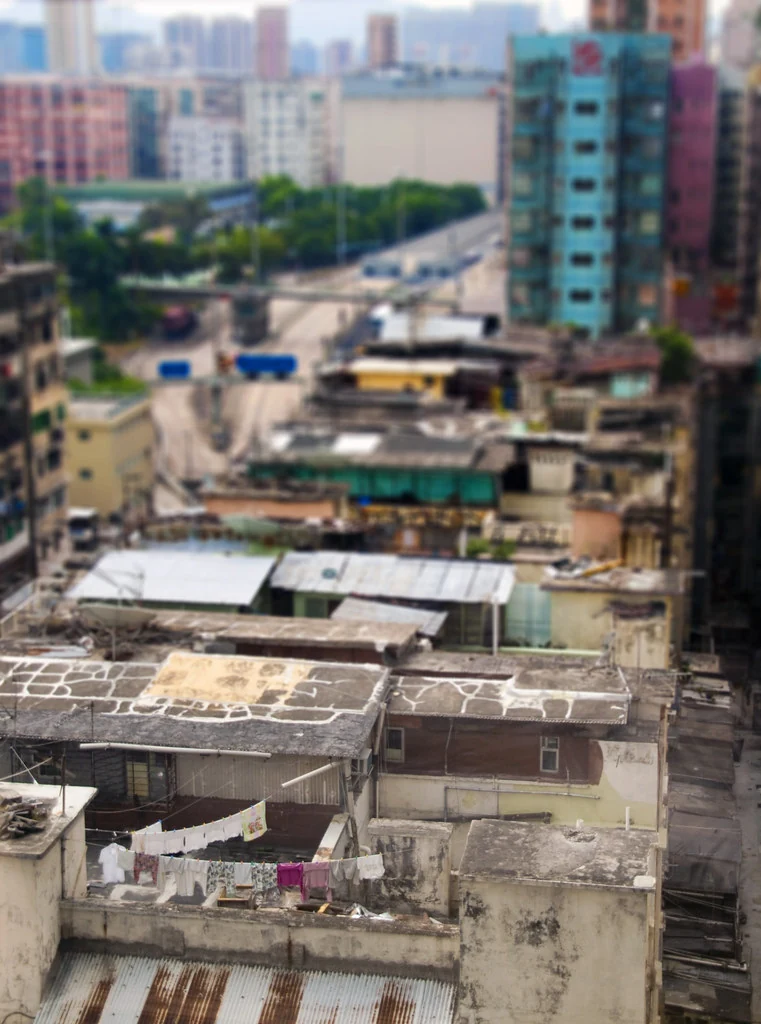
An airport inside the city
A longer runway
In 1975, the runway was extended to 3,390 metres to meet the long-haul operating needs of 31 airlines, according to the Civil Aviation Department’s account. The number is more than a technical measurement. It signals how global air travel had changed the scale of service demanded from a runway fitted into a crowded city. Extending the strip required works at the edge of the harbour and tied airport capacity to reclamation, engineering and land planning.
A city shaped around operations
Height restrictions limited construction near flight paths, while the runway and apron occupied land with other potential urban uses. These constraints shaped nearby buildings and limited how the airport could grow.
The runway as a historical measure
Kai Tak closed in 1998, but the runway remains a useful measure of the city that surrounded it. It reveals a period when airport capacity was increased through engineering within a tight urban geography, rather than through a remote new site. The 3,390-metre figure connects a local strip of pavement to international routes and aircraft demands. Looking at the former runway today, one can read both the ambition to keep Hong Kong connected and the compromises required when a global gateway shared its boundaries with ordinary city life.