Kai Tak is usually remembered as an airport, but its name preserves an earlier enterprise. It combines the names of Ho Kai and Au Tak, whose land development scheme was associated with the reclamation of Kowloon Bay. The project’s original ambition was residential development rather than aviation. That change of purpose gives the place-name a quiet irony: a scheme intended to make new urban land became the label for a major gateway to the city.
From the journal
Kai Tak: From a Housing Proposal to an Airfield
Kai Tak’s name began with two developers’ reclaimed-land scheme before becoming inseparable from Hong Kong aviation.
In this district · Kowloon City ↗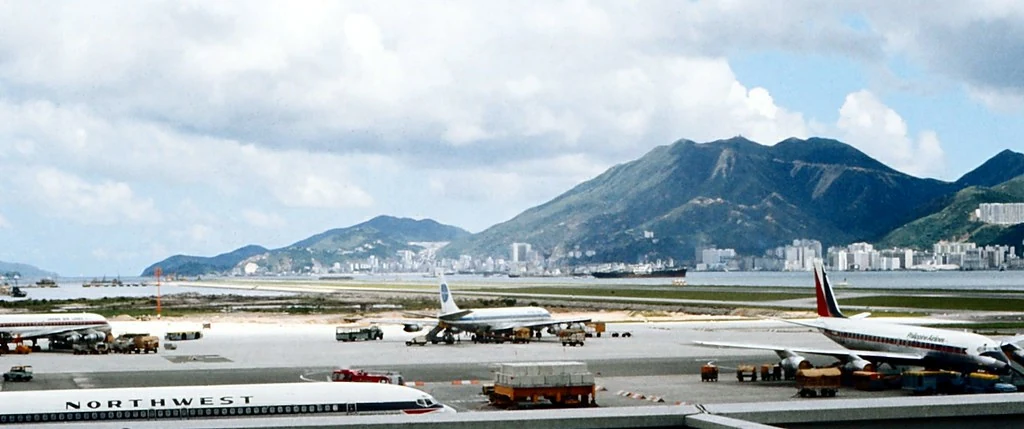
Two names on reclaimed land
A field becomes a service
The early airfield took shape on reclaimed land, and civilian aviation gradually gave the site a new role. The Civil Aviation Department records a commercial passenger flight arriving from Penang on 24 March 1936. That date marks a step beyond experimental flying: scheduled passenger movement had entered the story. The airport did not appear fully formed. It developed through successive works, new facilities and growing links between Hong Kong and other cities.
The airport reshapes its setting
Kai Tak’s later footprint extended beyond a runway. Reclamation altered the shoreline, while the airfield became embedded in a dense urban district. Airport operations and city life therefore developed side by side, with land use repeatedly adjusted around aviation. The old coast did not simply vanish; it was recast through new fill, routes and facilities. The site’s story is a useful reminder that infrastructure often begins with a local project and then acquires a scale its first promoters could not have planned.
A name that outlived its first plan
Kai Tak Airport closed in July 1998 when operations moved to Chek Lap Kok. The name remained attached to a district undergoing another round of transformation. The names Ho Kai and Au Tak add an earlier layer to a place whose identity changed repeatedly, from housing proposal to airport and redevelopment. The sequence—from a proposed residential reclamation to an airfield, then to redevelopment—shows how one piece of land can carry several civic futures. The old name is the thread that lets those different plans remain connected.