From the journal

Guilin Mifen: Noodles, Lu-shui and Craft

Guilin mifen combines freshly made rice noodles, seasoned lu-shui and accompaniments shaped by makers’ choices.

A bowl assembled from several kinds of work

Guilin mifen is often introduced as rice noodles with toppings. That description names the visible ingredients but conceals the work that joins them. The national intangible-heritage record divides the craft into noodle production, lu-shui preparation, accompaniments and final assembly. The speed of serving can therefore be misleading: a bowl finished in moments may bring together processes that began much earlier.

The noodles supply texture, lu-shui concentrated flavour, and meat or other additions contrasting qualities. Because choices occur at several stages, bowls bearing the same name can differ within the same tradition.
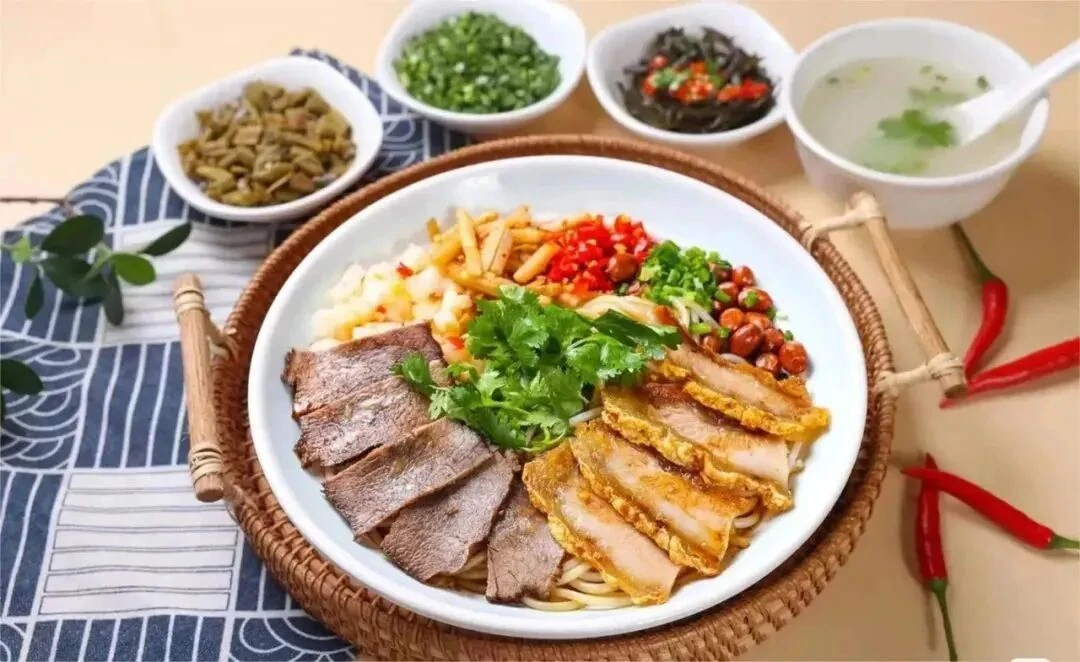
A bowl of rice noodles is topped with sliced meats, peanuts, chopped greens and red chillies, with condiments and soup alongside.
Guilin mifen pictured by CNTO Singapore. The separate toppings, condiment dishes and accompanying soup help explain how a bowl is assembled and adjusted at the table. Capture date unconfirmed.

Rice becomes a texture

The heritage account describes a traditional sequence involving selected rice, soaking, grinding, draining, fermentation, working the dough and pressing noodles. In a 2025 interview, practitioner Liang Zhiqiang emphasized the judgement involved in fermentation and kneading, followed by pounding and extrusion. The sequence connects raw rice with the texture of the finished noodles.

The noodles’ texture reflects choices in rice selection, fermentation, kneading and pressing, connecting the finished bowl with raw material and handling.

Lu-shui is more than soup

Lu-shui is the seasoned liquid central to the familiar lu-cai style. The national record describes a stock prepared with spices whose formulas vary between makers. Star anise, fennel and cinnamon are examples, rather than a universal checklist. Lu-shui seasons the assembled noodles rather than being served as a large bowl of soup.

The same record describes accompaniments including braised beef, tripe, crisp-skinned guoshao and additions such as soybeans, peppers or garlic. These additions bring contrasting textures and flavours. Condiments and accompaniments differ by shop; their combination shapes the balance of the finished bowl.

Variation belongs to the tradition

In an April 2026 interview, Liang Zhiqiang described traditional Guilin mifen as a range of flavours. He discussed hot and cool preparations, combinations of braised accompaniments and less familiar varieties such as horse-meat noodles.

His recollections emphasise diversity within the food's history. A soup preparation and a drained lu-cai bowl aim for different effects, while both belong to the wider noodle culture. Makers participate in selecting and passing on those differences.

A living craft travels

The 2025 maker profile describes training beyond family apprenticeship, including a teaching studio associated with Long Fusun, and discusses packaged noodles. A municipal definition published in 2026 encompasses fresh wet noodles and dried forms, joined by Guilin-style lu-shui and accompaniments.

Teaching studios, kitchens and packaged products give the craft different settings. Folklore links mifen with Qin soldiers; the documented accounts of makers place its continuing history in the preparation of rice, seasoning and accompaniments.

Continue exploring · Guilin ↗
Photo credits and rights
  1. Guilin mifen pictured by CNTO Singapore. The separate toppings, condiment dishes and accompanying soup help explain how a bowl is assembled and adjusted at the table. Capture date unconfirmed.China National Tourist Office in Singapore; photographer not stated · Rights information Photo source ↗ Resized and converted to WebP; full composition retained.