From the journal

When Tea Becomes a Meal in Gongcheng

Pounding, boiling and sharing turn tea into a savory social occasion in Gongcheng Yao Autonomous County, southeast of Guilin.

In the same city · Guilin ↗
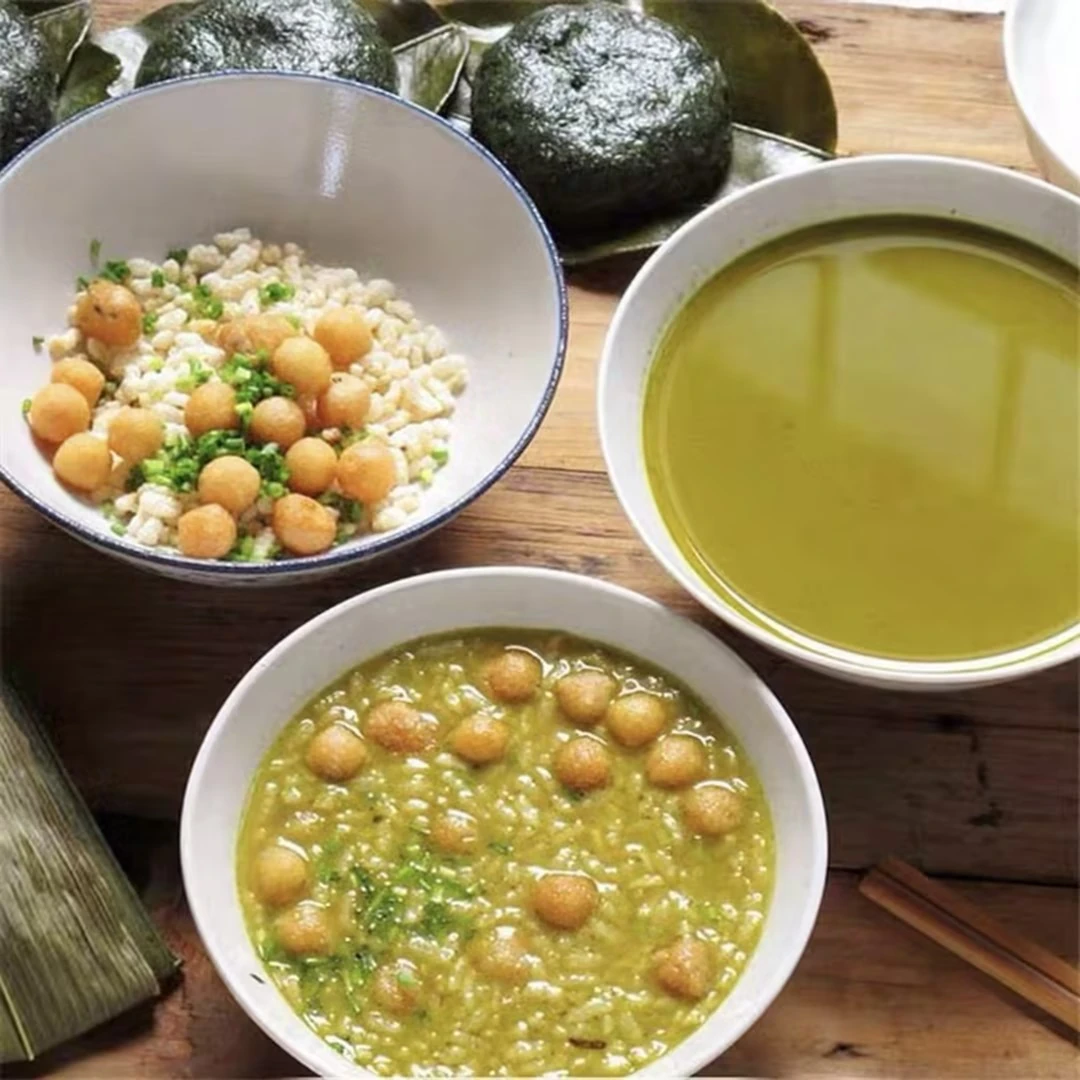
Bowls show plain yellow-green oil tea, crisp additions and a serving with the additions mixed into the tea.
Gongcheng oil tea served with crisp accompaniments. The photograph distinguishes the plain tea from a bowl assembled with puffed grains, small crisp pieces and chopped greens. Capture date unconfirmed.

Tea at the centre of a meal

In Gongcheng, the word tea can describe something savory enough to sit at the center of a meal. Oil tea, youcha, is prepared by working tea leaves with other ingredients and boiling the mixture into a savoury broth. The finished liquid arrives with seasonings and foods that invite eating as well as drinking.

Gongcheng is a Yao autonomous county within Guilin’s wider jurisdiction. The national heritage record locates the Yao oil-tea custom there and in other communities across the Nanling region. It also describes the practice being shared through interaction among Yao, Zhuang and Han residents. It is therefore both locally distinctive and socially mobile. The preparation and enjoyment of oil tea extend beyond any single household or setting.
Pounding, boiling and straining

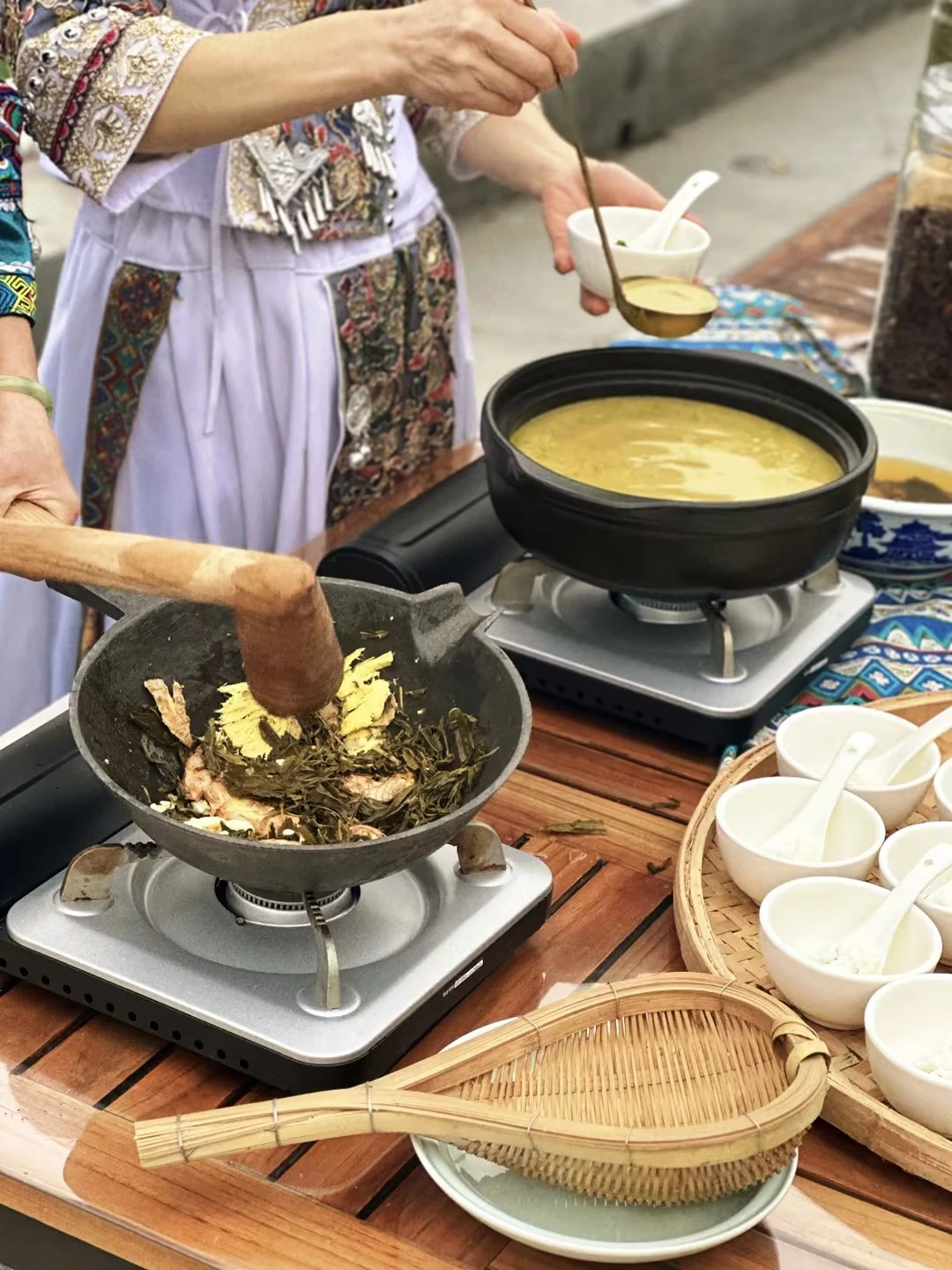
The Guangxi heritage description gives a sequence involving tea leaves, ginger and garlic, heated with a little fat, pounded, boiled and strained. Salt and herbs may season the liquid, with crisp rice preparations, peanuts and other accompaniments alongside it. The verb used for making it, da, emphasises the beating or pounding.

The worked ingredients change texture in the pot before liquid passes through the strainer. The published preparation uses lard, although household versions vary. Oil tea's savoury character comes from this physical work and combination of ingredients.

Tea leaves and sliced ginger are pounded in an iron pan while yellow-green oil tea is ladled into a bowl nearby.
Preparing Gongcheng oil tea: pounding the tea-and-ginger mixture and serving the finished tea are visible side by side. The wooden mallet, iron pan and bamboo strainer make the work behind the drink tangible. Capture date unconfirmed.

The accompaniments change the experience

Crisp accompaniments and herbs change texture and aroma as they meet the hot liquid. Their combinations differ by serving and occasion, bringing eating into the act of drinking tea.

The regional account also describes successive pots made from the worked ingredients, with the flavour becoming less forceful. This sequence gives the gathering a rhythm, moving through different intensities as people share the meal.

Inherited knowledge can become a modern profession

Oil-tea making also has a contemporary institutional life. In June 2022, China's employment portal reported an oil-tea preparation competition within Guilin's migrant-worker skills programme. A 2025 profile of heritage bearer Zhou Liwei discussed his involvement in standards, teaching and product development.

The custom enters training rooms and professional networks alongside domestic kitchens. Makers teach judgments difficult to reduce to an ingredient list, while competitions and new products bring the practice into additional settings.

The social occasion belongs inside the heritage

China's traditional tea-processing techniques and associated social practices entered UNESCO's Representative List in 2022. The national heritage portal identifies Yao oil-tea customs and Liupao tea processing as Guangxi components.

In Gongcheng, preparation belongs beside greeting guests, sharing food and making time for company. These social practices carry knowledge from one occasion to another. A bowl gathers ingredients and work, but also the relationships through which the custom continues.

Continue exploring · Gongcheng Yao Autonomous County ↗
Photo credits and rights
  1. Gongcheng oil tea served with crisp accompaniments. The photograph distinguishes the plain tea from a bowl assembled with puffed grains, small crisp pieces and chopped greens. Capture date unconfirmed.China National Tourist Office in Singapore; photographer not stated · Rights information Photo source ↗ Resized and converted to WebP; full composition retained.
  2. Preparing Gongcheng oil tea: pounding the tea-and-ginger mixture and serving the finished tea are visible side by side. The wooden mallet, iron pan and bamboo strainer make the work behind the drink tangible. Capture date unconfirmed.China National Tourist Office in Singapore; photographer not stated · Rights information Photo source ↗ Resized and converted to WebP; full composition retained.