A garden shaped around water
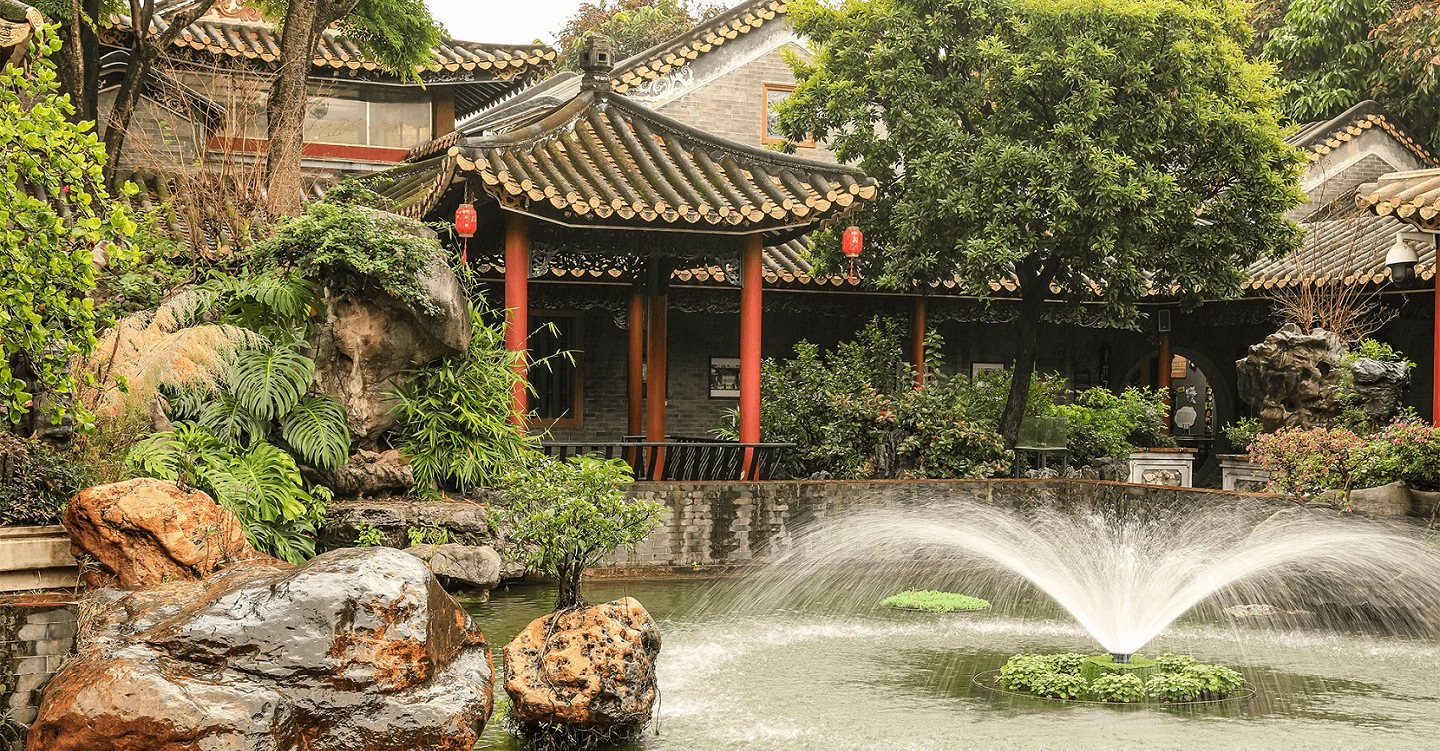
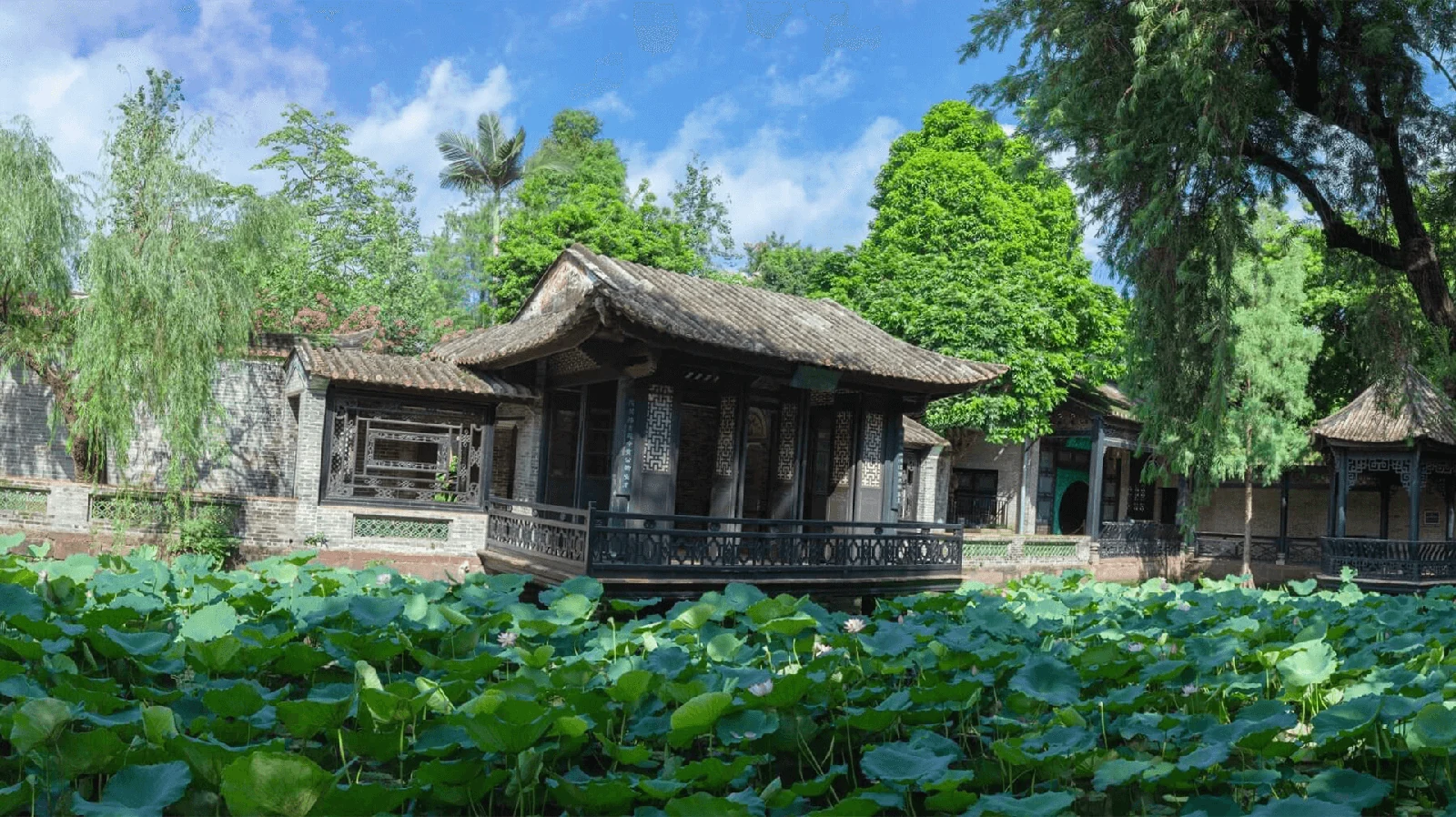
The site was formerly the residence of Huang Shijun, who placed first in the imperial examinations in 1607. In the Qianlong era, jinshi degree holder Long Yingshi acquired the garden, which developed over several generations of the Long family. Water occupies a substantial part of the present Lingnan garden. Halls, pavilions, corridors, towers, and waterside structures form a sequence of views.
Rooms, ornament, and changing views
Pavilions, terraces, halls, studios, galleries, towers, and covered walkways create contrasts of height, scale, light, density, and openness. The garden’s decoration draws on Lingnan flowers, trees, and fruit. Grey plaster, wood carving, and etched glass carry those motifs onto the buildings. Water, room, threshold, and ornament work together: a view across a pond opens into a hall, while a covered corridor frames the next garden space.
Restoration and regional tradition
The Shunde government invested in restoring the garden toward an earlier layout in the late 1990s. The present landscape therefore includes a modern conservation history alongside its earlier development by Huang and the Long family. Qinghui is counted among Guangdong’s four famous gardens, with Liangyuan, Yuyin Shanfang, and Keyuan. Its water-centered sequence and local decorative motifs place the Shunde garden within a broader Lingnan tradition, while its restoration records how that tradition was maintained in the modern period.