From the journal

Wishes Within Dong Timber Architecture

Documented building ceremonies show how practical work, family hopes and public celebration can meet in the same timber frame.

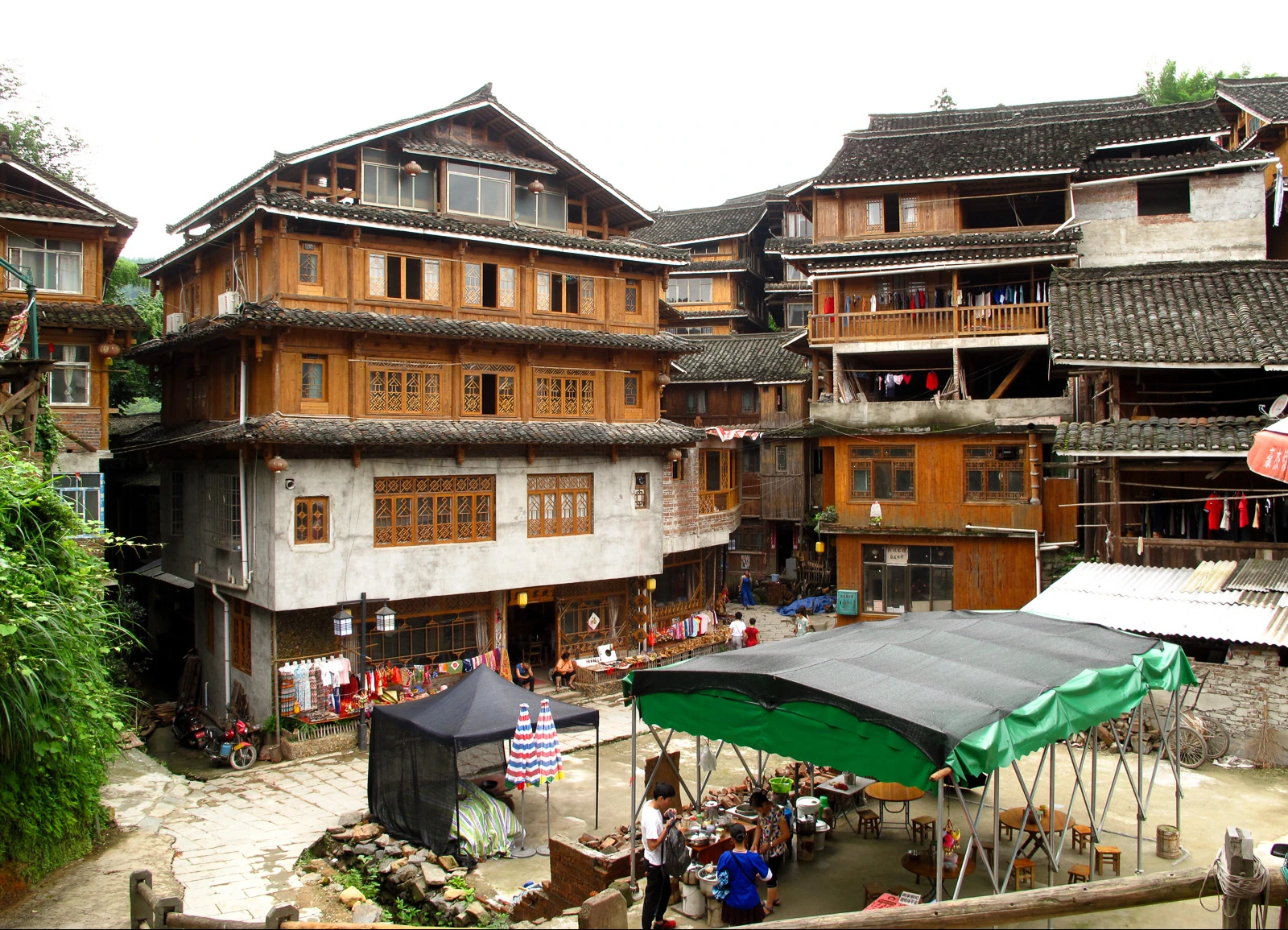
Timber and masonry buildings surround a Chengyang courtyard with a green canopy.
Village courtyard and shopfronts in Chengyang, Sanjiang, photographed on 24 June 2017.

Buildings carrying hopes

The national heritage record associates timber buildings with wishes for favourable weather and harvests, and describes protective meanings attached to bridges. Practical structures also hold hopes for family and community life.

Those hopes enter construction through particular ceremonies and objects. A beam supports a roof while also becoming the place for a wish about prosperity or descendants. Material work and cultural meaning meet in the same frame.
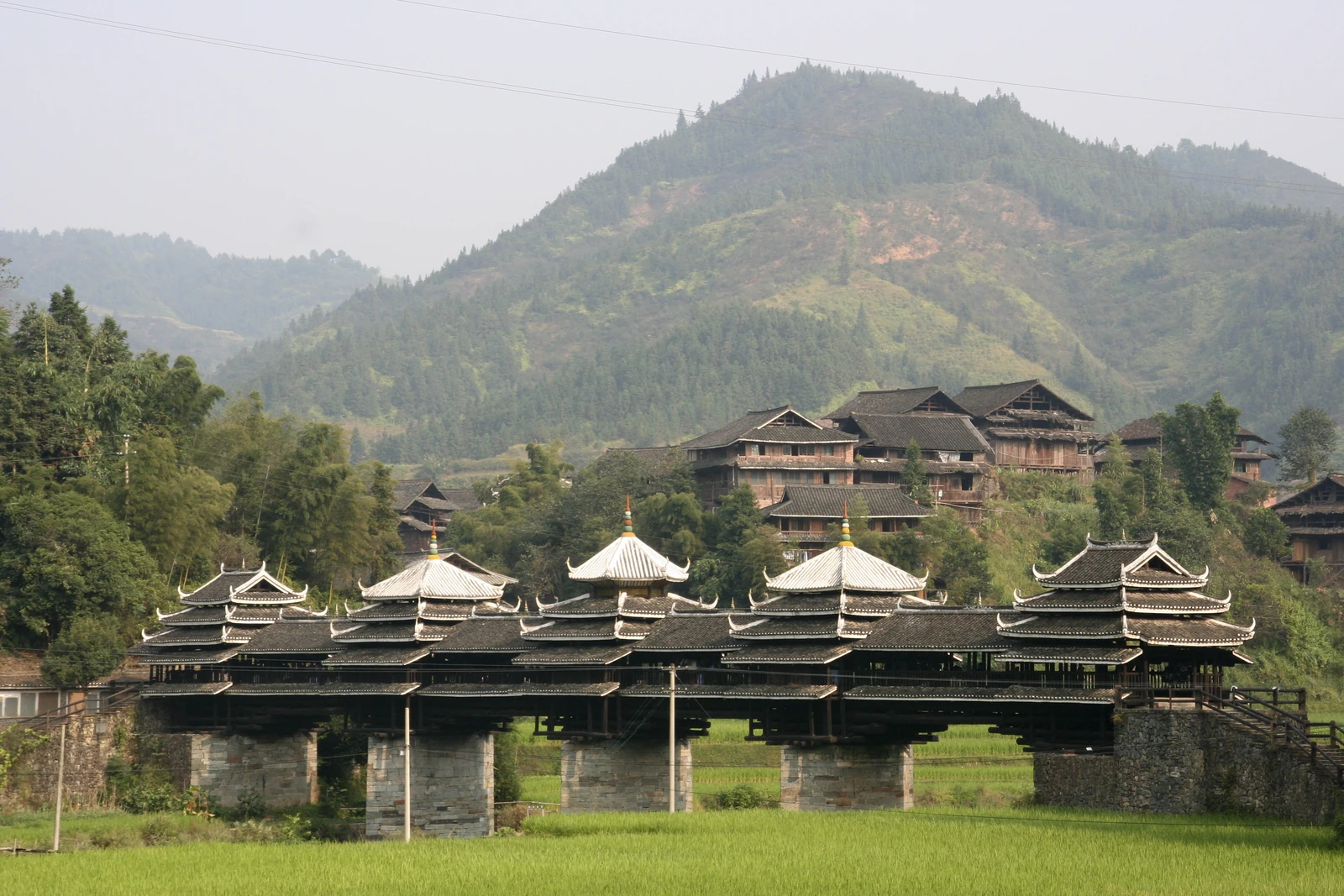
Chengyang’s covered bridge stretches across fields below village houses and a wooded hillside.
Chengyang Yongji wind-and-rain bridge, Sanjiang, in a photograph dated 23 September 2006.

A named practitioner, a documented occasion

A 2021 exhibition produced by Guangxi heritage institutions photographs master builder Yang Qiushi leading building ceremonies. It describes stages including commencement, raising posts and lifting a beam. Here there is a tangible connection between a person, a technical process and a ceremonial act.

Each ceremony accompanies a change in the building: prepared timber becomes a standing frame, or an upper member reaches its place. Construction is both a technical operation and a social occasion, bringing people together around consequential work.

Small things placed on a large beam

The exhibition explains coins set into a beam as a wish for prosperity. Rice ears and writing materials tied with red cloth are interpreted in relation to harvests and capable descendants; embroidered decoration carries an auspicious wish.

The beam has a structural role; attached or inserted objects can carry hopes beyond engineering. Careful measurement and ceremonial attention coexist in the construction process.

Practitioners make choices

Researcher Liu Mengying's study of master builders describes technical and ceremonial knowledge as related and adaptable. Her fieldwork follows practitioners responding to clients, jobs and changing circumstances.

Different communities, projects and occasions can have different ceremonial details. Builders make professional and social decisions within the tradition, bringing inherited knowledge to the particular work before them.

A building as a communal occasion

Beam raisings and household rites bring particular people together at a stage in construction. Photographs preserve the participants, objects and gestures of those occasions.

Alongside the finished roof, these records retain the building as an event: timber being raised, work being coordinated and hopes given a material place. The structure's social history begins while it is still being made.

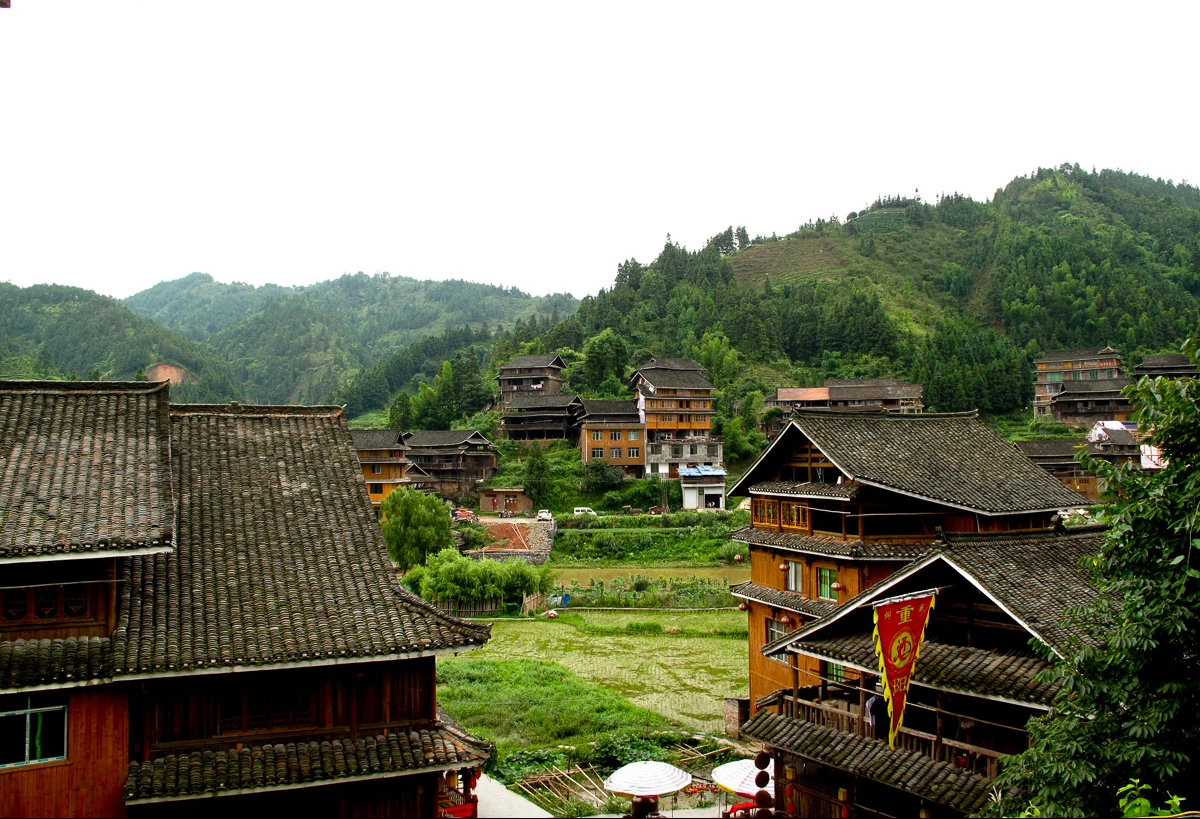
Timber village houses cluster beside cultivated fields in Chengyang.
Chengyang’s houses and fields, Sanjiang. The view places its landmark buildings within a lived-in agricultural settlement. Source-reported photograph date: 2017-06-24.
Continue exploring · Liuzhou ↗
Photo credits and rights
  1. Village courtyard and shopfronts in Chengyang, Sanjiang. No particular ritual or religious practice is identified by this scene. Source-reported photograph date: 2017-06-24.Rutger van der Maar · CC BY 2.0 Photo source ↗ Rights information ↗ Resized and converted to WebP; full composition retained.
  2. Chengyang Yongji wind-and-rain bridge, Sanjiang, in a photograph dated 23 September 2006.Anja Disseldorp · CC BY 2.0 Photo source ↗ Rights information ↗ Resized and converted to WebP; full composition retained.
  3. Chengyang’s houses and fields, Sanjiang. The view places its landmark buildings within a lived-in agricultural settlement. Source-reported photograph date: 2017-06-24.Rutger van der Maar · CC BY 2.0 Photo source ↗ Rights information ↗ Resized and converted to WebP; full composition retained.