Hong Kong lies on the East Asian–Australasian Flyway. AFCD describes the Mai Po Inner Deep Bay Ramsar Site as a stopover for migrating waders. Birds moving between breeding and wintering areas use coastal wetlands to feed and rest along the way. Deep Bay's significance becomes clearer when viewed not as one shore, but as a connected set of habitats along a much larger route.
From the journal
Winter Waterbirds across Deep Bay's Wetlands
From the East Asian–Australasian Flyway to the Mai Po Inner Deep Bay Ramsar Site, Deep Bay links distinct feeding and resting habitats for waterbirds.
In this district · Yuen Long ↗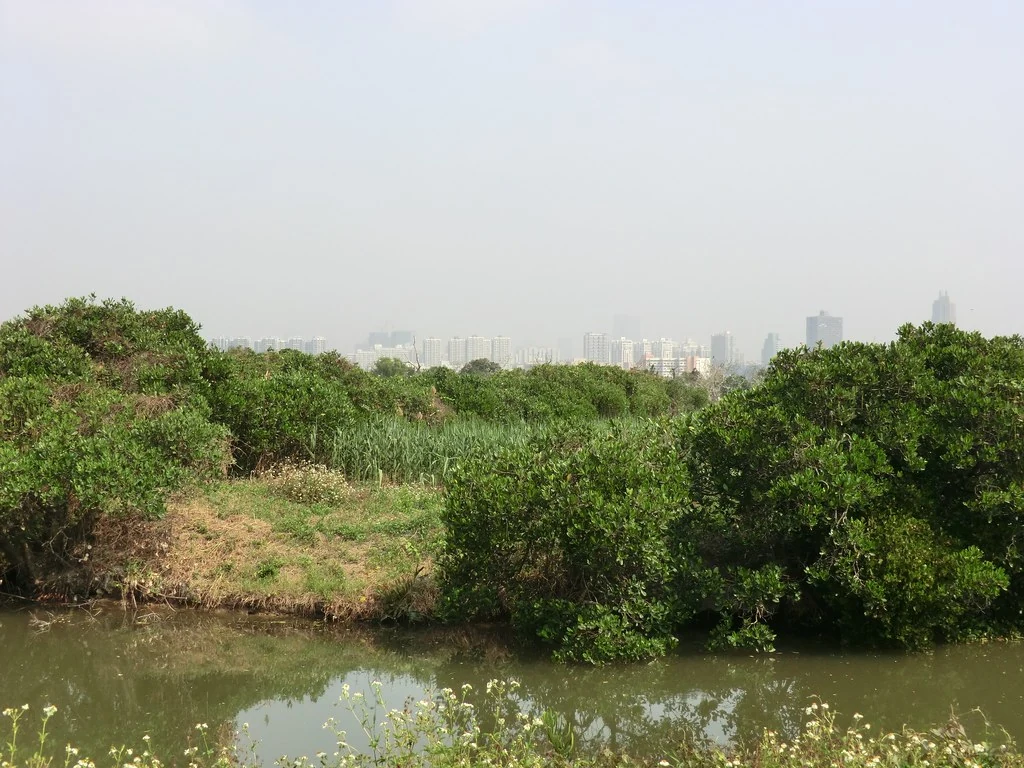
A stop on a wider flyway
Different places, different roles
AFCD distinguishes the roles of places within the wetland. Mai Po supports tens of thousands of waterbirds in winter, while Tsim Bei Tsui is identified as a roosting and feeding ground for wintering waders and ducks. The two examples show why Deep Bay should not be reduced to one bird count or one kind of habitat: mudflats, fishponds and protected areas each have distinct documented roles.
Monitoring a shared wetland
The Mai Po Inner Deep Bay Ramsar Site was designated in 1995. AFCD conducts ecological and waterbird monitoring to inform conservation and management, and asks birdwatchers to keep their distance from birds and nests. The monitoring follows a wetland whose habitats are used throughout the year, even as waterbird numbers and species change with the season. Giving birds space is part of caring for the places they rely on.