The Tamsui River runs past Taipei's western edge, and in the nineteenth century the deep water was at Dadaocheng. A merchant from Keelung, Lin Lan-tian, opened the first shop there in 1851. In 1853 a fight over wharf rights in neighbouring Wanhua pushed a group of Tong'an families north; they carried their city god with them and settled here. When the treaty port of Tamsui opened in 1860, Dadaocheng became the place where tea and cloth were weighed, packed and shipped. Five British firms had offices here by 1872. Taipei's first railway station opened at Dadaocheng in 1891, on the line to Keelung. The river later silted, the port moved, and Ceylon tea took part of the market. What remained was a street plan and a set of shop-houses built for a trade that had left.
From the journal
The tea street by the river
Dadaocheng turned a riverbank into Taipei's tea and cloth market in the 1860s. Dihua Street still sells the goods, and the City God still watches over its lanes.
In the same city · Taipei ↗A port that moved upstream
Dihua Street, shop by shop
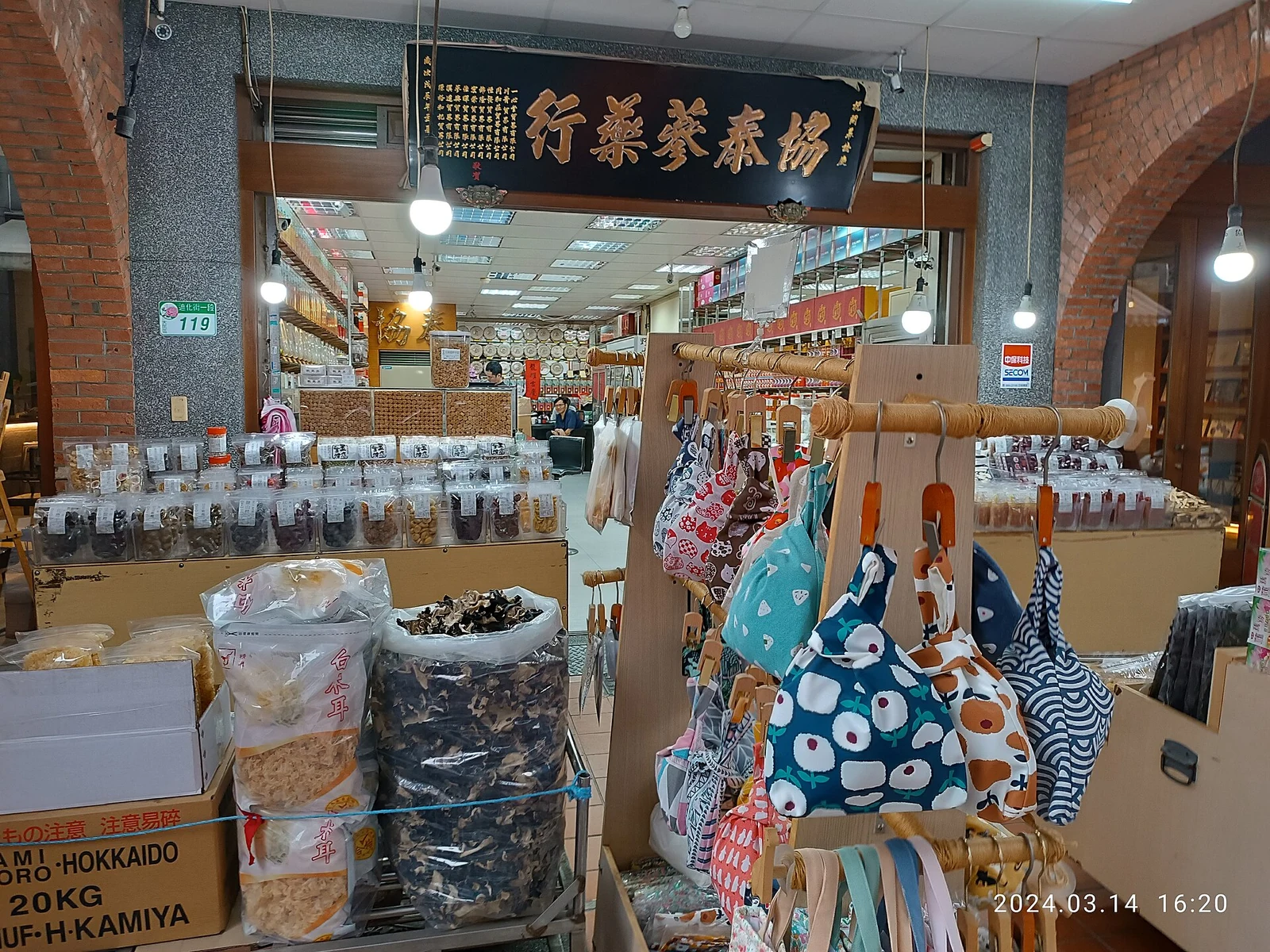
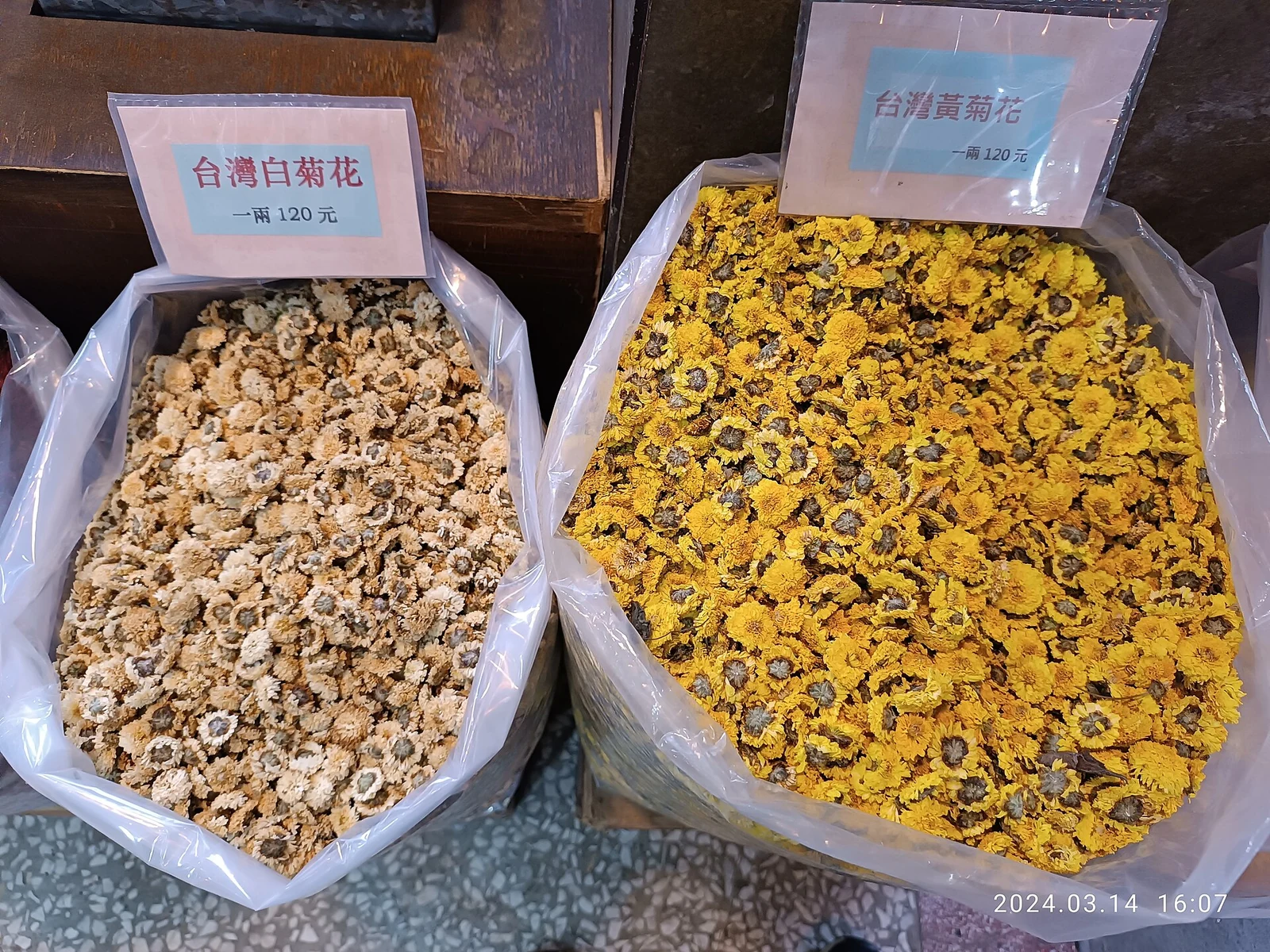
Dihua Street runs north from the river through the old trading quarter. The buildings are long and narrow, with a shop at the front, a courtyard in the middle and living rooms behind or above. Many have ornate facades from the 1920s, when the street was rebuilt with brick and concrete. Many of the goods are still sold in bulk: dried mushrooms, scallops and fruit, medicinal roots, tea in chests, incense, festival paper. In the weeks before Lunar New Year the street becomes a dense market, and the older shops sell the same goods their families sold a century ago. Walking north from the temple end, the street narrows and the signs change from wholesale to retail. It is a working street first and a heritage street second, which is why the shutters are open at seven in the morning.

The city god and the lane
The Xia-Hai City God Temple stands on Dihua Street, a small building packed with more than six hundred deities. It was built in 1859, and the Ministry of the Interior listed it as a historic site in 1985. The temple is crowded on the city god's birthday and on the days when people come to ask Yue Lao, the god of marriage, for help. Around it are the tea shops and the fabric shops that made the district rich. The former site of Tianma Tea House in the district recalls the confrontation on 27 February 1947 that preceded the February 28 Incident. The lane keeps both the trade and the memory.