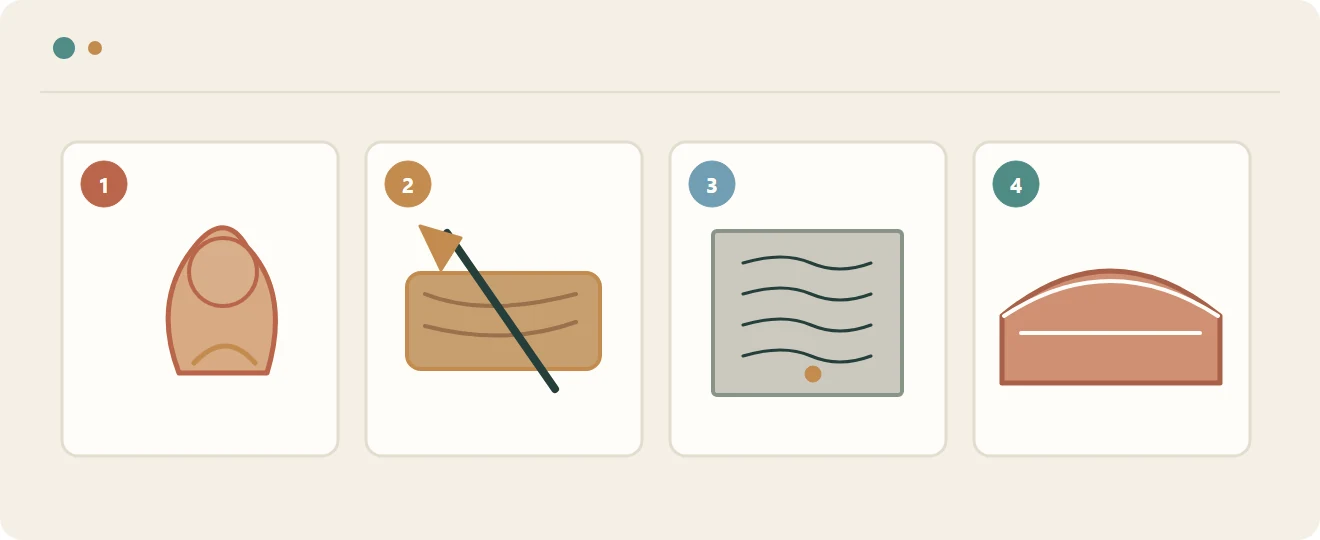
A 2008 cultural account names clay, wood, stone and brick in Regong sculpture. Clay figures are painted: Buddhas and bodhisattvas are gilded, while wrathful deities receive color. Woodcarvers worked red birch and pear wood, then finished the surfaces with gold or pigment. The examples show a shared visual vocabulary carried across different materials, each shaped for a particular kind of figure or setting.
From the journal
Clay, Wood, Stone and Brick in Regong Sculpture
A 2008 cultural account describes four Regong sculptural materials through their distinct uses: gilded clay figures, painted wood, inscribed or carved stone, and fired brick decoration.
Different materials, different uses
From a mantra stone to a roof ridge
Stone carving in the same account includes scriptures incised on slabs and recessed images of Buddhas, often used in mani stone piles. Brick decoration begins with a clay blank that is shaped and fired, then placed along a roof ridge or wall. These are not interchangeable objects: one carries writing or a sacred figure in stone, another becomes part of a building’s ornament. The material names lead directly to where the work is encountered—in a pile of prayer stones, on a wall or above a roofline.