A hole made by dropping a tool
The drill was a heavy iron bit suspended on a rope. Workers lifted it and let it fall, again and again, turning the hole slowly as the rock was broken. Shenhai was completed in 1835 at 1,001.42 metres, using this percussion method. The derrick that stands over it is 18.4 metres high, built from timber and braced like a tower. The well produced both natural gas and black brine, an unusual combination that made the site valuable twice over.
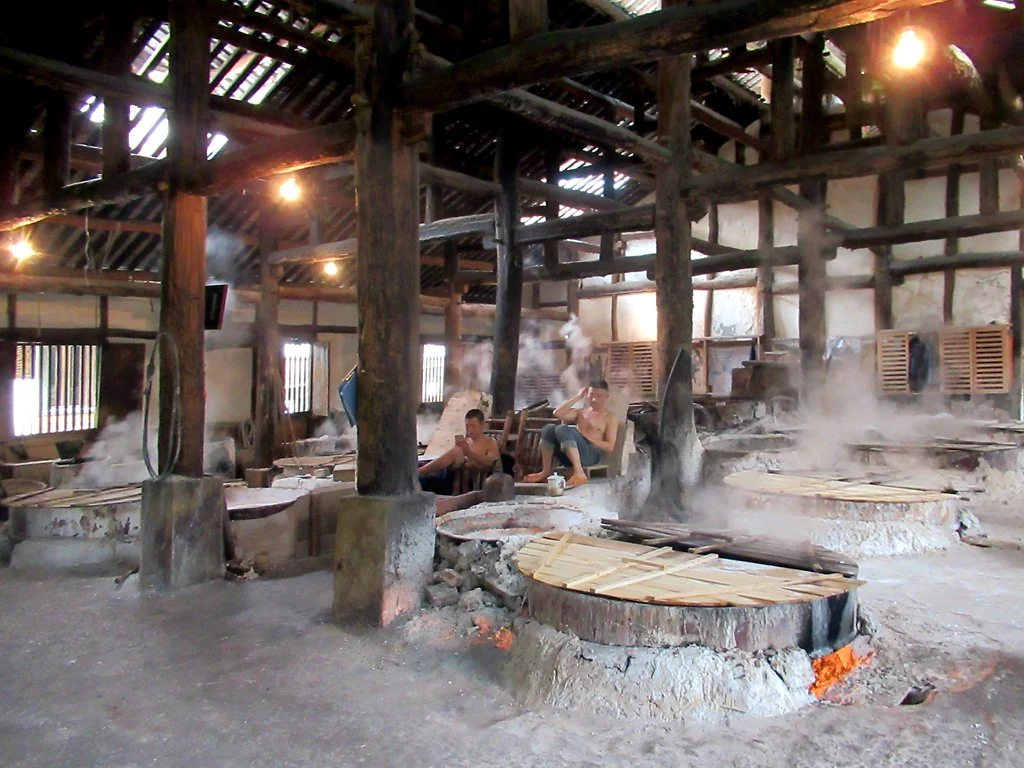
Boiling and raking
Brine was lifted in bamboo tubes and carried to the boiling house. There it was heated in shallow iron pans until the water evaporated and the salt could be raked out. The site once ran more than eighty pans; eight are still in use, producing about 2,500 kilograms a day. The buildings are arranged in a line: derrick and pounding shed, windlass house, boiling house, store. It is a compact factory from before the word existed.
The same city, a different craft
Zigong's other winter industry is light. The city has more than a hundred thousand lantern craftspeople, and the annual festival fills parks with large illuminated structures. The process is closer to sculpture than to wiring: design and full-size drawing, a welded frame, fabric stretched and glued in sections, then painting. Salt and lanterns are not unrelated. Both depend on skilled hands, a workshop economy and a season when the city is full of visitors.