From the journal

Work, Landscape and Good Wishes in Mangkang Song

The reported themes of Xianzi singing connect daily work, remembered places, affection and celebration with the people who teach the dance.

In the same city · Chamdo ↗

A song can address the people present

The words sung with Mangkang Xianzi range across daily work, natural scenery, affection and wishes offered over drink, according to a September 2024 report. These categories connect the song with many kinds of occasion. A shared melody can carry attention outward to a landscape or toward another person in the gathering.

Housewarmings and weddings are among the events named in the same account. In such settings, singing has a social purpose as well as a musical form. Good wishes address someone; affection assumes a relationship; descriptions of work and place draw on a world the audience can recognise.
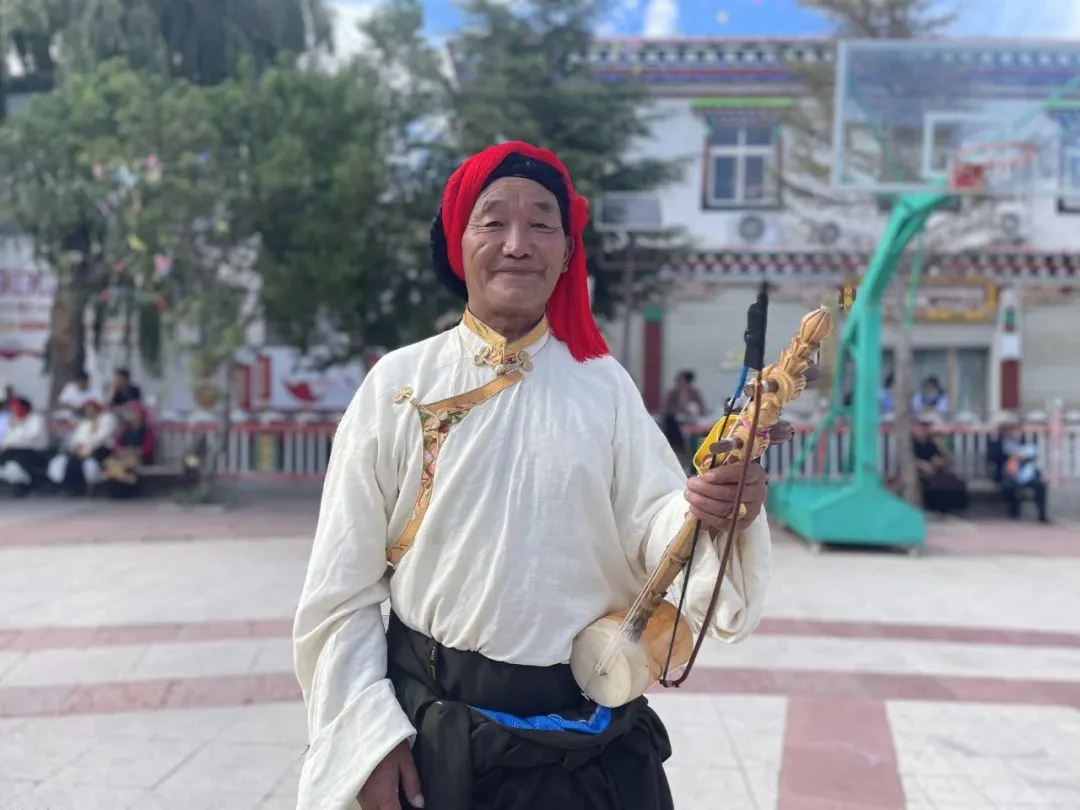
Xianzi practitioner Tsering Wangdu holding a bowed instrument
Tsering Wangdu illustrates the instrumental setting of Mangkang Xianzi in the 2024 report. He is a different practitioner from Jiangcuo, discussed in the text. Photograph: Zhang Jianlin, Beijing News.

Words travel with a moving group

Xianzi’s answering voices belong within a circle of dancers led by bowed-fiddle players. A line is heard while bodies continue to move. The exchange therefore involves timing: a response enters an ongoing rhythm, and the group maintains a shared pace.

The themes do not stand apart from this setting as entries in a songbook. Their force comes partly from being voiced on an occasion, among people who can answer. Sound, gesture and the reason for gathering give a familiar subject a particular present use.

Jiangcuo’s account of transmission

The national heritage profile of Jiangcuo provides one named history behind this shared practice. Born in Mangkang in 1950, he inherited Xianzi skills from his father Azhu. The profile describes demanding movements performed with an easy, expansive quality, alongside his work organising community dances.

It also records his teaching of younger people. That teaching connects an individual repertoire with future gatherings, where songs and movements acquire new participants. Xianzi’s broad themes remain close to ordinary life, while transmission gives people the practical means to sing and dance them together. The words belong to occasions; teachers help those occasions continue.

Continue exploring · Mangkang Xianzi Songs ↗
Photo credits and rights
  1. Tsering Wangdu illustrates the instrumental setting of Mangkang Xianzi in the 2024 report. He is a different practitioner from Jiangcuo, discussed in the text. Photograph: Zhang Jianlin, Beijing News.张建林/新京报 · No independent image licence established; private editorial research only Photo source ↗ Rights information ↗