At Zongri in Tongde County, an archaeological team excavated 300 square metres in 2024. The Qinghai Institute of Cultural Relics and Archaeology worked with Hebei Normal University and Nanjing University. The field season brought a broad patch of ground into view: the excavation area itself is one way to understand the scale of the work, before individual objects are lifted, sorted and interpreted.
From the journal
What the Zongri Excavation Brings to Light
A 2024 excavation at Zongri in Tongde County brought together pottery, stone, bone, jade and copper finds with animal, plant and environmental archaeology.
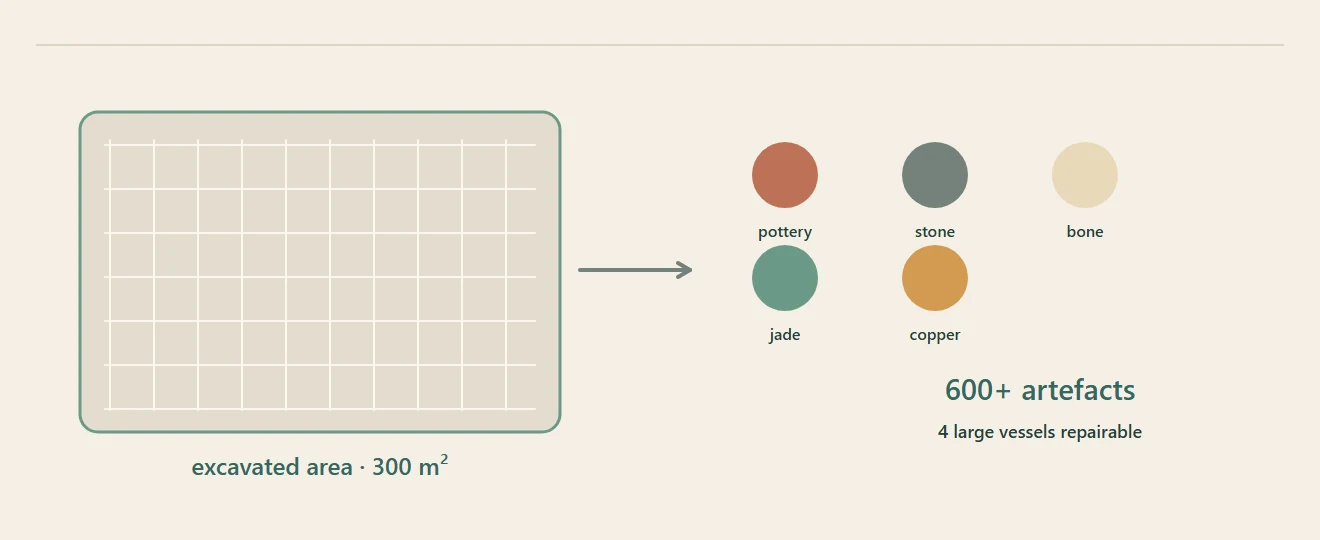
A measured excavation
Objects and multiple lines of inquiry
The excavation yielded more than 600 artifacts in pottery, stone, bone, jade and copper. Four large pots and basins from Zongri and Majiayao periods were considered repairable. Their materials and forms place small, ordinary vessels beside the larger questions an excavation can raise: how objects were made, used and set into a much longer sequence of life in the upper Yellow River region.