A tall building for many kinds of city life
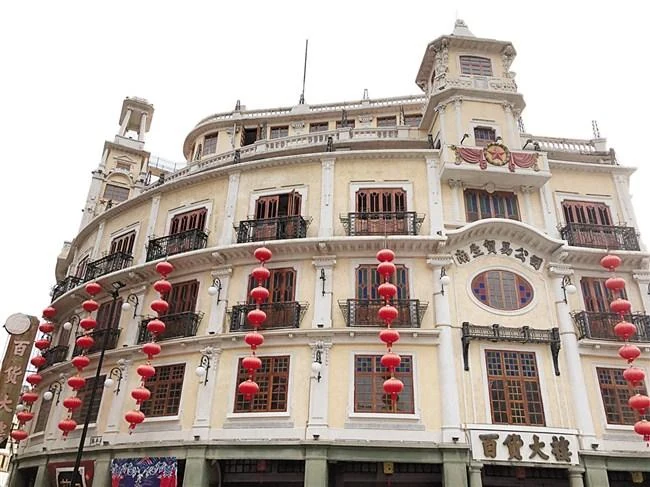
Nansheng Department Store opened in 1932 as a seven-storey building in Shantou’s Small Park district. A Shantou Daily report hosted by the municipal government describes a department store alongside a restaurant, hotel and entertainment spaces. The building gathered several uses vertically: shopping could take place below while other parts of an urban day unfolded on higher floors. Its height made it a conspicuous presence in a district of arcades and port-era commercial buildings.
The story is not just a matter of architectural scale. Mixed-use buildings concentrated activity and made it possible to meet different needs in one address. Residents could shop, eat and spend time within the same structure. Nansheng shows how Shantou’s port economy entered everyday life, bringing commerce, leisure and lodging under one roof.
A machine that changed the building
A municipal-hosted historical report describes Nansheng as the first building in Shantou’s port to install an elevator. The detail gives the store’s seven floors a practical dimension: a lift made upper levels easier to reach and brought retail, dining, lodging and entertainment into one vertical route.
The elevator places Nansheng in a moment when new equipment, commercial architecture and port-city habits were changing together. Its vertical circulation made height useful for everyday life in the district.
One landmark within a port district
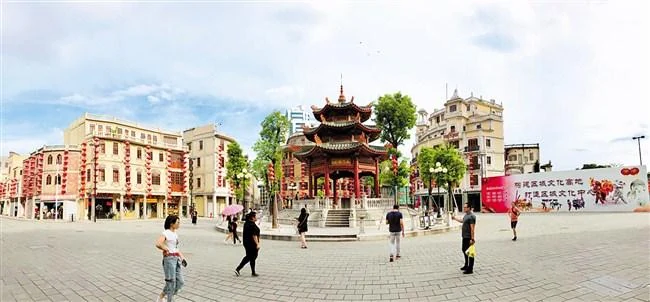
Nansheng did not stand alone. Small Park’s radial streets and arcades connected it to shops, civic buildings and offices in a changing port city. The area drew activity from overseas Chinese businesses, local merchants and foreign trading firms. Traditional Chaoshan forms and newer commercial architecture occupied the same district, creating an urban fabric that was neither a preserved old town nor a single modern development.
Today, Nansheng stands within that wider pattern. Its seven floors rise above arcade streets where commerce meets pedestrians at ground level. Between the department store and the central pavilion, one large building concentrates different uses while the street network carries people among many addresses. Its history gives Shantou’s port-era modernity a specific urban scale.