A 2024 report describes Mangkang as an important station on the Tea Horse Road in the past and a necessary passage on National Highway 214 today. That pairing gives Yanjing two transport histories without suggesting that the modern road simply repeats the old caravan route. The route appears in the source as context for salt-making, but the article does not reconstruct specific historic shipments or trading partners. Its closer story begins with a more immediate movement: brine carried from a well.
From the journal
From Brine Pool to Salt Field: Work and Song in Yanjing
A 2024 report follows Mangkang salt worker Ze Ren Wangdui through the movement of brine from well to pool and field, then places Xianzi song beside labor, landscape, love and toasting without inventing lyrics.
In the same city · Chamdo ↗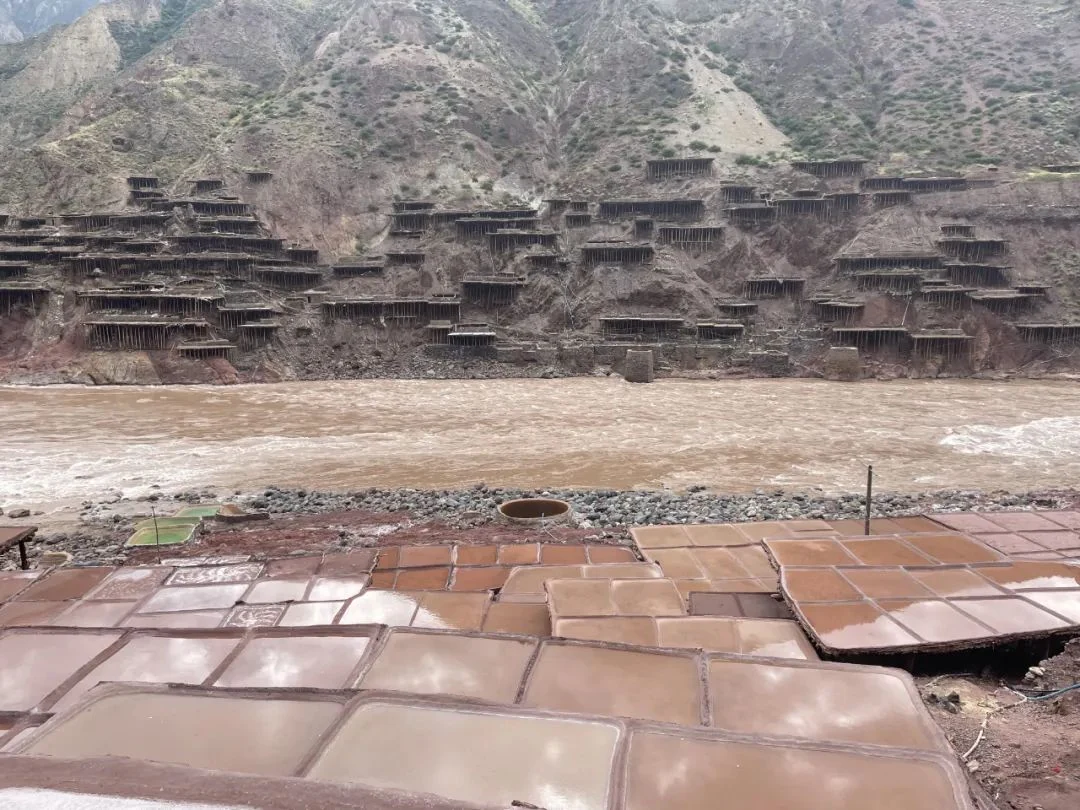
A station on a changing road
Lifting and concentrating brine
The report names salt worker Ze Ren Wangdui and describes a sequence of physical tasks. Workers bring brine up from the well in wooden tubes, carry it to their own brine pools, and leave it to dry and concentrate before transferring it to the salt fields. The work moves liquid through several containers before the sun and air complete part of the transformation. Each transfer requires attention to weight, balance and timing. The source does not provide a technical chemistry of the brine or a complete calendar for production, so the clearest account is the one it gives of handling: draw, carry, concentrate, then move the stronger brine to the fields.
The salt field as a workplace
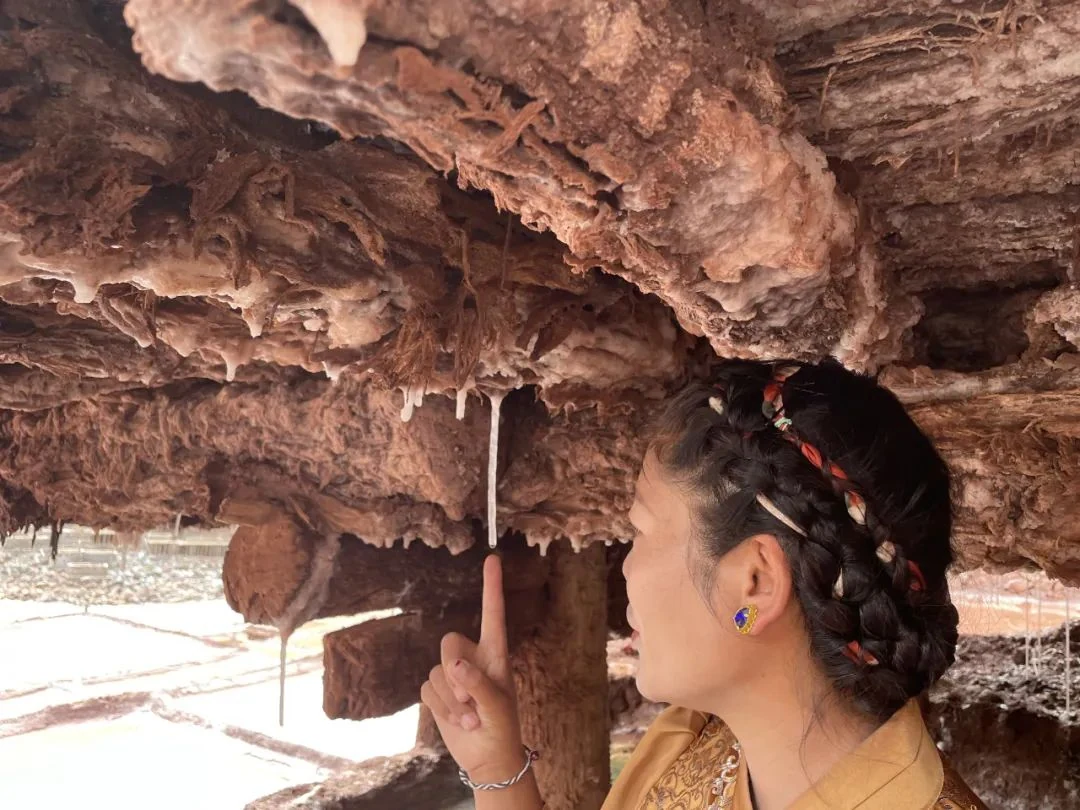
The salt terraces are often photographed as a patterned landscape, but the report’s account places people and labor inside that pattern. A pool is not merely a patch of color; it is one stage in a production sequence, owned or tended by salt-making households. Ze Ren Wangdui’s named presence makes the description less anonymous, while still remaining a published report rather than an interview conducted for this article. It lets the reader connect the visible field to repeated work: brine lifted from the well, carried uphill, concentrated, and spread where it can dry. The sequence explains why the terraces are both landscape and infrastructure.
Xianzi gives work a voice
The same report places salt-making beside Mangkang Xianzi, a local song-and-dance tradition. It identifies categories of song about labor, scenery, love and toasting, but does not provide exact lyrics. Those categories are enough to show the range of subjects carried in performance, from the tasks of daily life to social exchange. They do not authorize a reconstructed verse. Read together, the brine process and the song categories offer two distinct forms of knowledge: one organizes the movement of salt, the other gives voice to work and relationships. Yanjing’s story is richer when neither is reduced to a decorative backdrop for the other.