In early 2026, the Palace Museum brought Sakya’s history and art into the Meridian Gate galleries in Beijing. The exhibition selected more than 200 objects and arranged them in four sections: the history of Sakya Monastery, political unity, Sakya culture and art, and the monastery’s collections. That sequence set a clear frame for visitors. The monastery’s religious life, artistic traditions and historical relationships came into view through objects held in different collections. The exhibition ran from 10 February to 10 May 2026.
From the journal
When Sakya Objects Enter a Museum Gallery
A 2026 Palace Museum exhibition arranged objects linked to Sakya across four themes, pairing the monastery’s history with manuscripts, ritual objects and signs of political exchange.
In the same city · Shigatse ↗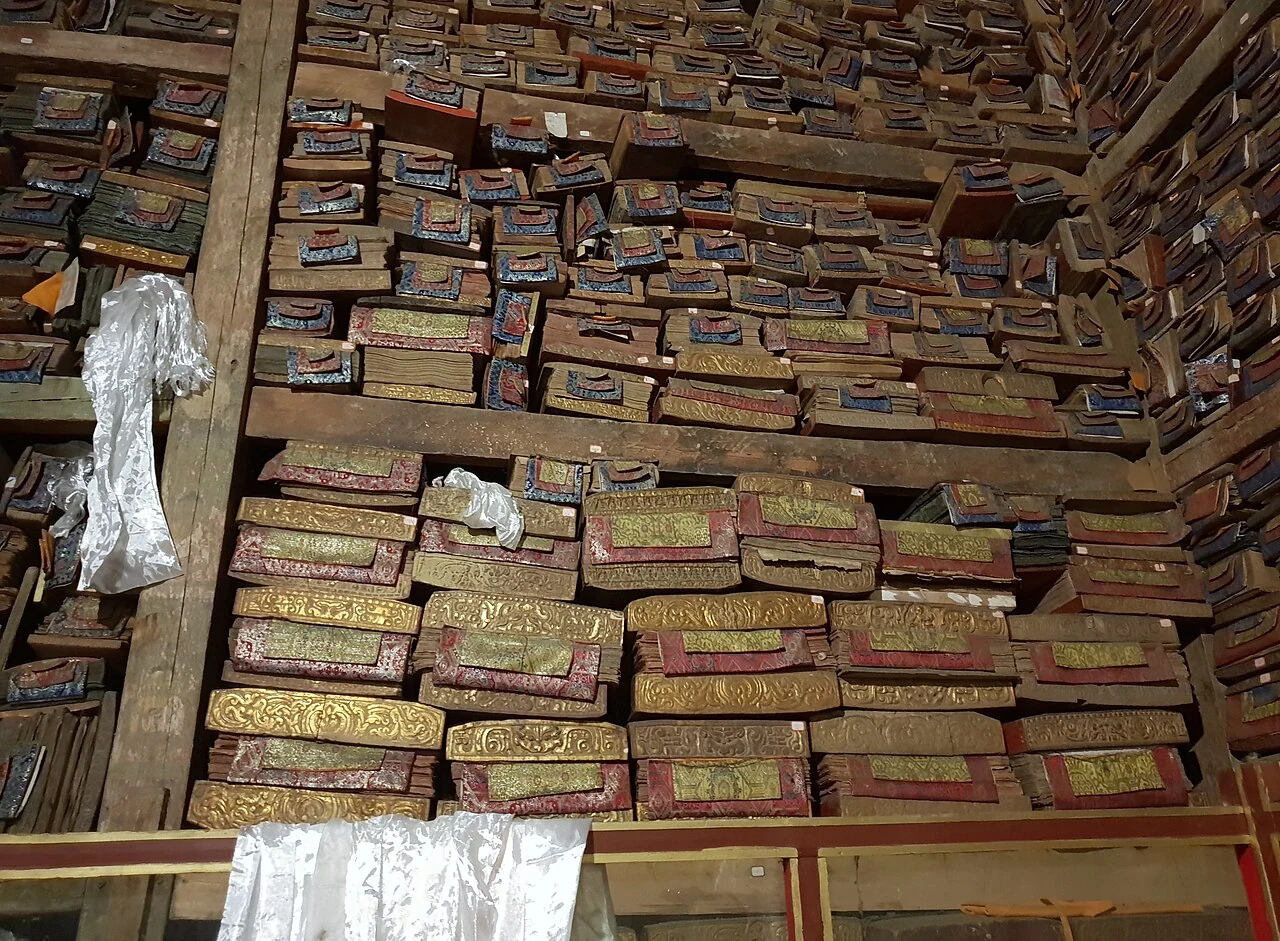
Four ways into a monastery’s history
A manuscript beside a bell and vajra
The catalogue names a Sanskrit manuscript of the Perfection of Wisdom in Eight Thousand Lines among the displayed works. It also lists a bell and vajra associated with Phagpa, the Sakya teacher who became a Yuan imperial preceptor. These objects belong to different material worlds: a handwritten religious text and implements used in ritual. In the gallery’s story, both are part of Sakya’s intellectual and devotional life. Their labels give visitors a way to move from the scale of a manuscript page to the sound and handling of ritual objects.
A seal, a title and a historical role
A replica of the White Orchid King seal also appears in the catalogue, alongside a replica image of Phagpa. The labels connect a named person with an object associated with authority, letting the exhibition place religious leadership within a wider political history. A seal is small enough to fit in a case, yet it carries a formal role: it identifies a person or office through an object designed to be used and recognized. The grouping makes political history tangible through crafted things as well as dates.
The gallery returns to a living place
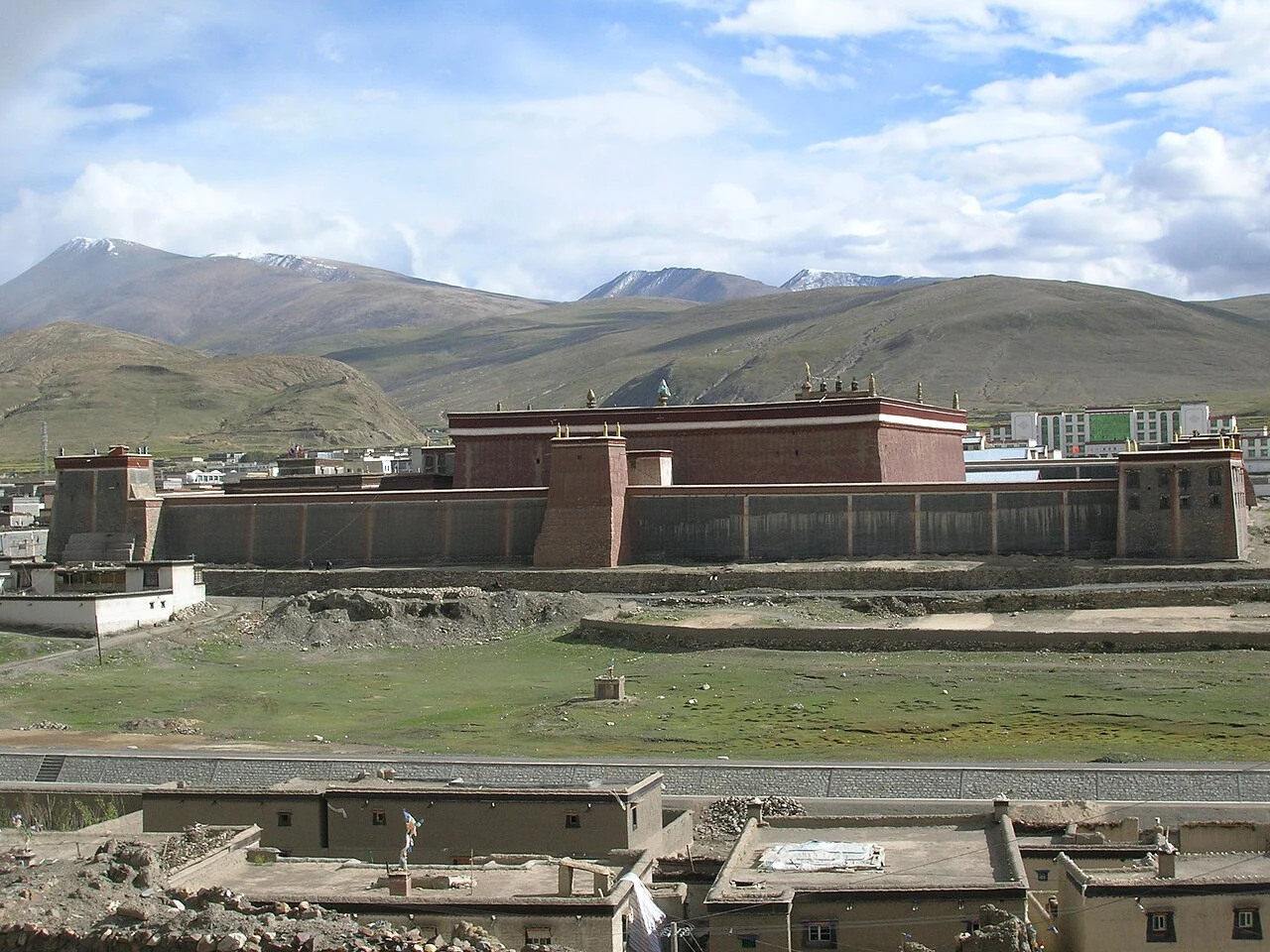
The exhibition’s four sections linked artifacts to a monastery founded in 1073 and identified by the Palace Museum as the origin centre of the Sakya school. After the galleries closed in May, the objects returned to their respective collections, while Sakya itself remained the place that gives their shared history its name. The catalogue offers a meeting point between a site in Shigatse and a museum audience in Beijing: the manuscript, ritual implements, figures and seals each open a different doorway into the monastery’s long record. The close of the show marks the life of a temporary display, while the monastery continues to anchor the identities and histories represented by its objects.