Penghu lies about fifty kilometres west of Taiwan, across a channel that is shallow and busy with ferries. The archipelago is made up of ninety islands and islets covering 141 square kilometres. The main island holds Magong and Huxi, and is joined by bridges to Baisha and Xiyu; the Penghu Great Bridge, between Baisha and Xiyu, is the longest in Taiwan. The islands are the eroded remnant of a Miocene shield volcano, and their coastlines are cut into platforms and cliffs. Fishing, farming and tourism support a population that is small and scattered.
From the journal
Basalt, wind and the sea goddess
Penghu is a volcanic archipelago of ninety islands, with columnar basalt, a temple older than most of Taiwan's, and a wind that never stops.
In the same city · Penghu ↗Ninety islands
Columns of stone
The islands are built of two to four layers of basalt, laid down by lava flows and interleaved with sandstone and mudstone from shallow seas. As the lava cooled, it cracked into hexagonal columns, and the sea has since exposed them along the cliffs. The best-known sites are on Xiyu and Baisha, where the columns stand in rows above the water. The rock is dark, the joints are regular, and the effect is architectural. The Penghu National Scenic Area was established in the early 1990s to protect the landscape and promote tourism, and the columnar basalt is its signature.
The temple at Magong
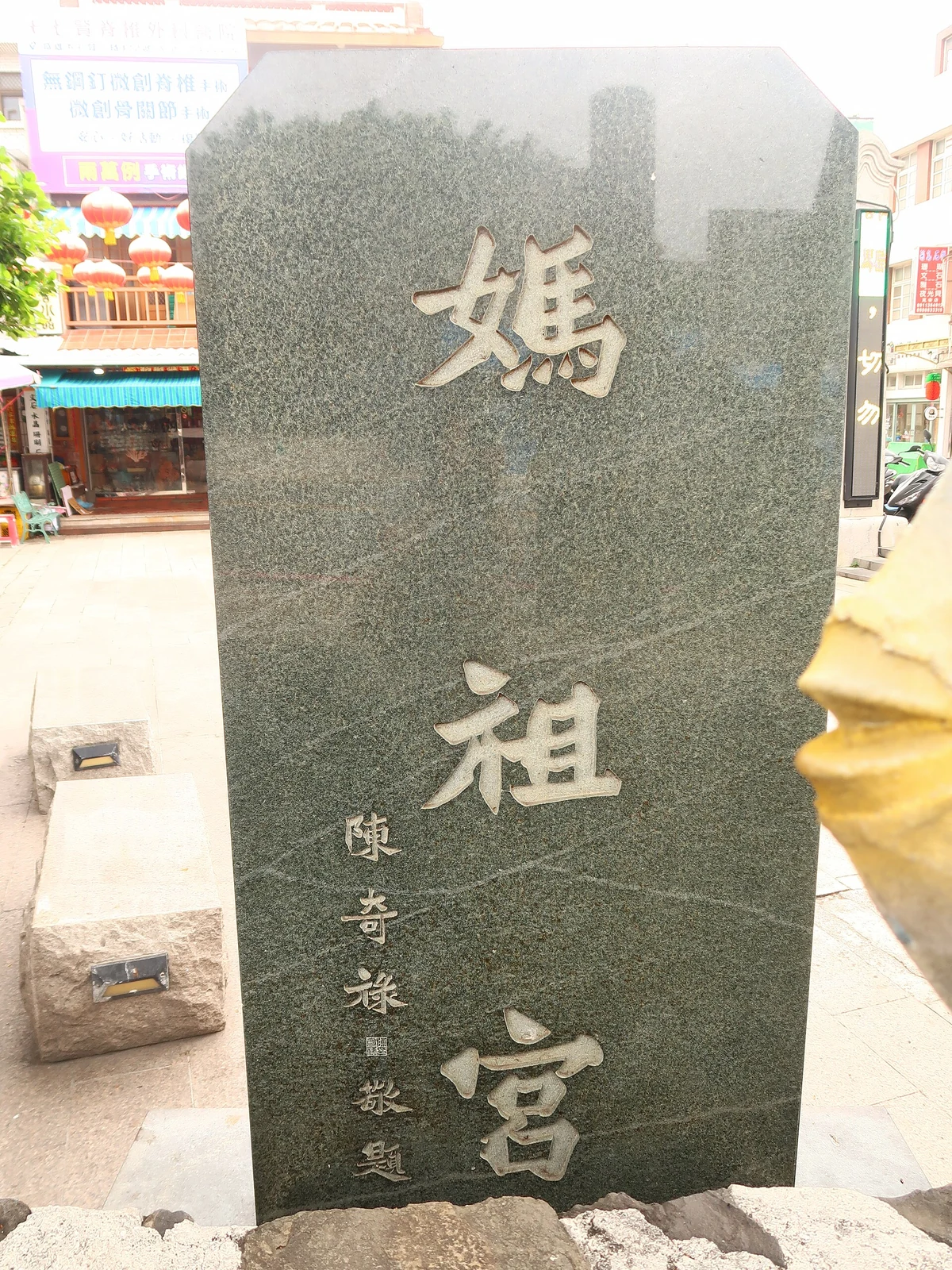
Magong grew around the Penghu Tianhou Temple, which is usually considered the oldest Mazu temple in Taiwan. The site may date to the early Ming period, and the temple was rebuilt in the sixteenth century and enlarged after naval victories over pirates in 1563 and 1592. A stele from 1604, recording Shen You-rong’s negotiation for the Dutch to leave Penghu, was found there in 1919. The present building is largely the result of a 1922 renovation, with Chaozhou-style wood carving and a main image said to be more than 700 years old. The town takes its name from the temple, and the goddess is still the patron of the islands.