From the journal

Bronze Drums in Guangxi: Form, Ornament and Classification

Nanning’s museum collections open a wider Guangxi story through the shape, ornament and careful classification of bronze drums.

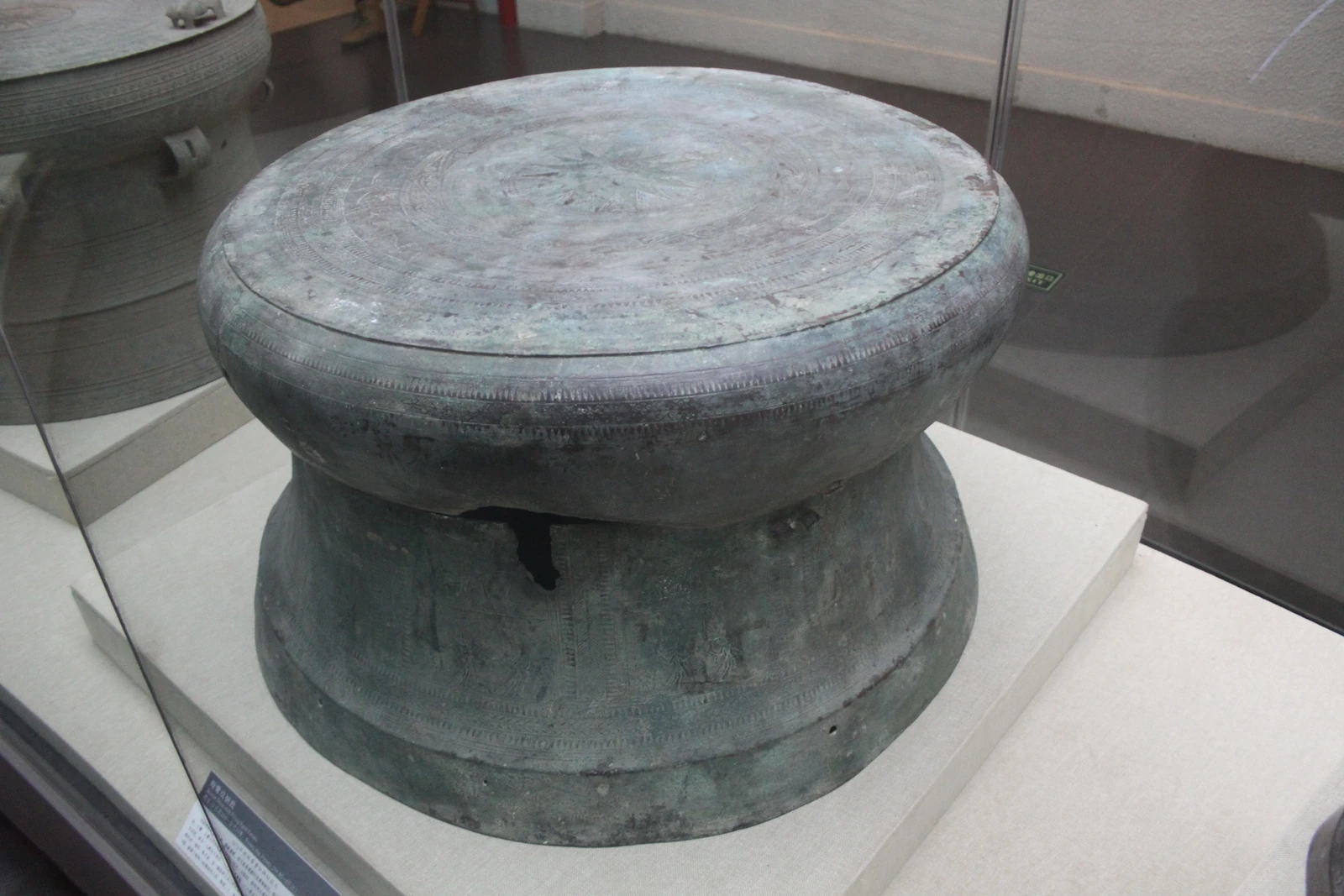
A large bronze drum with concentric decoration stands in a museum case.
Comparison: a Western Han bronze drum at Guangxi Museum in Nanning, photographed on 17 March 2011; identification follows the photographer’s record.

Form and Ornament on a Bronze Drum

A bronze drum’s form relates its upper striking surface to the body below. The profile widens and narrows, the top projects by varying degrees, and ornament divides some surfaces while others remain comparatively smooth. These features make it possible to compare objects before turning to interpretations of their decoration.

The Guangxi Museum of Nationalities in Nanning provides an important collection-based starting point. Its online catalogue names drums through varied features, including cloud-and-thunder ornament, birds, mounted figures and a later inscription.
Findspots giving names to types

A study published by the China Nationalities Museum explains eight established drum types named after standard findspots, including Beiliu and Lingshan in Guangxi. These names organise comparisons of form and decoration.

Type, estimated date, findspot and material describe different aspects of an individual drum. The categories place objects within a region where materials, practices and people circulated across the lines of present-day administration.

Lines, figures and patterned bands

The Palace Museum's glossary describes cloud-and-thunder patterns through curling geometric lines, distinguishing rounded and angular forms. Repetition, turns and alternation create bands around the decorated surfaces.

Figures and geometric fields occupy different areas of a drum. Their placement gives the ornament a composition, bringing the overall form into relation with small repeated details.

Six frogs and several interpretations

The Palace Museum in Beijing holds a Beiliu-type drum with six frogs. Its curator discusses several readings of frog imagery, including associations with rain and agriculture, the moon and fertility.

This comparison places a familiar animal within a wider range of interpretations. The drum's particular arrangement belongs to an individual object, while the proposed meanings draw on different cultural connections.

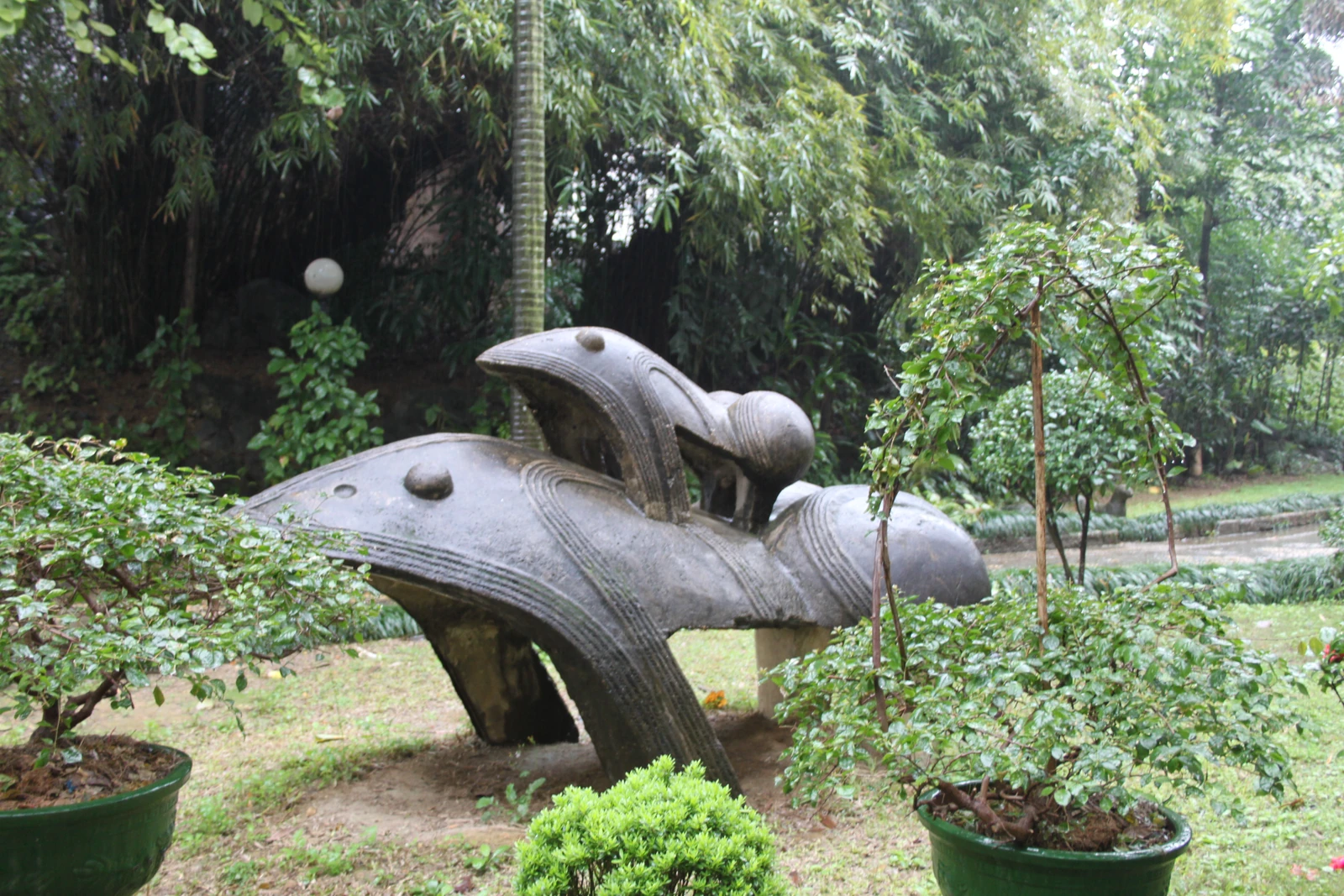
Two oversized frog sculptures stand among garden plants.
Modern garden frog sculptures inspired by bronze-drum decoration at a museum display in Nanning, photographed on 17 March 2011.

Individual Drums and Collection Histories

Inscriptions, ornament and damaged edges distinguish individual drums within a collection. Their records preserve histories of finding, use and collecting alongside the categories used to compare them.

Nanning's museum opens this wider Guangxi material history. Each object brings its own form and connections into the gallery, giving the broad family of bronze drums many particular lives.

Continue exploring · Nanning ↗
Photo credits and rights
  1. Comparative illustration: a Western Han bronze drum at Guangxi Provincial Museum, Nanning, photographed on 17 March 2011. It is not a view of the Museum of Nationalities collection. Object attribution follows the photographer’s record.Gary Todd · CC0 1.0 Photo source ↗ Rights information ↗ Resized and converted to WebP; full composition retained.
  2. Modern garden frog sculptures inspired by bronze-drum decoration at a museum display in Nanning, photographed on 17 March 2011.Gary Todd · CC0 1.0 Photo source ↗ Rights information ↗ Resized and converted to WebP; full composition retained.