A return shaped by family memory
A 2025 Kaiping government feature tells of Tan Shangxiang, a descendant who returned to Ming Shilou with her mother and aunt. The visit brought the building into a family frame: not only a landmark in Zili Village, but a place connected to older generations and stories heard at home. A descendant’s return differs from a historian’s survey. It shows how buildings remain present in family memory even when relatives live far away.
A remembered flood
In the published account, Tan recalls her mother describing floodwater entering a room and the family lifting a bedboard to keep it above the water. The image is concrete and domestic: familiar furniture becomes a temporary raft. The recollection places everyday life inside the tower and makes protective architecture part of remembered weather. A house is experienced through more than its outer walls; it also holds rooms where families faced water, waited together and later retold what happened.
A building with defensive details
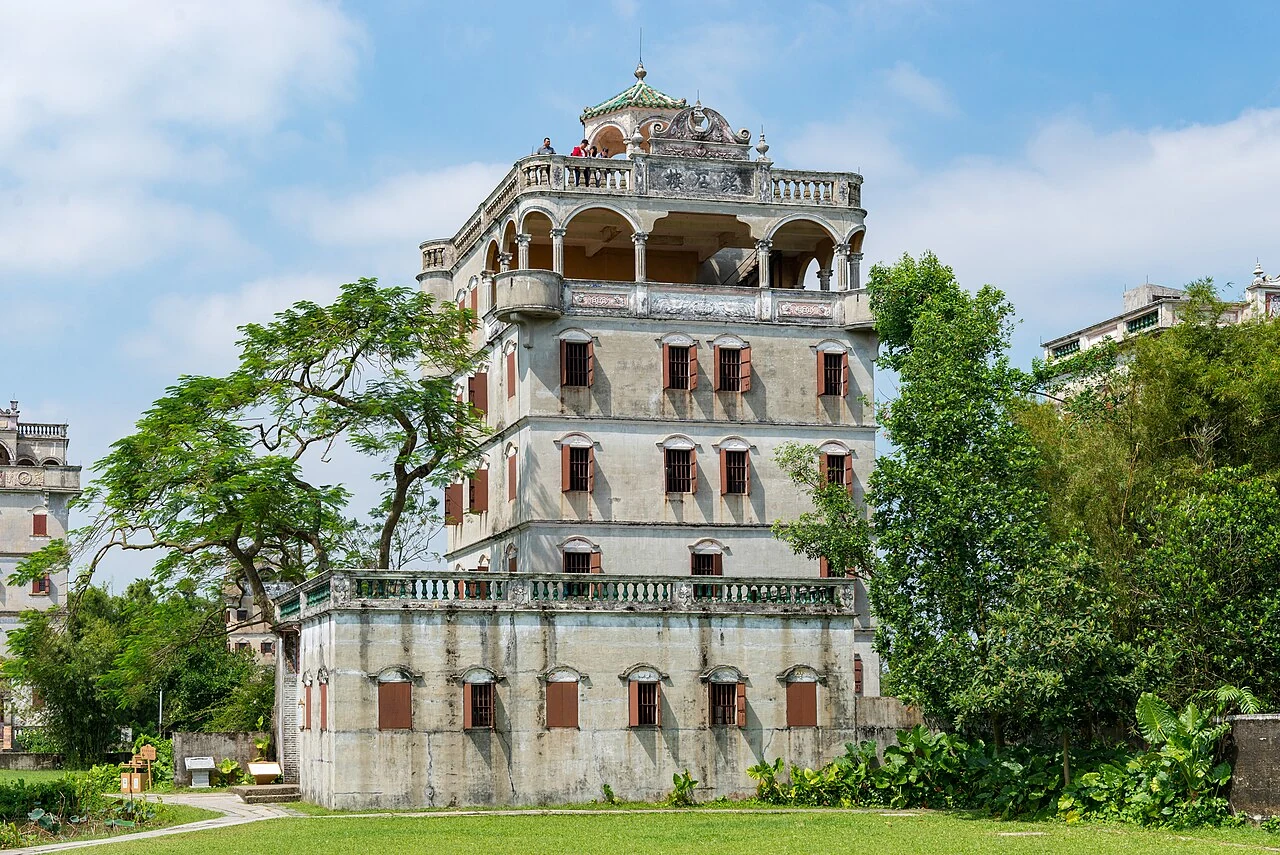
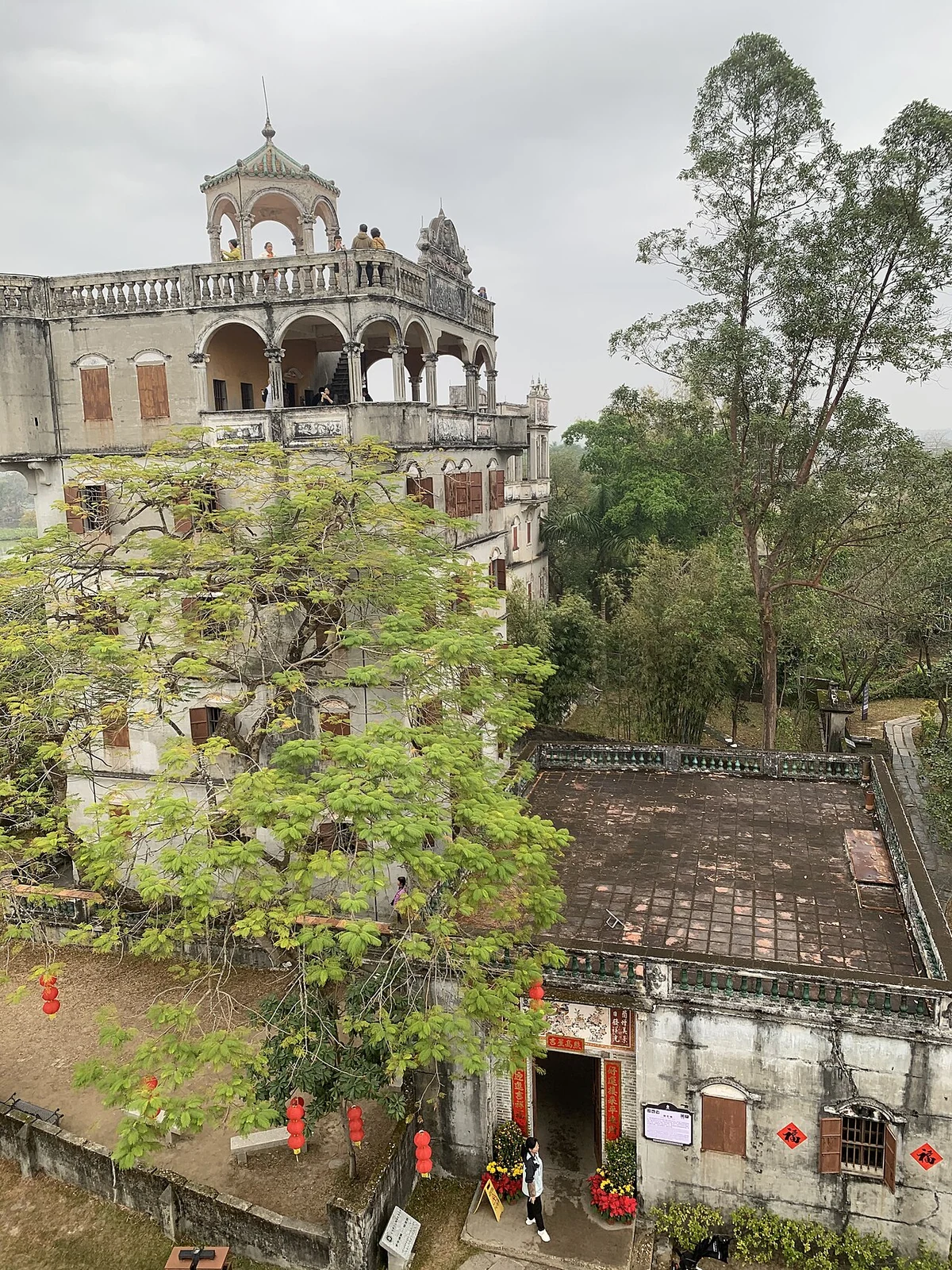
The same government account describes the tower’s five-storey form and a defensive projection nicknamed a “swallow’s nest,” with openings that allowed observation from above. Such features change how the home is read. Its elegant outline may suggest status, while openings and projections speak of watching and protection. The return visit joins material details to memory: architecture is encountered both as an object and as a place where family stories happened.
The return of a place
A published family recollection carries the closeness of a remembered room, a bedboard and rising water. Beside the tower’s structure and Zili landscape, it helps explain why descendants may return: the building holds a version of home that photographs alone cannot contain. Ming Shilou’s public recognition and private meaning coexist. Its masonry carries architectural history, while family memories keep the tower emotionally present across generations and connected to the village around it.