A name above the village
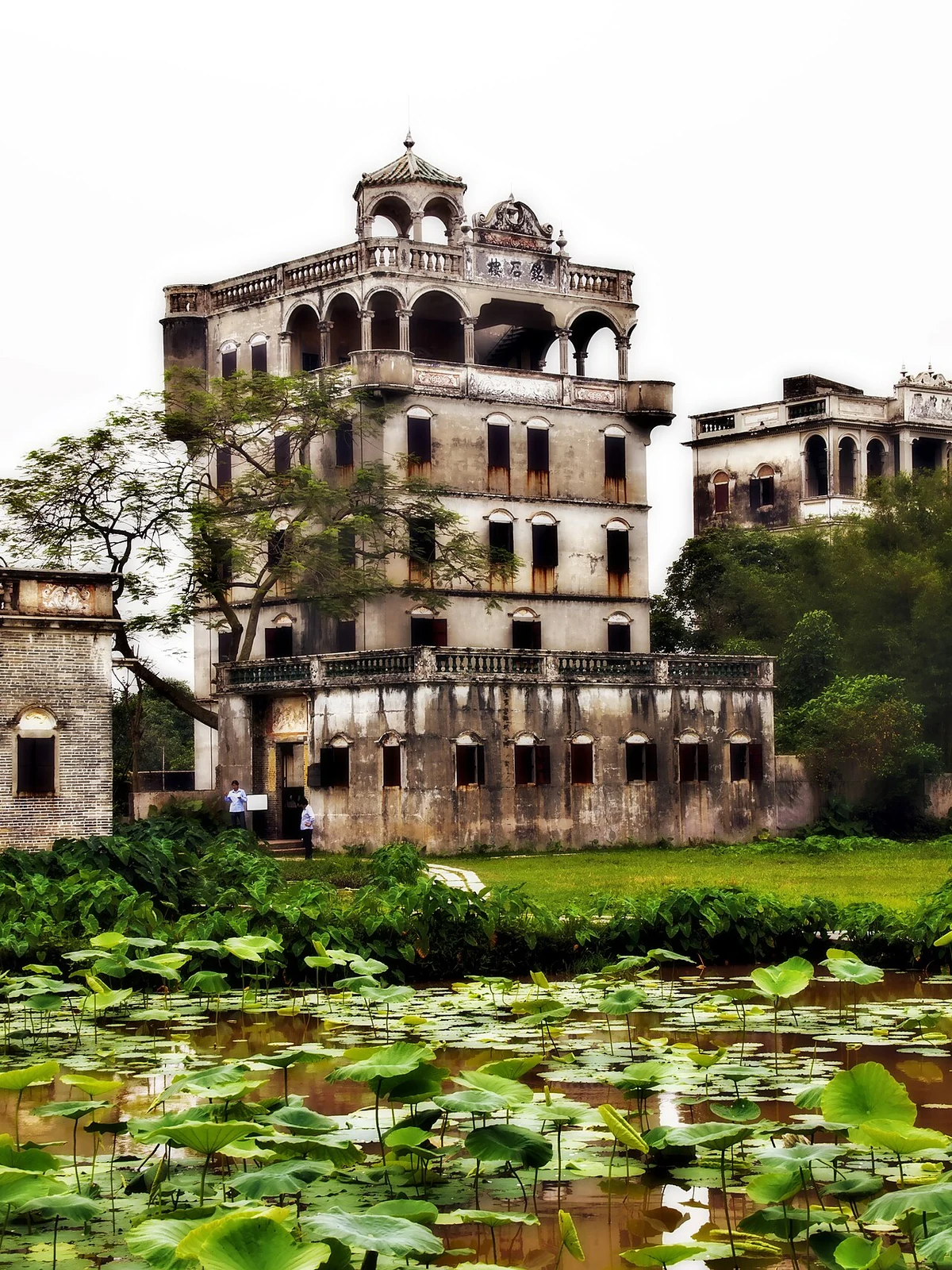
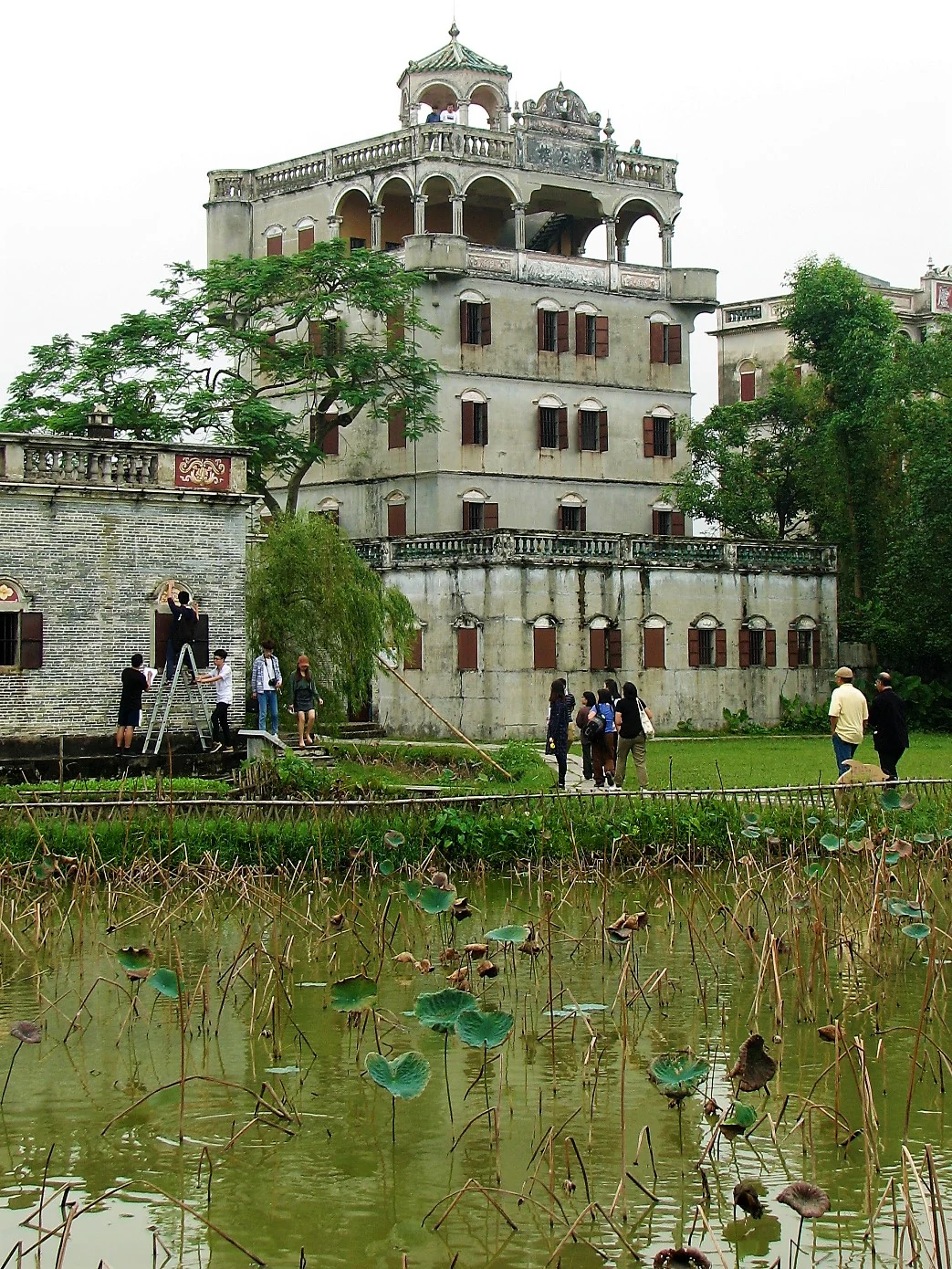
Ming Shilou rises above the ponds and homes of Zili Village, in Kaiping’s Tangkou area. Kaiping government materials date the tower to 1925 and identify Fang Runwen as its builder; he had worked in the United States before building at home. Its five storeys and roof pavilion draw the eye, yet the story begins with a person and a decision. Resources earned abroad became a lasting structure in a village where family, land and security were closely connected.
The tower as a family address
A tower here should not be reduced to a monument assembled for distant visitors. Ming Shilou was a family address, with rooms for domestic life inside a structure built to offer security. That dual character helps explain the building’s scale: it had to hold a household while making a visible statement of durability. The home and protective shell were not separate projects but joined in the same walls. Its rooms, outer height and ornament together show how household life and security shared the same structure.
A changing village skyline
The tower stands among ponds, rice plots and neighboring homes rather than on an isolated hill. Kaiping’s official description of Zili notes water, lotus ponds, fields and grassland beside diaolou and residences. The view makes migration and place tangible. Money earned abroad could return as brick, timber and ornament; the resulting building remained rooted in a working village. The surrounding ponds, fields and homes anchor the tower in the working landscape that shaped the family’s return.
Architecture as a return
Ming Shilou joins local building practice with design influences carried across oceans. The return was not simply a transfer of style. Family resources became a durable object in the community, part home and part public presence. The roof pavilion, openings and floor plan matter alongside the tower’s relation to Zili’s landscape. Together they tell a quieter story of return: not a traveler arriving for a visit, but a household anchoring itself again in a village. Its materials and setting keep that story visible long after the builder’s journey.