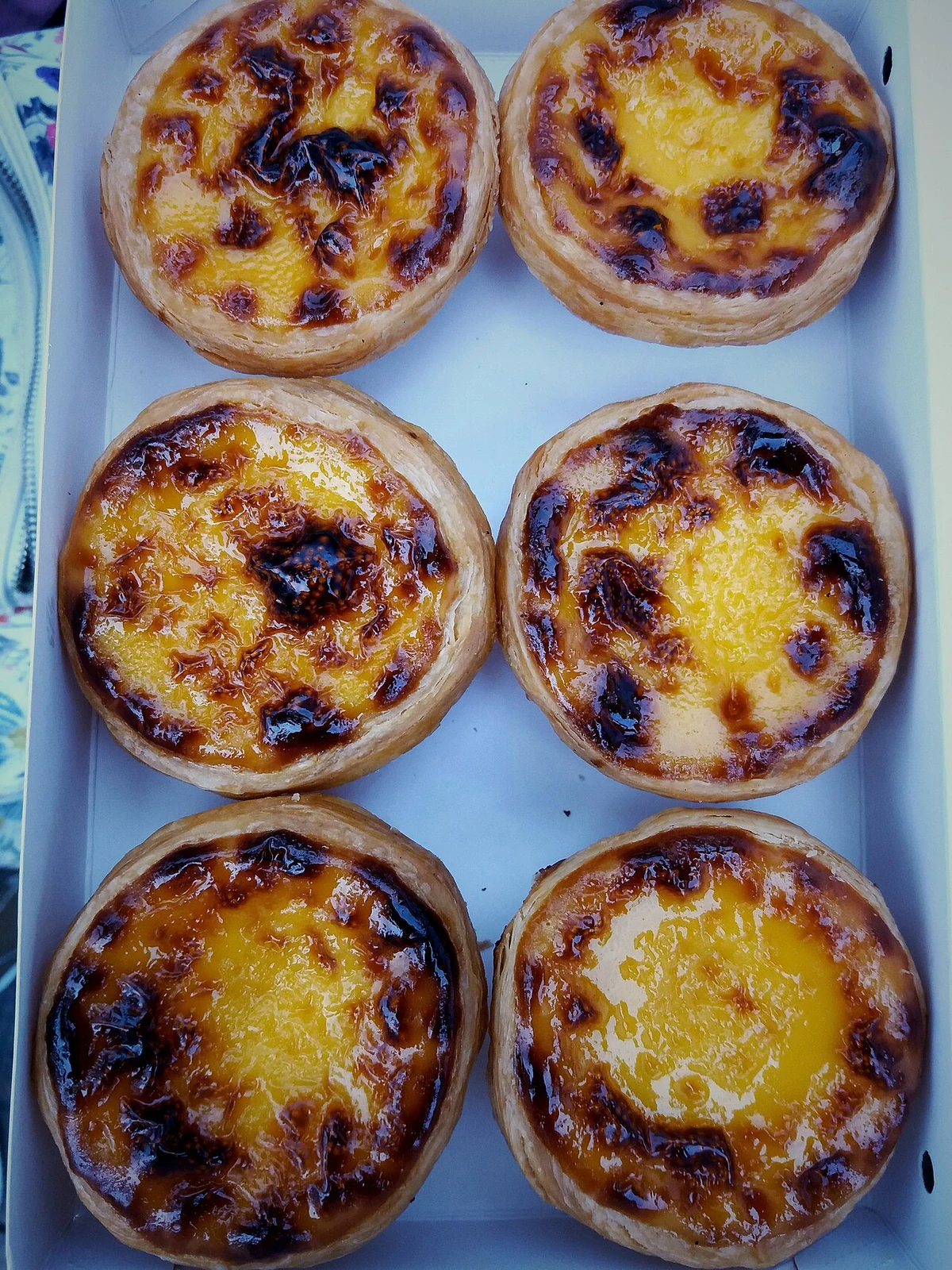
Macao’s Portuguese-style egg tart brings an egg-custard filling into a shell of puff pastry. The Macao Government Tourism Office describes a caramel-like bitterness in the custard, while its food guide notes cinnamon and lemon peel in the yolk mixture and a top marked by brown and dark spots from baking. The contrast is familiar at a glance—pale custard, layered crust—but the aroma and browned surface distinguish the Macao version.
From the journal
Macao’s Egg Tart and Portugal’s Pastel de Nata
Macao’s Portuguese-style egg tart keeps a custard-and-puff-pastry base while developing a local signature of caramelized spots and aromatic filling.
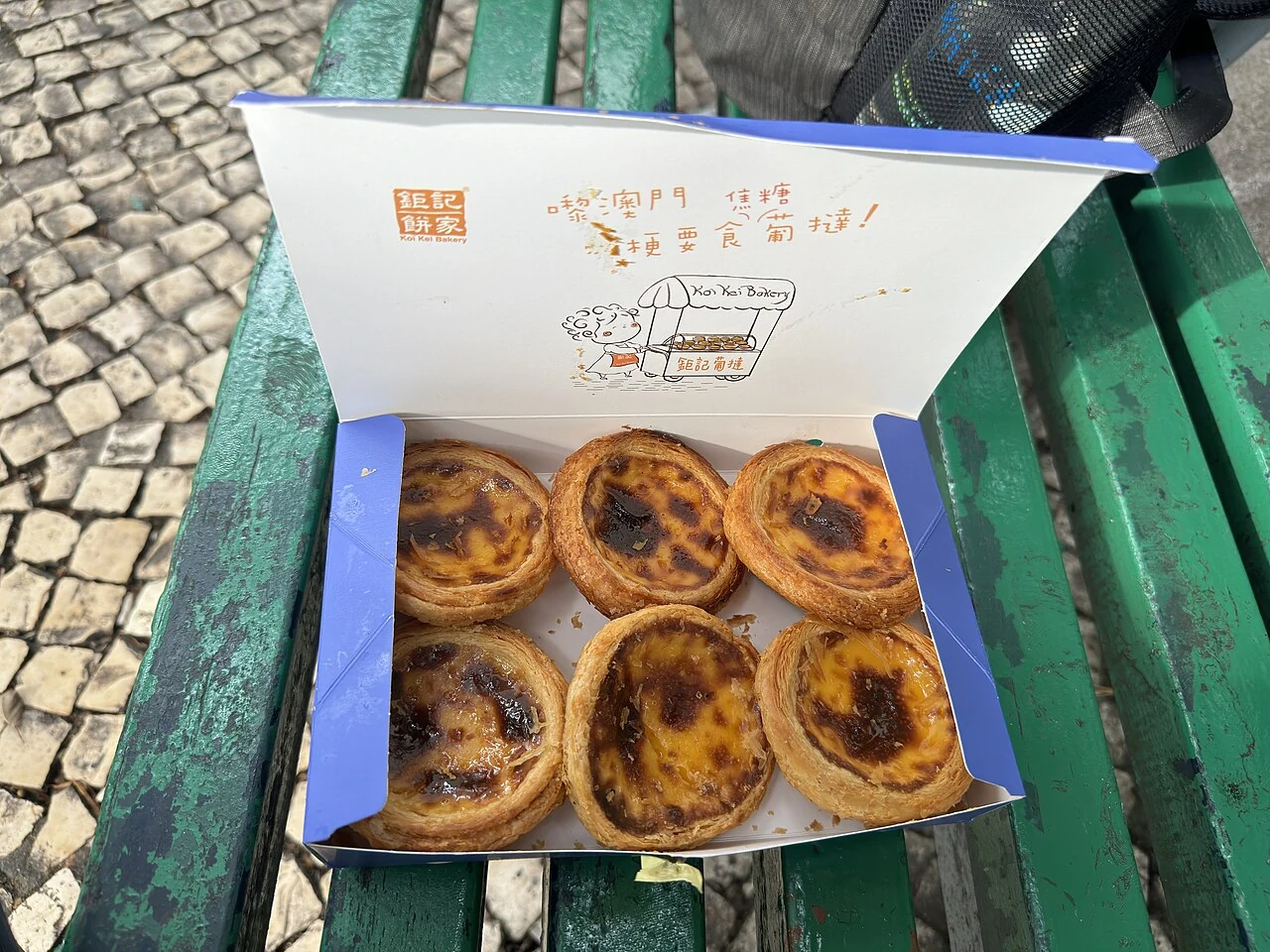
Custard in a Layered Shell
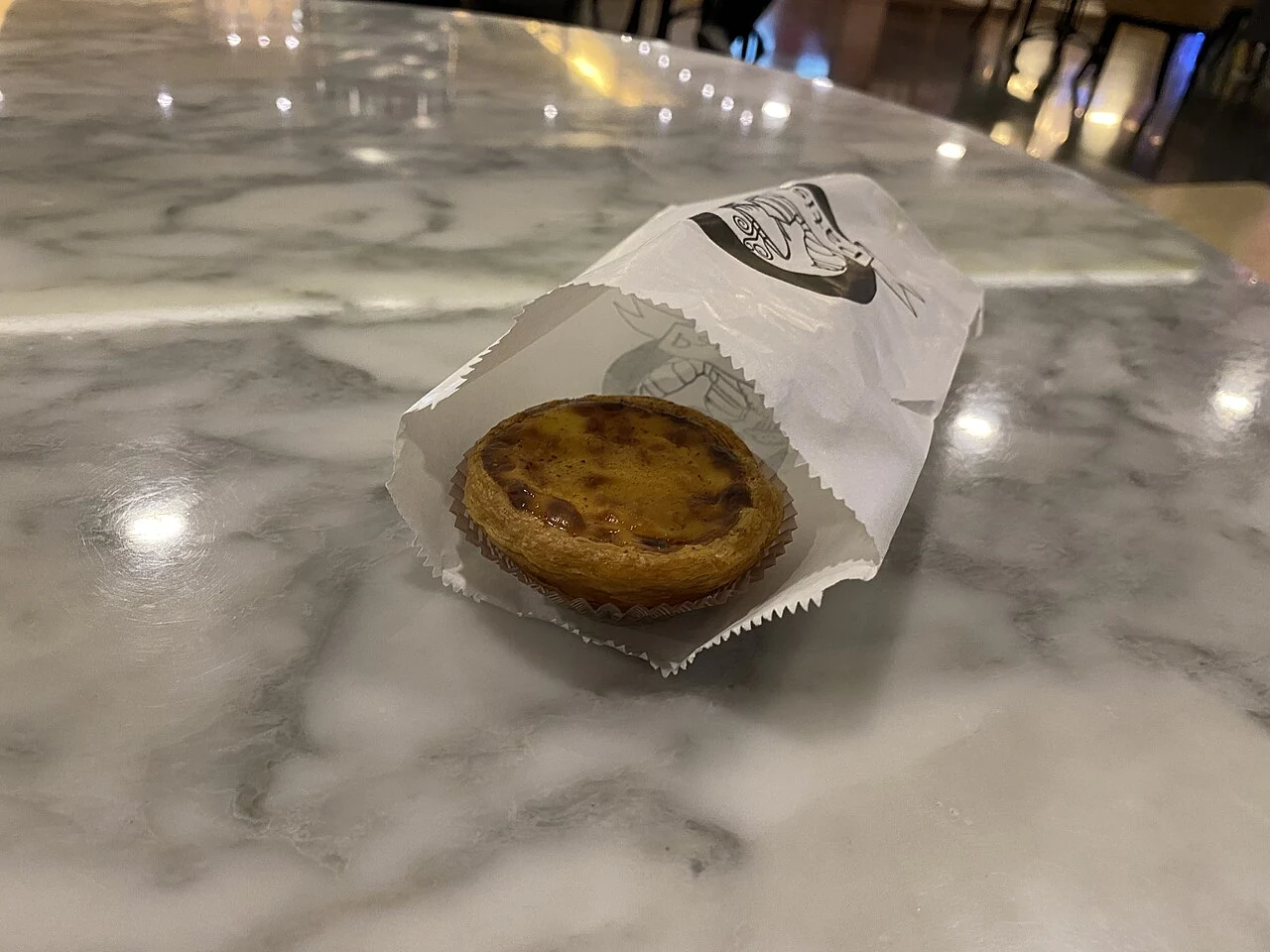
Pastel de Nata, Reworked in Macao
Pastel de nata is a Portuguese pastry with a long history; in Macao it became a beloved bakery counter staple. Macao’s official tourism guide attributes the local version to baker Andrew Stow, who adapted the Portuguese tart into a pastry associated with the city. Today both names appear around Macao: pastel de nata when the Portuguese connection is foregrounded, and Portuguese egg tart in English-language menus and travel writing. In either case, the best comparison begins with the pastry itself—crisp layers, a soft filling and caramelized notes.