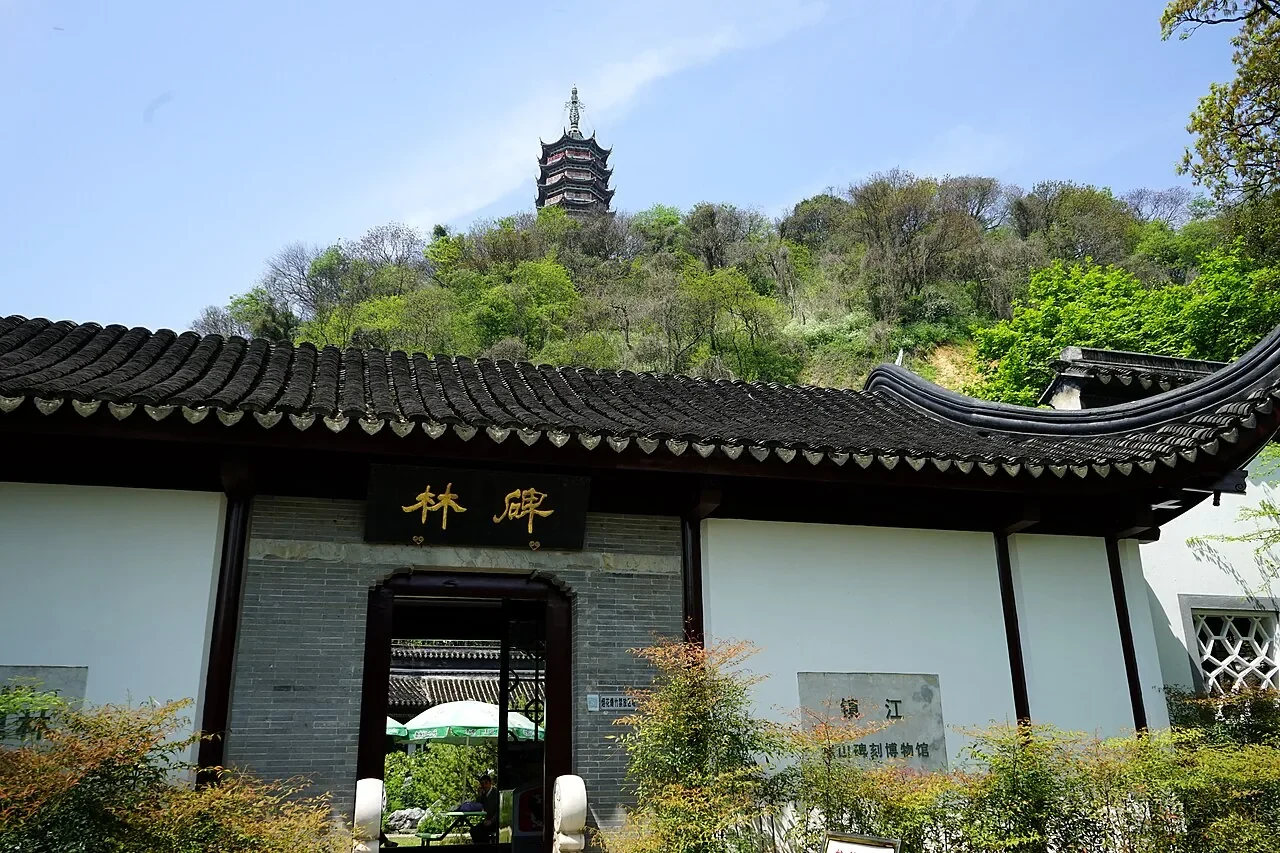
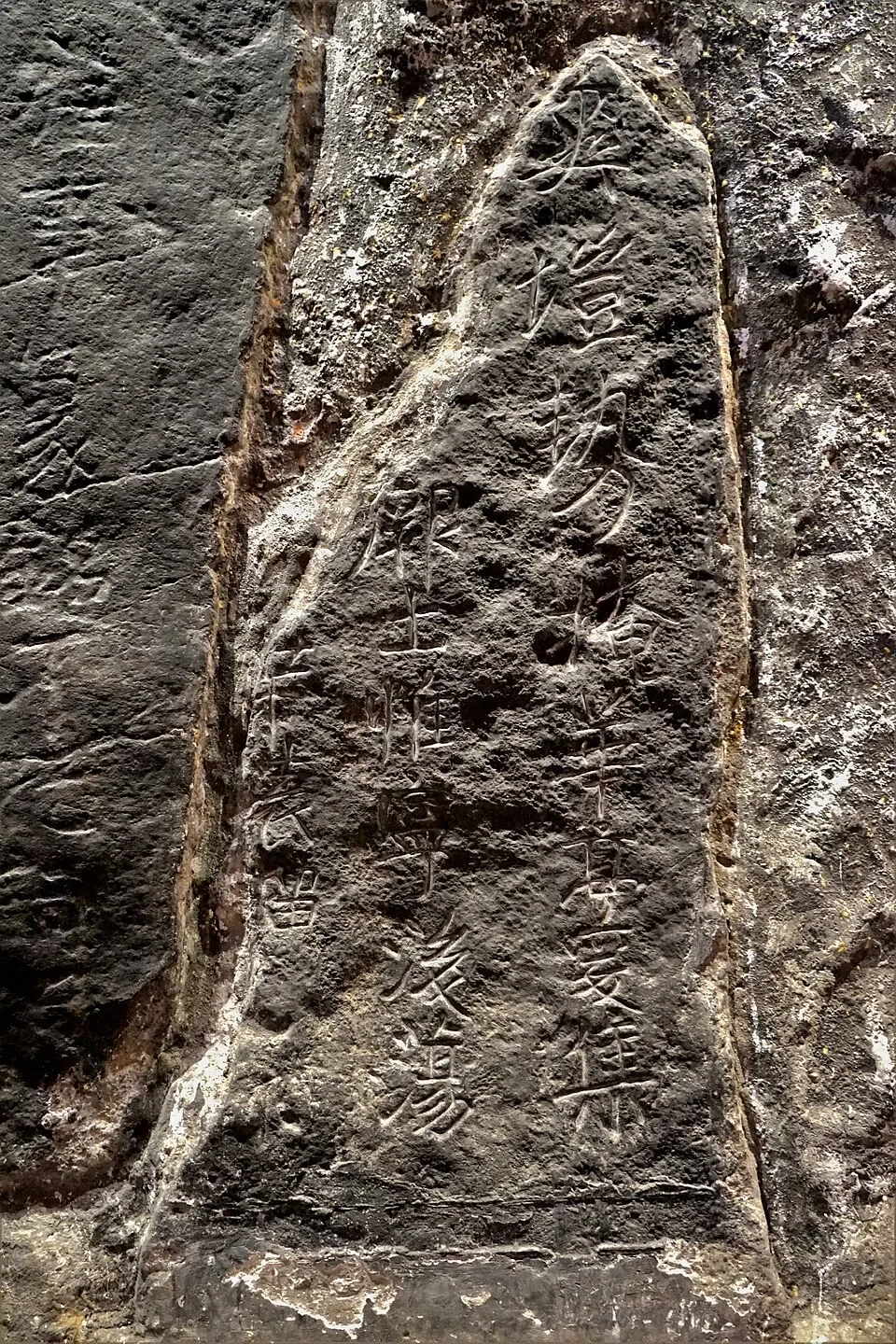
At Jiaoshan, the most productive way to look at a celebrated inscription is to start with its incompleteness. The Yihe Ming, conventionally translated as an inscription for the burial of a crane, survives in fragments. It was originally cut into the western cliffs, so the object now protected in the stele collection once belonged to an exposed landscape. Its broken edges are not incidental damage to be ignored while searching for beautiful characters. They are central to what the work has become.
A crane gives the inscription an unusually intimate starting point. Instead of beginning with a sovereign's decree or a military victory, it offers the idea of mourning a bird. That difference in scale makes the monumental treatment arresting. Even without reading Chinese, a visitor can ask what it means to give a small act of remembrance such durable material form.