From the journal

Finding Han Hepu Beneath the Ground

Walls, wells, production remains and tombs reveal how archaeologists reconstruct Hepu’s Han-era maritime world from evidence that survives in different forms.

In the same city · Beihai ↗
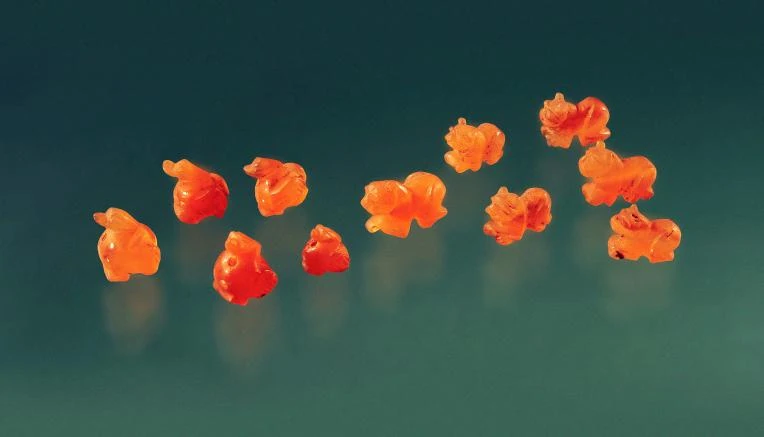
Small translucent orange agate animal ornaments are arranged against a dark green background.
Agate animal ornaments excavated at Tangpai in Hepu County, from the Guangxi Zhuang Autonomous Region Museum collection, illustrated by Chengdu Museum during their 2017 loan display. The source identifies five geese and six tigers. Photograph date unconfirmed.

A port reconstructed from many traces

Hepu's Han-era maritime centre emerges through settlement remains, production areas, tombs and written accounts. Each preserves a different part of the port's world.

Walls show how a settlement was organised, burial goods record choices made for particular people, and texts describe places and connections. Together, these traces bring the port into view as a community of buildings, work and exchange.
Caoxiecun provides a built environment

The Guangxi archaeology institute describes excavations at Caoxiecun conducted between 2007 and 2010. Surviving walls, a moat, wells and architectural ceramics point to a substantial Han settlement. The institute identifies the site as a possible seat of the Hepu commandery, an interpretation supported by the settlement’s scale and layout.

The remains work together as parts of a built environment. Boundaries organize space, wells provided for occupation, and roof tiles mark buildings. These materials suggest a place that people constructed and maintained for a range of activities, rather than a collection of attractive finds detached from daily life.

Production belongs beside exchange

Local historical and archaeological records also draw attention to production remains at Caoxiecun. They broaden the port story beyond ships arriving and departing. A maritime centre depended on people making things, maintaining buildings and supplying everyday needs as well as on trade.

An ordinary ceramic fragment can be as revealing as a precious object. A roof tile or working vessel helps reconstruct the setting in which exchange took place. Luxury goods are striking because they travelled or signalled status; everyday remains matter because they record repeated activity. Both belong in the story of Hepu as a human settlement, not merely a point on a trade-route map.

Burial choices and objects in circulation

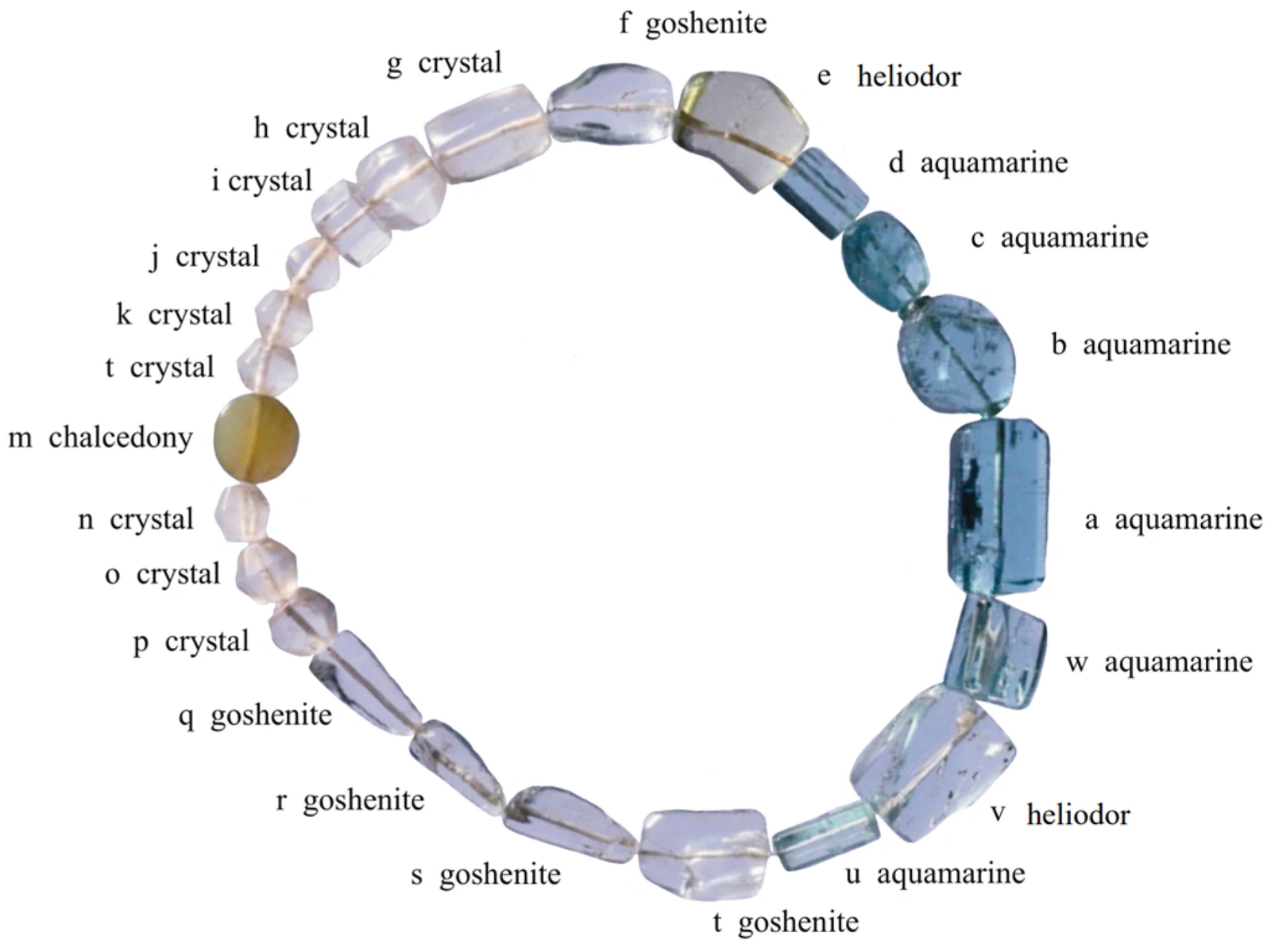
Hepu’s Han tombs have yielded varied materials, including beads whose possible origins have been studied. Burial assemblages reflect choices about identity, commemoration and what accompanied a person in death. They offer a selective view of objects in circulation, further shaped by what survived the centuries.

An imported object can establish a connection and suggest value without showing how common it was in ordinary households. The contents of one tomb record that burial’s selection; comparison across sites helps map the wider circulation of materials.

A strand of translucent blue, yellow and clear beads is surrounded by material labels in an academic figure.
Han-period gemstone beads from Hepu in Figure 1 of Zheng and Guo (2025), with material labels following Xiong (2015).
A pale blue-green glass vessel with horizontal bands around its body.
A glass vessel excavated in 1987 from Wenchangta tomb M70, Hepu, illustrated in Guizhou Provincial Museum’s lecture report on Han maritime exchange.

Networks between sea and inland rivers

Materials reaching Hepu could pass through several hands and ports. Maritime exchange connected with rivers carrying goods inland, joining the coast to places beyond the shoreline.

Objects, settlement remains and comparisons across sites help reconstruct those networks. A community participated in exchange through its own work and connections, linking distant materials with local uses.

Continue exploring · Hepu Han Heritage ↗
Photo credits and rights
  1. Agate animal ornaments excavated at Tangpai in Hepu County, from the Guangxi Zhuang Autonomous Region Museum collection, illustrated by Chengdu Museum during their 2017 loan display. The source identifies five geese and six tigers. Photograph date unconfirmed.Chengdu Museum official website; collection: Guangxi Zhuang Autonomous Region Museum · Rights information Photo source ↗ Resized and converted to WebP; full composition retained.
  2. Han-period gemstone beads from Hepu in Figure 1 of Zheng and Guo (2025), with material labels following Xiong (2015).Yanyan Zheng and Guikun Guo, Arts 14(6),147, Figure 1 / CC BY 4.0 · CC BY 4.0 Photo source ↗ Rights information ↗ Resized and converted to WebP; full composition retained.
  3. A glass vessel excavated in 1987 from Wenchangta tomb M70, Hepu, illustrated in Guizhou Provincial Museum’s lecture report on Han maritime exchange.Guizhou Provincial Museum, lecture report on Hepu Han finds · Rights information Photo source ↗ Resized and converted to WebP; full composition retained.