The large basin described at the entrance to Liuwan village carries three groups of dancers, five figures in each group, joined hand to foot in a circle. Its scale turns a painted-pottery motif into a village landmark: visitors encounter the image before they enter the museum galleries. The figures are described in a 2016 report on Liuwan’s pottery museum, alongside jars, handled vessels, owl-faced containers and other objects in the displays. The motif’s repeating circle offers a useful way to look closely: notice how bodies link into a continuous band, then compare that movement with the angular lines and animal forms found on other pottery surfaces.
From the journal
Painted Pottery at Liuwan: The Dancers on a Village Landmark
A painted-basin form greets visitors in Liuwan village, where three groups of linked dancers circle its inner wall. The nearby museum places that striking motif within a much larger story of pottery and burial.
A modern landmark with ancient figures
Inside the pottery galleries
Inside the museum, painted pottery is part of a wider archaeological collection associated with the Liuwan cemetery. The galleries present vessels together with bone tools and polished stone implements, giving visitors more than a sequence of decorated pots. Their forms point toward everyday use, while the cemetery displays place objects within burial practices. Liuwan’s village landmark and its museum galleries therefore offer two different encounters with the same regional heritage: one monumental and public, the other organized around excavated objects and their contexts. A visit can move from the large circular dancers outside to the varied shapes inside, keeping the scale of the modern display distinct from the archaeological objects it evokes.
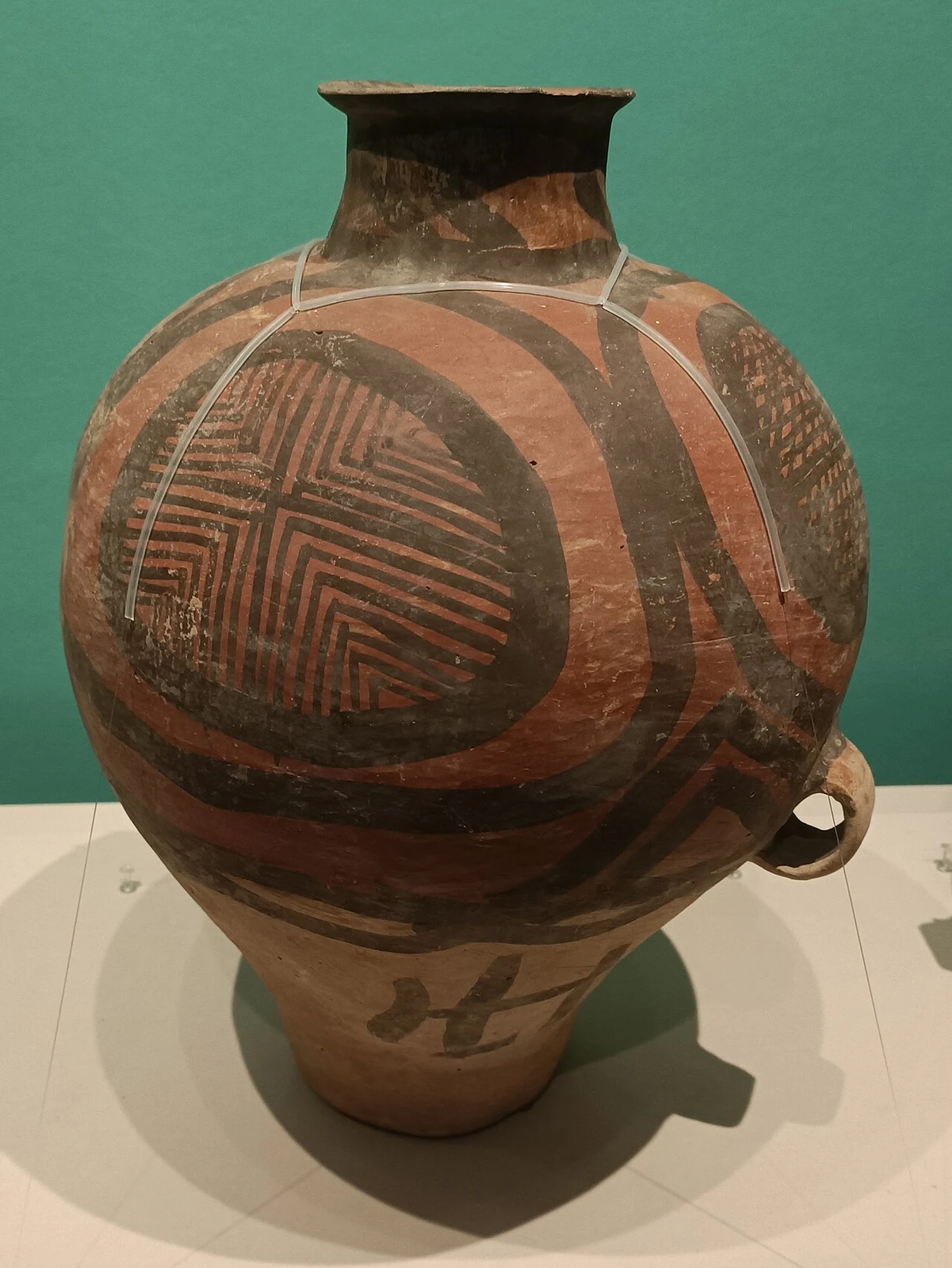
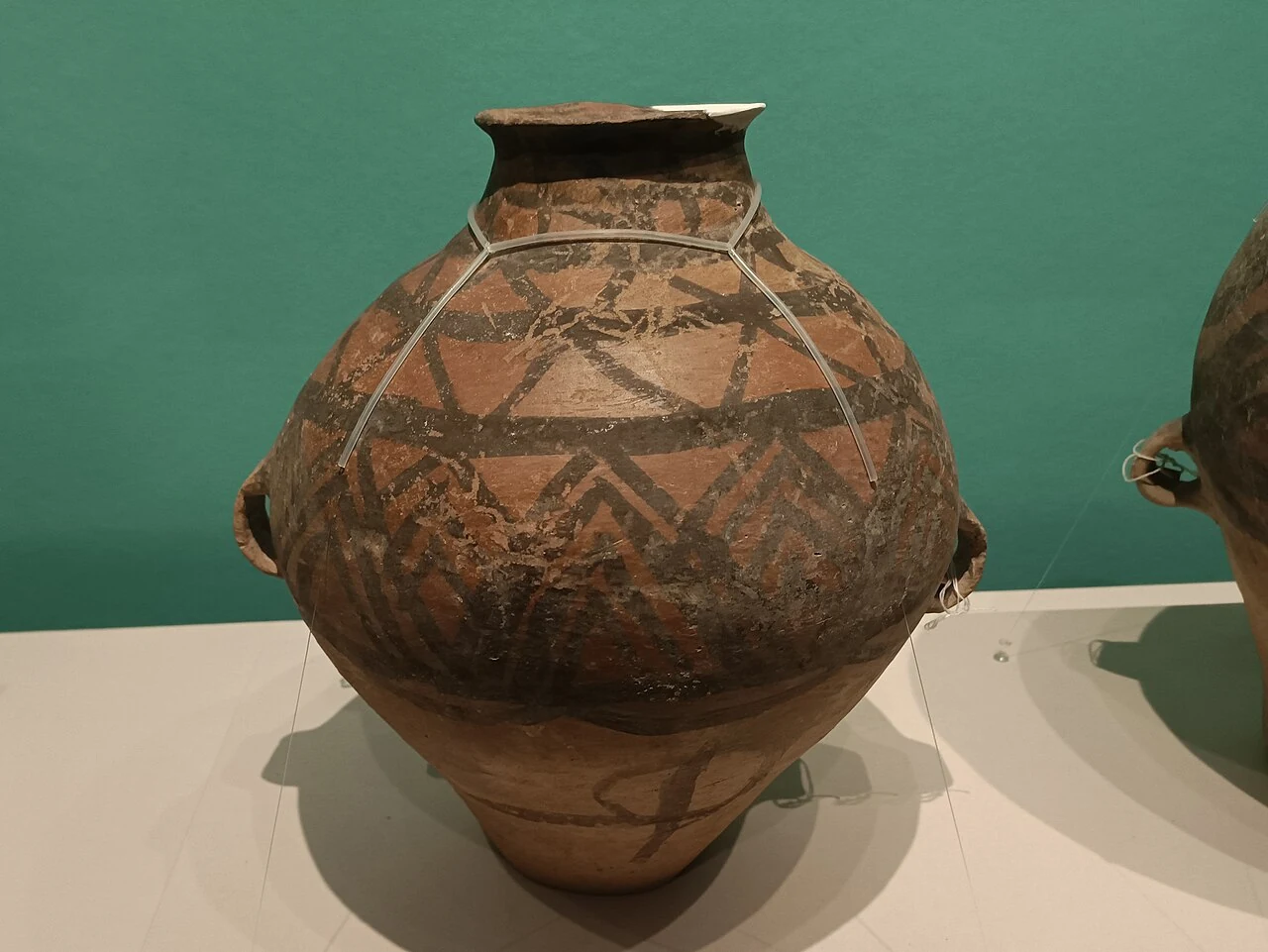
Other galleries widen the visual vocabulary. The report describes orange-red and purple-red surfaces marked by black geometric or animal designs, along with frog-patterned jars, handled pots, owl-faced vessels, a human-headed jar and a pottery boot. These objects reward comparison: repeated lines organize one surface, while a modeled face changes the outline of another. Bone knives, forks and spoons, plus polished stone tools, appear alongside the ceramics. The museum presents these as evidence of daily life and craft across the Neolithic and Bronze Age.