A garden found beneath the ground
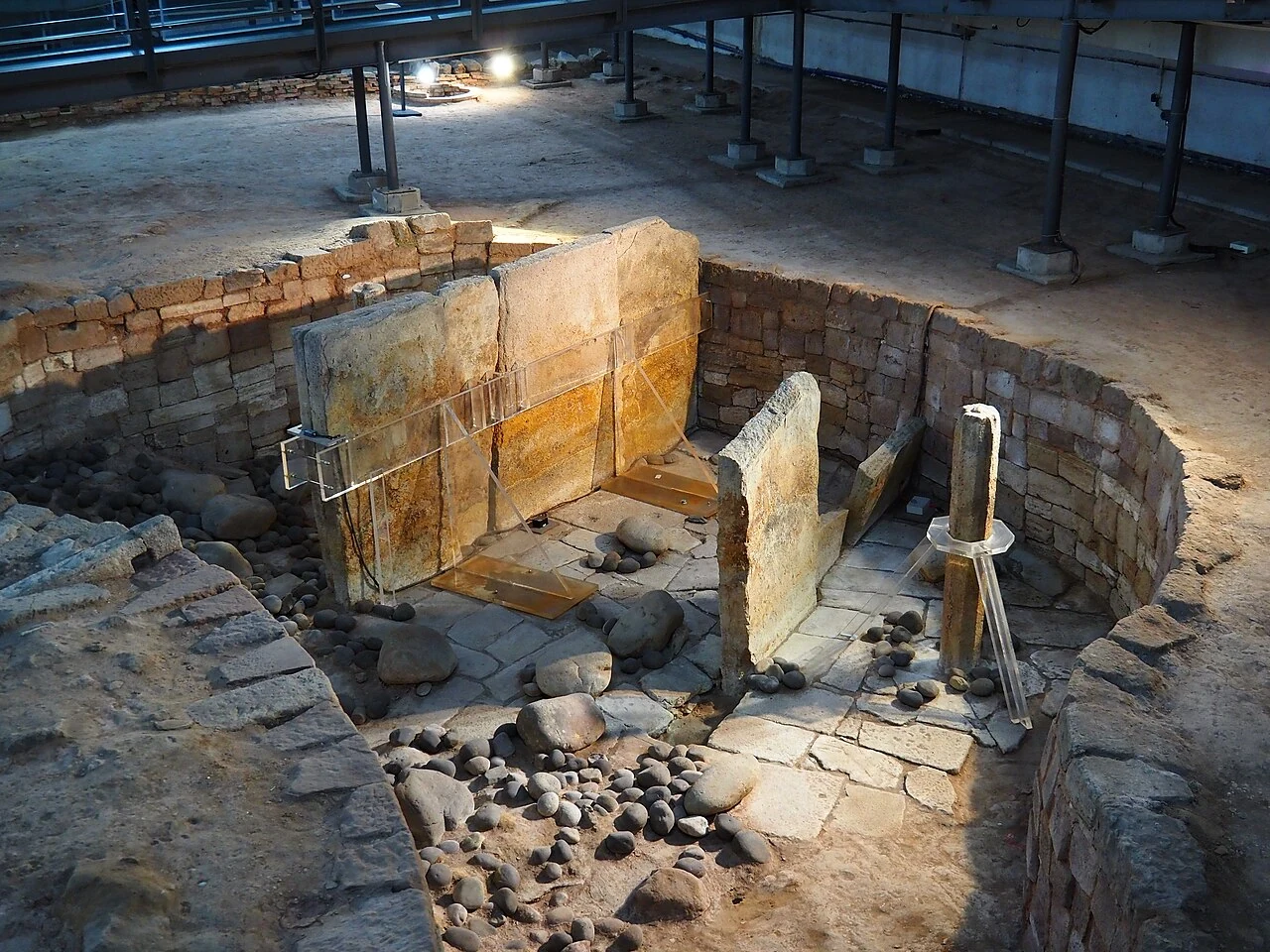
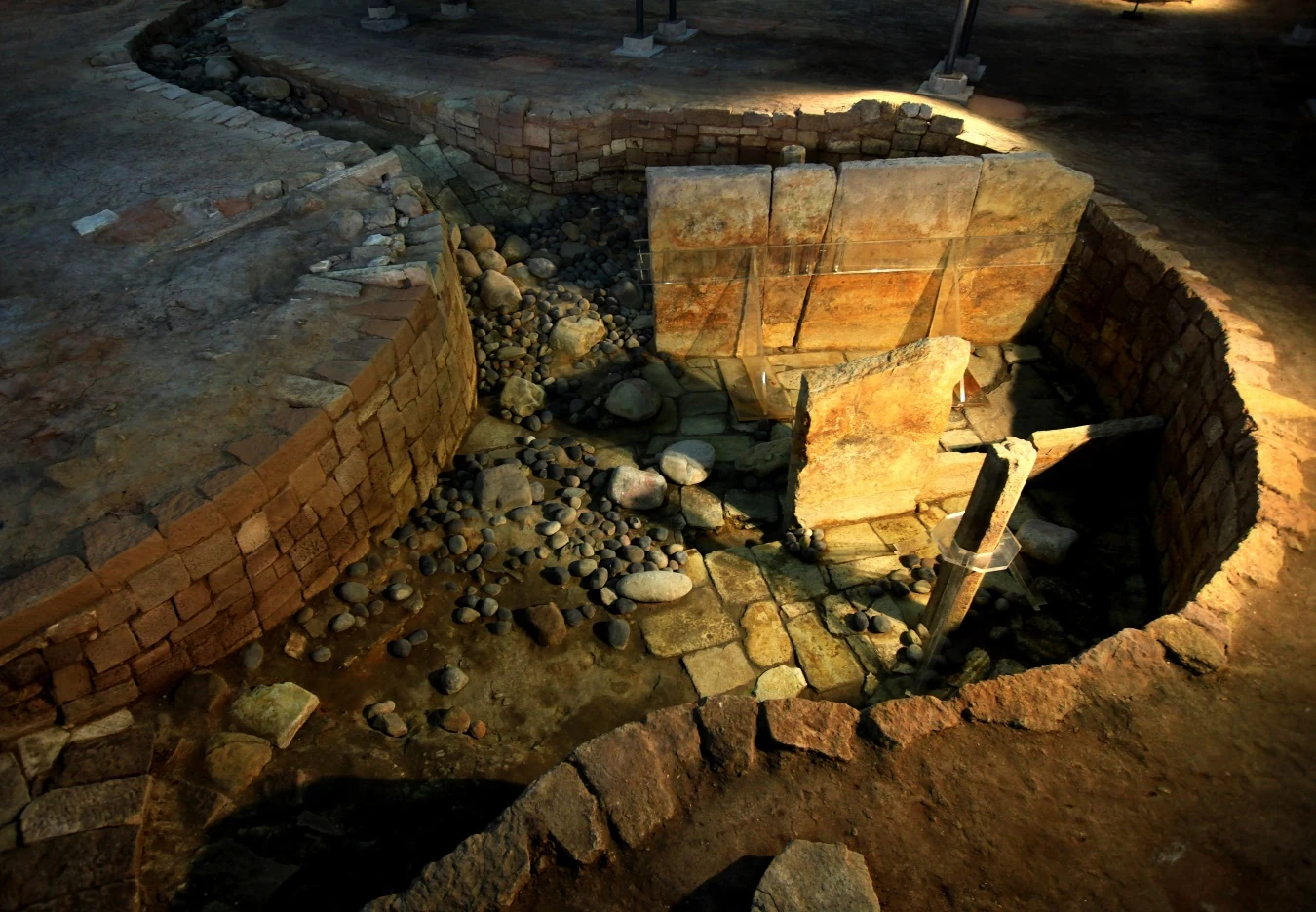
In 1995, archaeologists working at the Nanyue palace site uncovered part of a large stone-built pool. Two years later, a winding stone channel emerged. A covered wooden conduit linked the channel with the pool, joining them into a royal garden's water landscape.
These features survive at the Palace Exhibition Area of the Nanyue King Museum in central Guangzhou. Curves, stone edges and changes of level give a distant court a physical setting. The garden belonged to the capital of Nanyue, a kingdom whose remains now sit among the streets of a much later city.
Water for display and daily use
The excavations also found a brick drinking-water well. Water had several jobs within the palace grounds: it supplied people, moved through channels and formed part of a designed garden. Later work revealed palace buildings and drainage works alongside wooden writing slips and other remains.
The museum identifies pools, a winding channel, small bridges, stepping stones and both open and covered drains among the garden features. Together they reveal choices about how water should appear and where it should go. The court's landscape depended on built systems as well as planted ground.
Another palace, and another layer
The site also preserves palace and garden remains of Southern Han, a later regional kingdom. Excavated bricks, roof tiles and everyday objects belong to different periods. Repeated building left successive layers in the same urban area.
Wells from many centuries are another part of that sequence. They connect the remains of royal compounds with the continuing need for water in an occupied city. Beneath present-day Guangzhou, this place holds both carefully designed court spaces and traces of the practical systems that allowed people to keep using the ground.