A garment assembled from jade
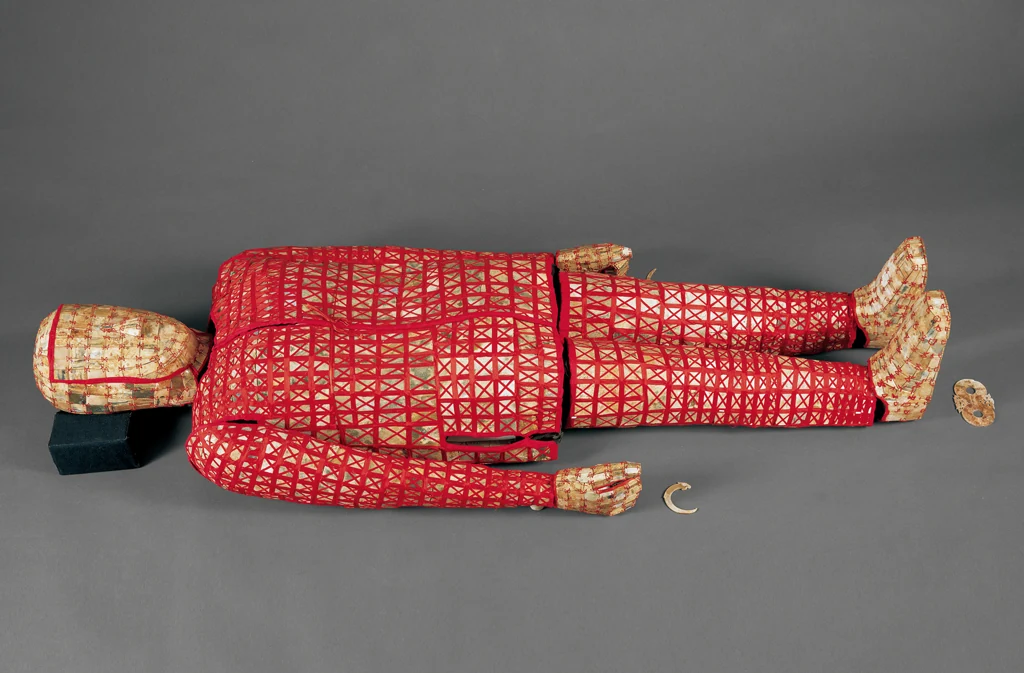
At the Nanyue King Museum, a human form lies within a grid of jade and red silk. The burial suit is 173 centimeters long and contains 2,291 jade pieces. A hood, upper garment, sleeves, gloves, trouser sections and shoes give the hard material the outline of clothing.
The pieces are held together in different ways. At the head, hands and feet, smooth jade pieces with holes at their edges were threaded with red silk. Much of the torso used pieces cut from older jade objects or leftover material, attached to hemp-cloth backing and secured with diagonal red-silk ribbon. The surface joins careful cutting with several methods of assembly.
Clothing for a royal burial
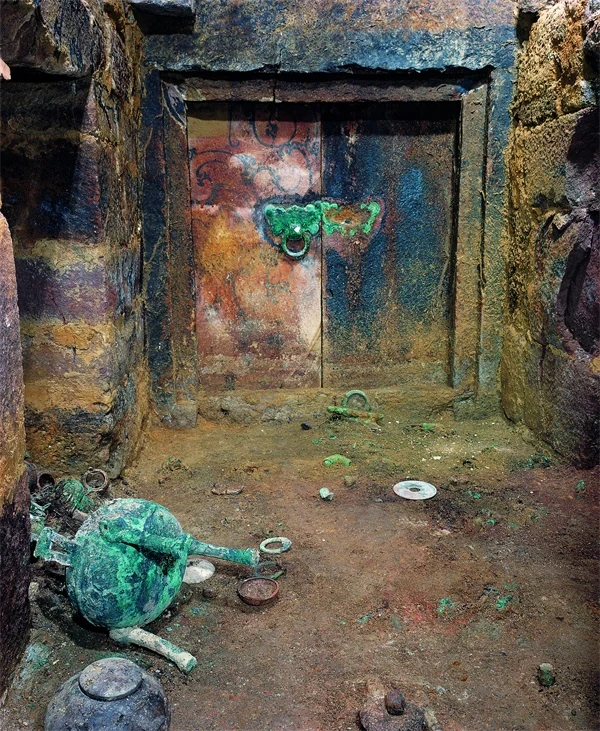
The suit came from the tomb of the ruler known as King Wen of Nanyue. His kingdom had its capital at the site of present-day Guangzhou. Nanyue existed from the late third century to 111 BCE, during a period when imperial authority and regional power were being reshaped in southern China.
Within that large political story, the suit brings attention back to one body and the work of preparing a royal burial. Its six parts turn familiar forms of clothing into something made for a tomb. The material, number of pieces and detailed construction give that burial a tangible scale.
Different work in one object
The gloves and shoes make the garment especially recognizable. Small elements have to follow the shapes of fingers and feet, while the larger body sections use another arrangement of jade, fabric and silk. A single name—silk-threaded jade suit—contains these differences in making.
Reused jade and offcuts also belong to this royal object. They link its monumental appearance to the practical work of selecting, cutting and fitting material. In the Royal Tomb exhibition, the suit sits within the archaeological story of Nanyue; its surface gives that story a close, physical detail.