The person beneath the lion
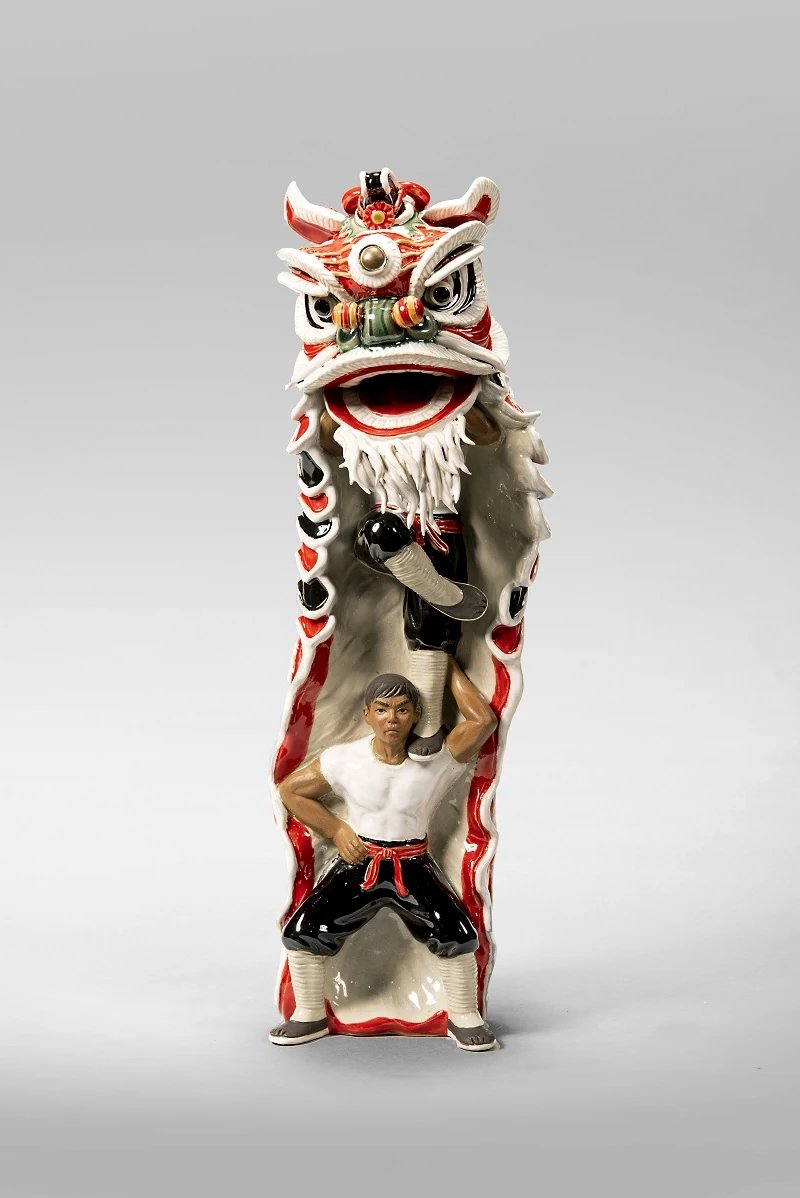
In Hu Zhibin's ceramic sculpture Lion Dance Brings Good Fortune, an open-mouthed lion rises above a performer in a white vest. Below the elaborate head, the human figure braces with bent knees. Red, white and black details hold the eye, while the figure's stance gives the sculpture its sense of effort.
The work keeps a moment of performance still. The lion's dramatic face and the person carrying the movement remain visible together. It is a contemporary example of Shiwan ceramic sculpture, where a familiar local subject becomes a carefully modeled object.
A bird among lychees
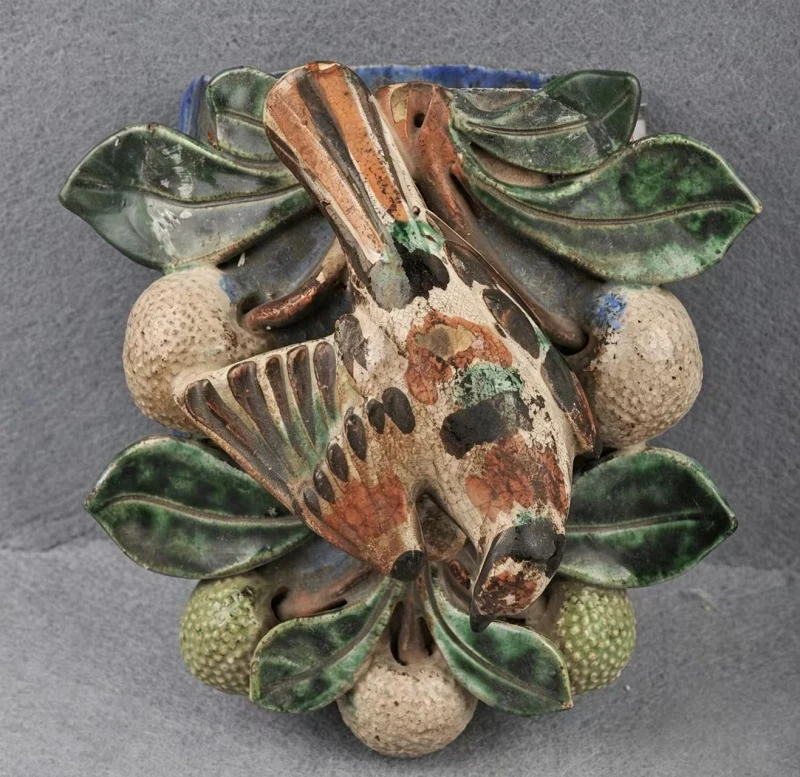
A Qing-period Shiwan wall hanging offers a quieter scene. Broad green leaves surround textured lychees; a bird bends among the fruit. Its wings, beak and body stand out from the background, bringing plant and animal forms into a compact relief.
The two works use clay at different scales and for different compositions. One gives a performance a standing human presence; the other gathers a bird, fruit and leaves into something made to hang on a wall. Both depend on the relationship between modeled forms and their glazed surfaces.
A tradition larger than one kind of figure
Nanhai Museum brought these works into its 2026 exhibition on Shiwan pottery, drawing together objects from the museum and works supplied by the New Shiwan Artistic Ceramics Factory. The exhibition gave individual makers and older objects a shared setting.
Shiwan's ceramic world also includes vessels, animals, miniature works and architectural decoration. A small sculpture belongs to that range of uses. Hu Zhibin's performer and the Qing bird-and-lychee relief offer two particular entries: movement and stillness, a contemporary named artist and an older object whose maker is not identified in the exhibition record.