An animal cast for a river crossing
A local account places iron oxen beside Guangji Bridge, where the metal figures faced the current. Their weight stood for protection against floods; their disappearance and later recasting carried the fear of loss into the bridge’s memory. The image is vivid: an animal of iron holding its ground beside moving water.
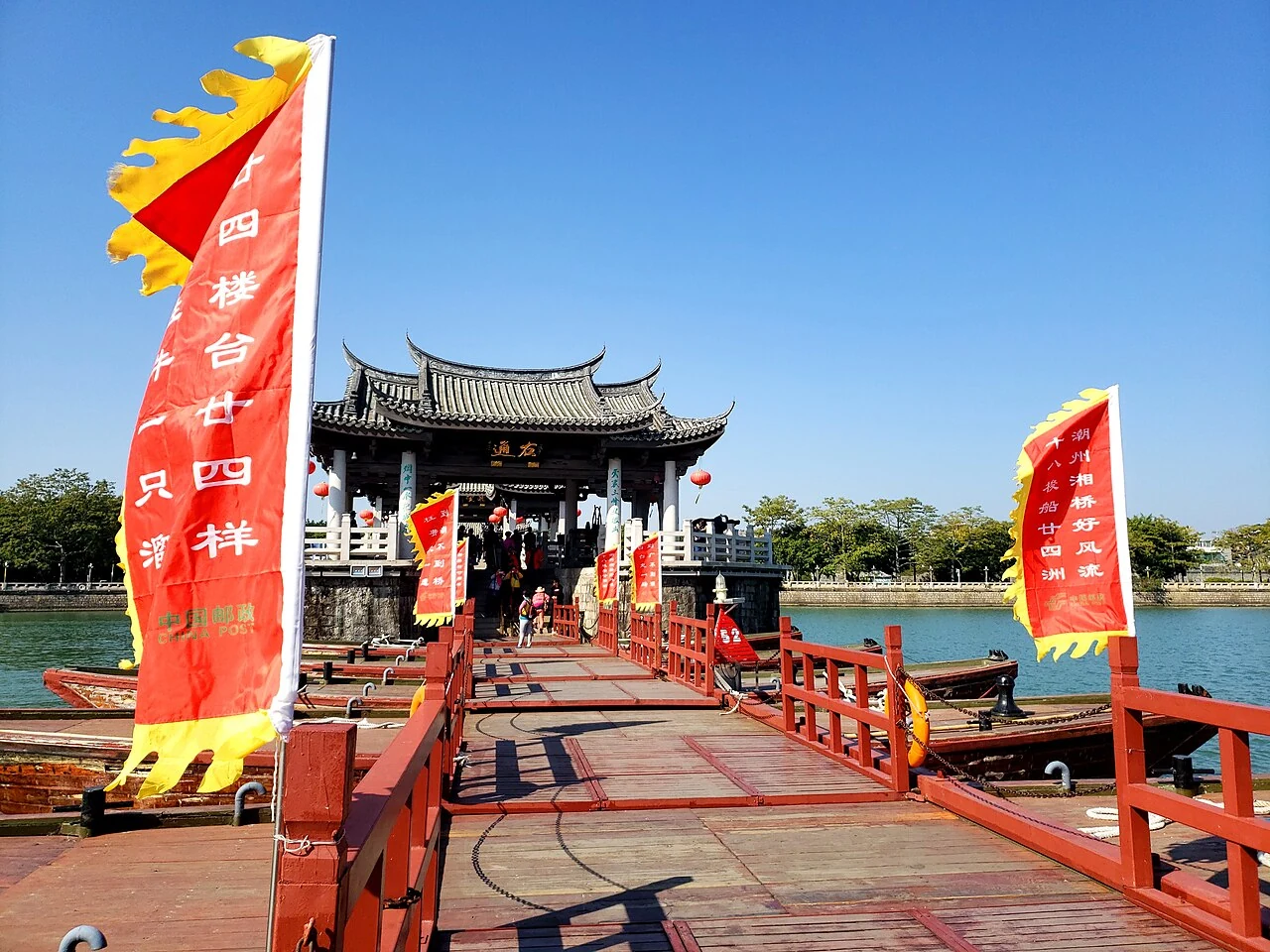
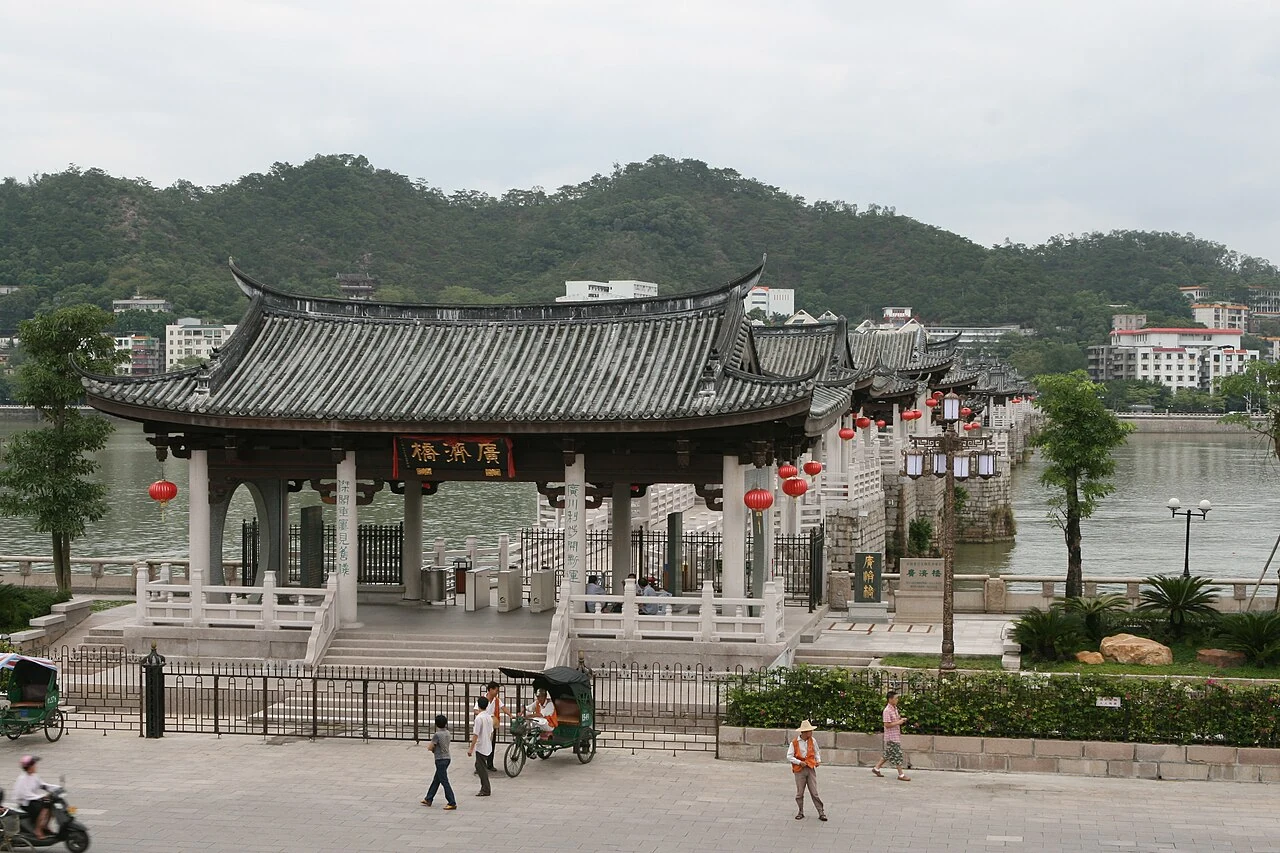
Guangji Bridge began as a floating span in 1171, with stone approaches added over later centuries. Its piers and removable boat span shaped a crossing that could adapt to river traffic. Beside that structure, the oxen gave the Han River’s power a human scale: weight against current, a wish for steadiness at the water’s edge.
A legend beside the bridge record
The bridge’s piers, boat span and restorations tell how people kept a crossing working. The iron-ox story tells what they hoped for beside it: protection from flood and the return of a familiar landmark. In local memory, the oxen stand at a vulnerable point where boats, banks and city life meet.
The Han River carried vessels and could also threaten the crossing. A heavy iron animal made a fitting guardian in the imagination: it expressed a wish for stability where water was always moving. The story of recasting adds another layer, as an object can change in material form while keeping its place in the community’s telling.
What survives when an object changes
In local telling, the oxen were made and remade as the bridge changed. Their remembered presence gives the landmark a guardian and turns repair into a story of continuity.
Guangji Bridge itself was repaired and restored over time. The iron-ox story offers an intimate counterpart: one figure carrying fears and hopes gathered around the river. Masonry and boats show practical adaptation; the legend keeps a human response to danger alive. The ox belongs to Chaozhou’s folklore, a familiar figure through which the river and its crossing remain memorable.