A bridge remembered in a line
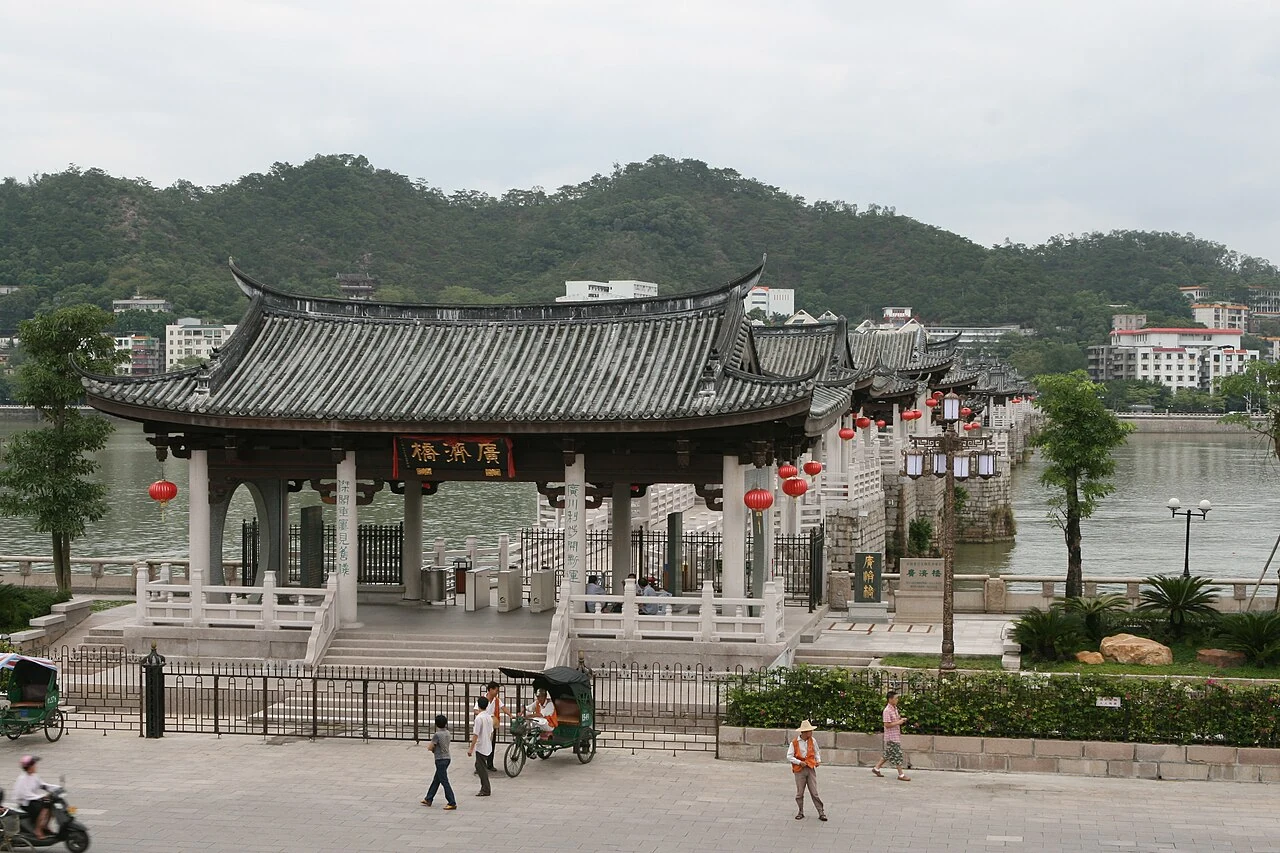
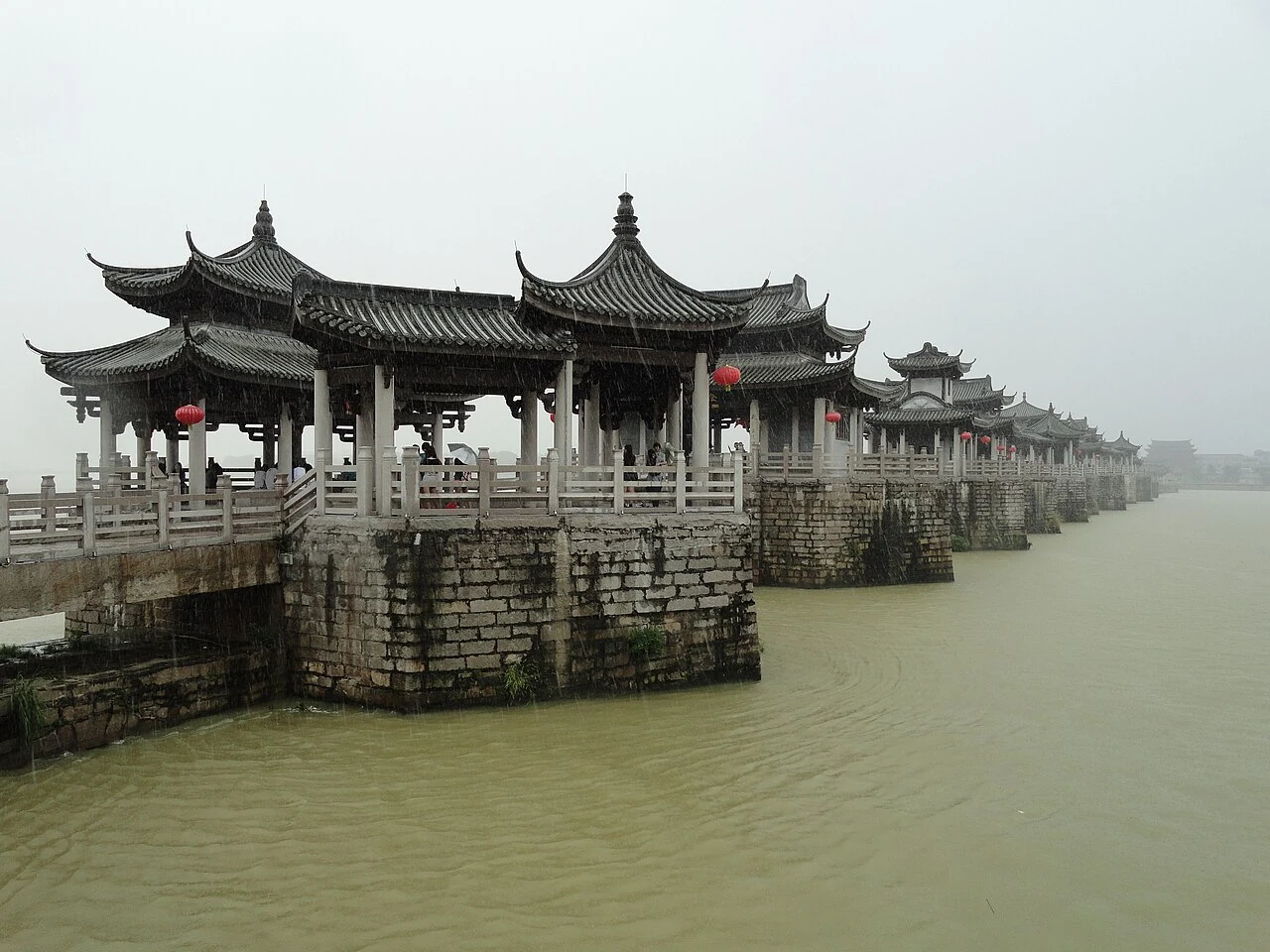
Guangji Bridge’s familiar local verse compresses a complicated structure into a memorable count: eighteen shuttle boats and twenty-four islets. The phrase makes the bridge sound like a landscape of its own, not simply a way to get from one bank to another. Stone piers, small islands, pavilions and boats each become part of a shared mental map.
The crossing began in 1171 as a floating span, then grew through the addition of stone approaches. In later forms, boats could be linked across the river during the day and drawn apart to let larger vessels pass. The verse gives that ingenious arrangement a rhythm that is easy to remember. Engineering became part of everyday speech, just as the river crossing became part of the city’s daily movement.
The iron ox and the river’s force
Local legend places iron oxen beside Guangji Bridge, facing the current. Their weight stood for protection against floods; their disappearance and later recasting carried the fear of loss into the bridge’s memory. The image remains vivid: an animal of iron holding its ground beside moving water.
The bridge changed as river conditions and navigation changed. Stone piers and a removable boat span made the crossing work; the oxen gave people a figure through which to remember flood danger and the effort of restoring a familiar route. One belongs to the bridge’s physical design, the other to the stories told beside it.
A landmark carried in public memory
Crossings gather the life that moves between two banks. Guangji Bridge carried people and goods, and shops once occupied parts of its route. A short verse made its unusual arrangement easy to remember; the iron-ox story gave flood danger a protective image.
Today, the bridge is both a working urban landmark and a place in Chaozhou’s shared imagination. Its stonework records construction and repair, the verse keeps a distinctive shape in memory, and the oxen belong to a story handed down beside the river. Together, these details give the crossing a history made of engineering, daily use and local telling.