A crossing assembled in stages
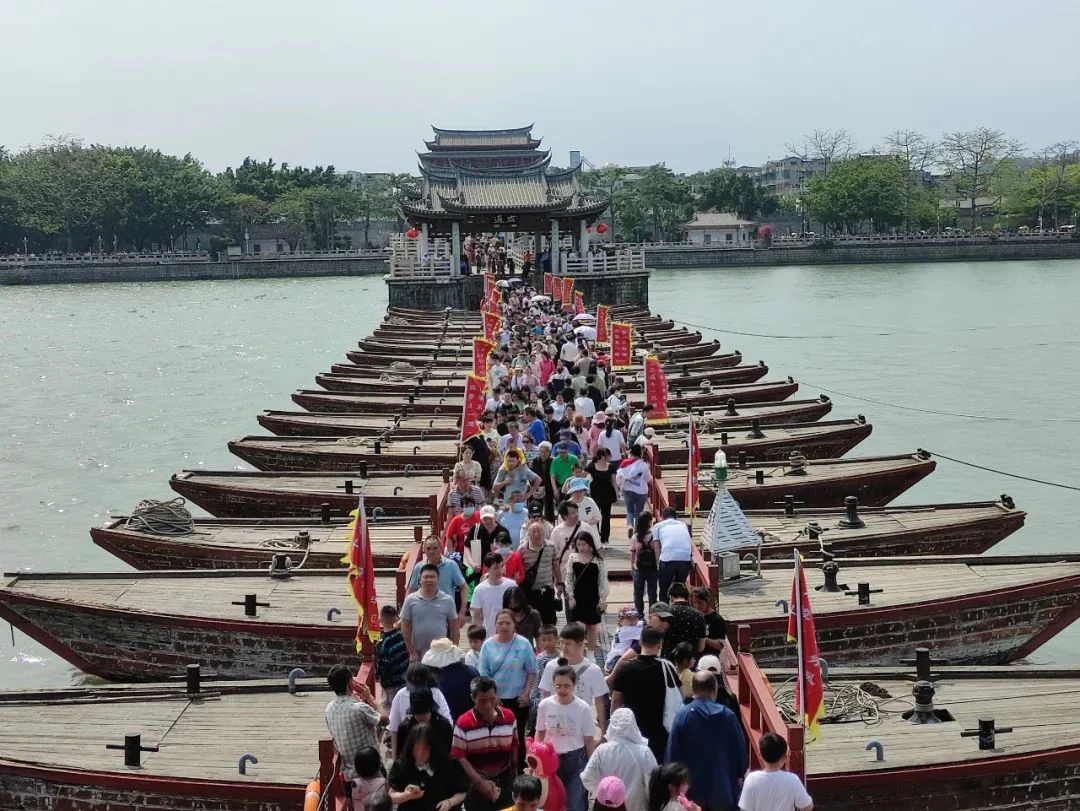
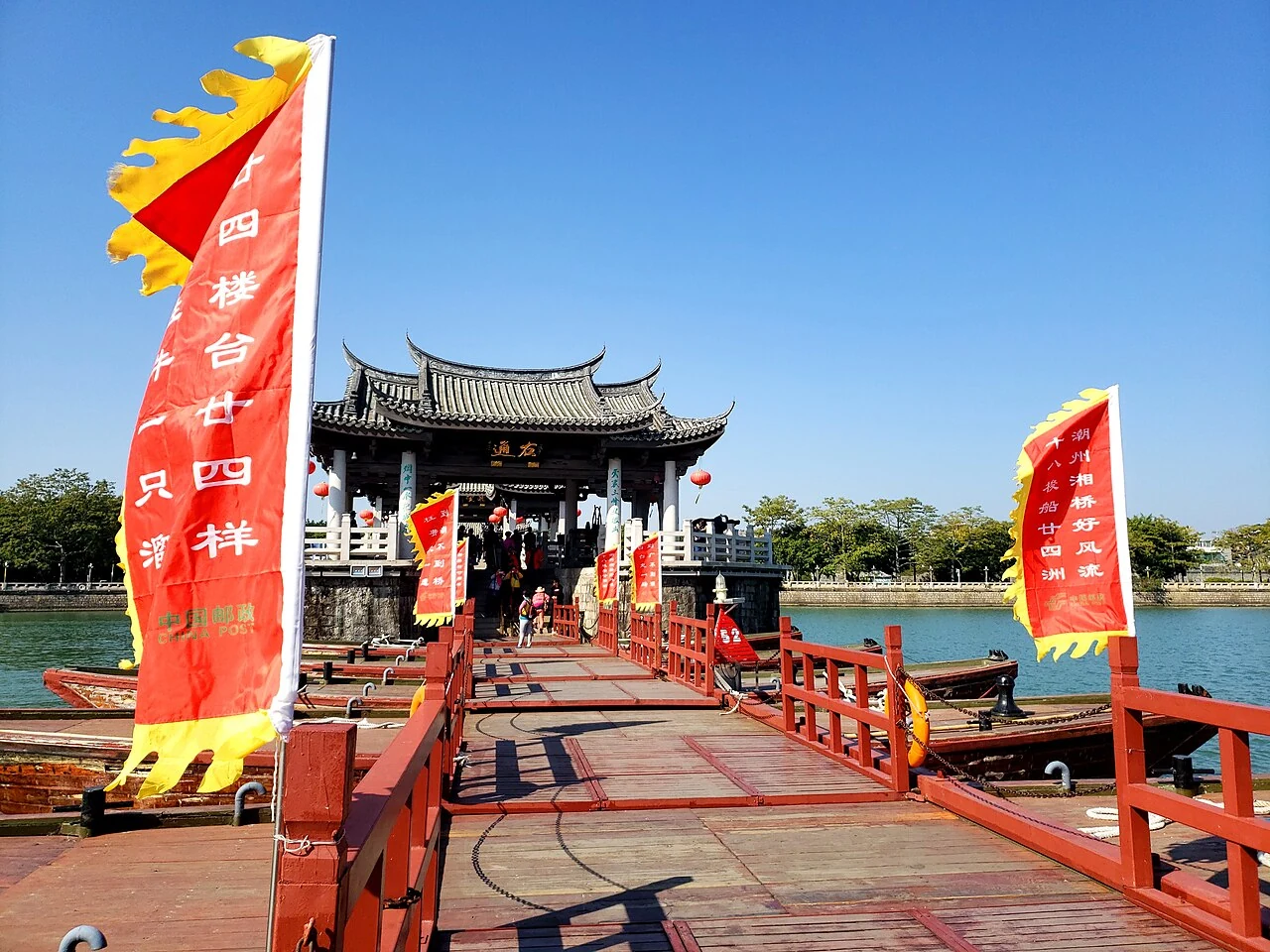
At the eastern edge of Chaozhou’s old city, Guangji Bridge brings distinct structures together. Stone piers carry the approaches from both banks; a line of boats forms the middle span. The arrangement carries pedestrians across the broad river while preserving room for vessels along its channel. The bridge’s silhouette is practical before it is picturesque: masonry gives pedestrians a stable route, while the boat section can be separated when river passage matters.
The bridge began in 1171 as a floating crossing of eighty-six boats, according to the heritage accounts. Over later centuries, stone approaches lengthened from each shore and the central passage remained distinctive. A local verse remembers the Ming-period arrangement as eighteen shuttle boats and twenty-four islets. Restoration completed between 2003 and 2007 returned this historic arrangement to the river in a carefully reconstructed form.
A bridge that leaves a channel
The Han River was also a route. A fixed bridge across the whole waterway would have made movement easier for people on foot but harder for vessels traveling along the river. The removable central span addressed that tension. The bridge therefore belongs to two kinds of movement at once: across the water and along it. That double purpose helps explain why the boats are not merely decorative pieces added to a stone monument.
The structure changed through damage, repair and rebuilding. Early floating arrangements gave way to longer masonry approaches, while navigation continued to shape the center. The different components preserve this history in their sequence: solid pier, pavilion, opening, boat. Rather than assigning one inventor a finished design, the bridge is better understood as a civic work repeatedly adjusted to the river and the needs of the city around it.
From passage to urban landmark
Guangji Bridge linked neighborhoods and helped people and goods cross a waterway that had interrupted overland journeys. Bridge houses and adjoining spaces also supported commerce; the familiar saying about a mile-long bridge and a mile-long market recalls that trading life. The river setting connected Chaozhou to routes beyond the city, while the crossing gave the old urban core a direct relationship with its eastern bank.
Today the piers, pavilions and central boats make the bridge easy to recognize, but its lasting interest lies in how the parts work together. It is a protected historic site and a city landmark, yet its original logic remains legible: build enough to connect the banks, then leave a way for the river to keep carrying traffic. Looking from shore, the bridge reads as a negotiation between solid ground and a moving channel, not as a line imposed upon water.