From the journal

Barkhor: A Temple Circuit with a City Around It

Around Jokhang, Barkhor brings devotional movement, trading streets and the thresholds of old courtyards into close proximity.

In the same city · Lhasa ↗
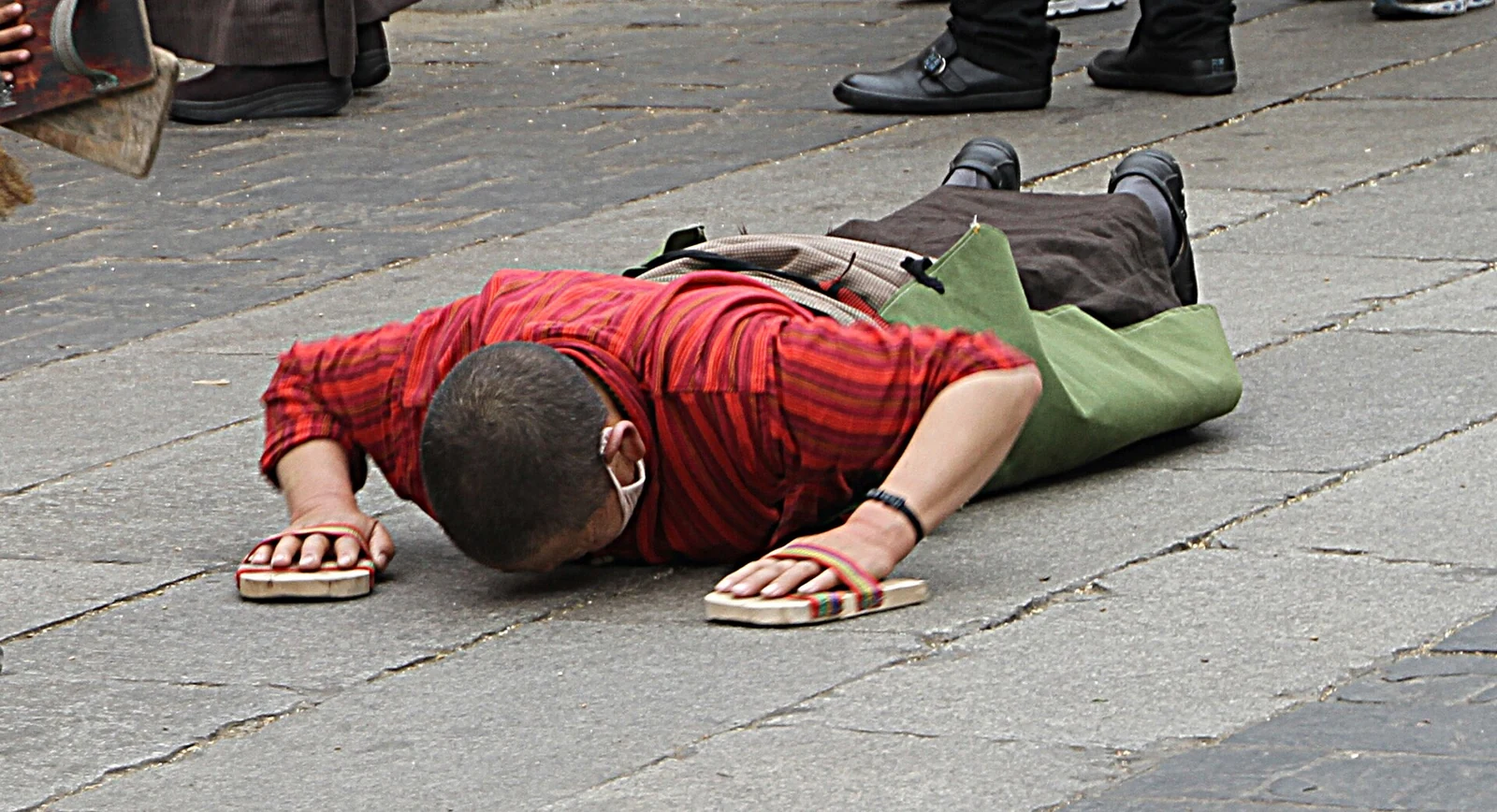
A worshipper prostrates on the paved ground in the Barkhor area.
Devotional practice gives the Barkhor circuit one of its characteristic rhythms.

The temple gives the route its centre

Barkhor is the circuit around Jokhang’s outer walls, the middle circle between an inner temple route and the larger Lingkhor of historic Lhasa. Its form begins with a relationship: people move around a religious centre. The street is consequently understood through the building it encloses as well as the buildings that line its outer edge.

This makes Barkhor different from a straight avenue connecting two destinations. A circuit returns, and the same places are encountered in succession. Doorways, corners and changes of frontage become familiar points within a continuous movement around the temple.
A circuit opens into a network

More than thirty streets and lanes extend through the wider Barkhor old city, according to a July 2024 Xinhua report. Their relationship with the circuit gives the district both a centre and many possible directions. The route around Jokhang is only one part of the way the neighbourhood works.

Shops and courtyard entrances occupy the same wider network. Their thresholds lead away from the public street into places with different scales and uses. The contrast is visible even without entering: a continuous frontage can conceal an open court, while an unassuming doorway may lead into a substantial older building.

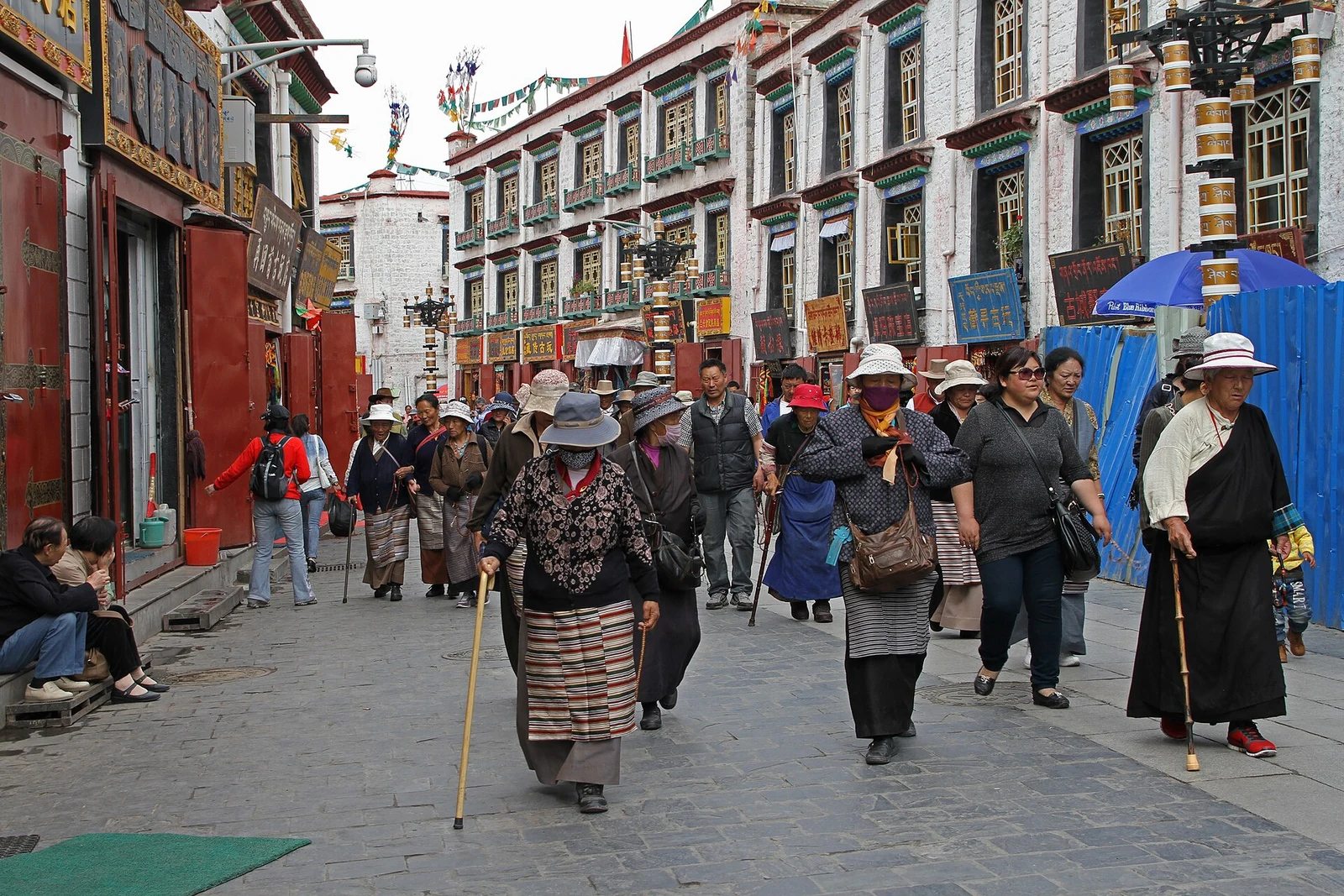
People walk between the shopfronts of the Barkhor district.
Pilgrimage and everyday urban movement share the streets around Jokhang.

Movement shares space with daily life

The 2024 report describes old courtyards accommodating homes, food businesses, lodging and cultural shops. These activities give Barkhor another set of rhythms alongside pilgrimage. Goods arrive, people work and neighbours continue to use spaces that visitors may first encounter as heritage.

The circuit is therefore a useful beginning for understanding the district, but the adjoining lanes explain its depth. Jokhang provides the religious centre; the street carries movement around it; the courtyards hold more private and local histories. Their proximity makes Barkhor a distinctive part of Lhasa’s living city.

Continue exploring · Barkhor ↗
Photo credits and rights
  1. Devotional practice gives the Barkhor circuit one of its characteristic rhythms.Gerd Eichmann · CC BY-SA 4.0 Photo source ↗ Rights information ↗
  2. Pilgrimage and everyday urban movement share the streets around Jokhang.Gerd Eichmann · CC BY-SA 4.0 Photo source ↗ Rights information ↗