A food that can be given
Xinhui Chenpi is often discussed as a local specialty, but its social life also includes gifting. A Xinhui government cultural feature describes chenpi as something people present to relatives and mentions collections associated with dowry traditions. The detail shifts the scale of the story: dried peel moves from orchard and workshop into relationships between households. A gift carries taste and provenance, but also the intention to offer something durable and locally meaningful.
From harvest to keeping
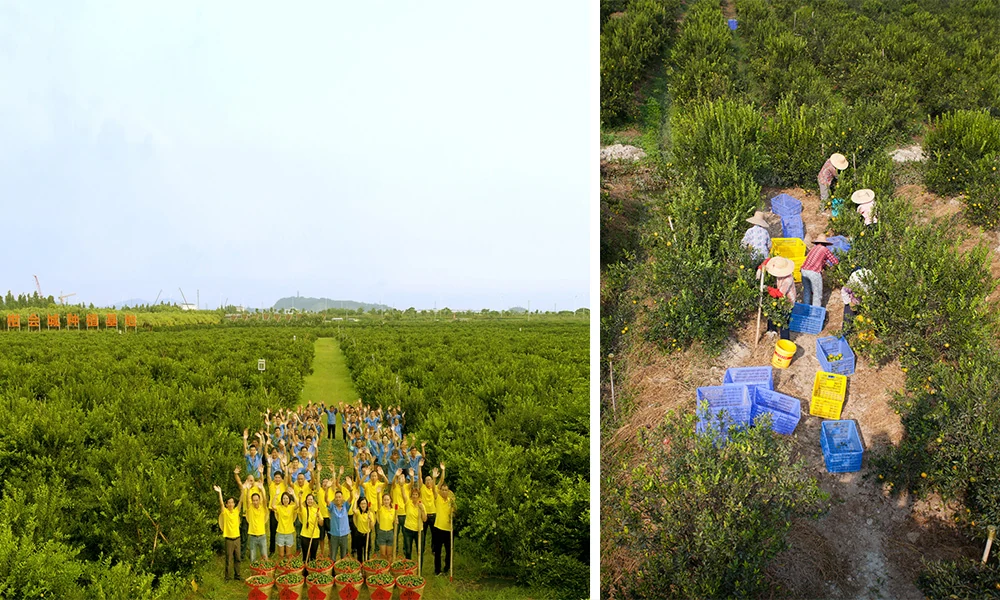
The craft begins with tea-branch mandarins grown in Xinhui’s protected production area. Local descriptions follow the peel through selection, opening, drying and aging. A gift made from chenpi therefore carries a process, not simply a finished ingredient. Peels must be handled and stored over time; their value is linked to production care and place. The tangible object is light, but its making stretches across seasons and years.
A tradition of household passage
A Xinhui government feature describes chenpi in dowry collections, suggesting how a food can stand for continuity between generations. It offers a focused image: a stored ingredient chosen to accompany a new household, linking inheritance, regional identity and future use. It is material memory, held in jars and passed along with family belongings. The practice gives a local product a role beyond the kitchen, joining the movement of people between households to the slow work of preserving peel.
Place inside the present
The geographic indication connects the name Xinhui Chenpi with its production area and local mandarin, while intangible-heritage recognition records knowledge carried by makers. Together, these facts explain why a gift can mean more than rarity or price. It expresses a relationship to place and to people who preserve a process. At a table, peel may enter a dish; in a family store, it may wait for another occasion. Either way, a local landscape enters domestic life and carries its memory forward, linking a household’s customs to the fields and workshops beyond it.