From the journal

Weizhou: Reading Fire and Water in the Coast

Basalt, fragmented volcanic deposits and marine erosion reveal how Weizhou’s coast was built and reshaped over time.

In the same city · Beihai ↗
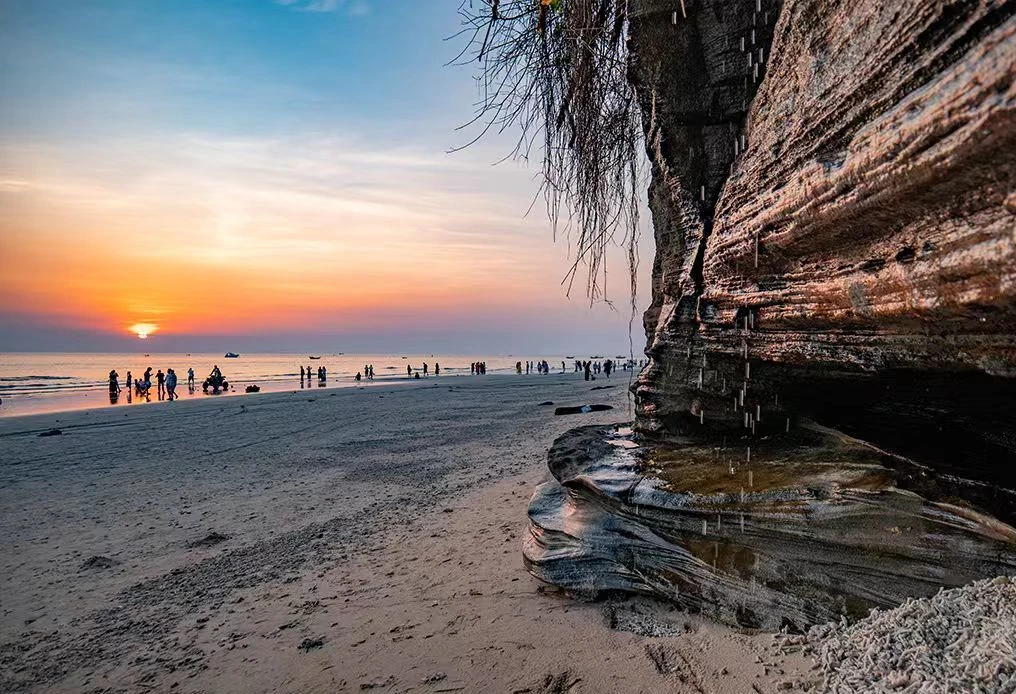
Water drips from a layered cliff beside a sandy beach where visitors watch the sunset.
Dishui Danping on Weizhou Island: layered cliffs, dripping water and the adjacent beach, pictured by CNTO Singapore.

An island built in stages

Weizhou's volcanic history has more than one stage. A 2006 study distinguishes earlier basaltic foundations from later volcanic deposits associated with Nanwan. Coherent rock masses and deposits made of fragments preserve different parts of that sequence.

The contrast runs through the island's coastal textures. Some material cooled into a solid body; other deposits accumulated from particles and pieces. The shore brings these records of formation into contact with the continuing action of the sea.
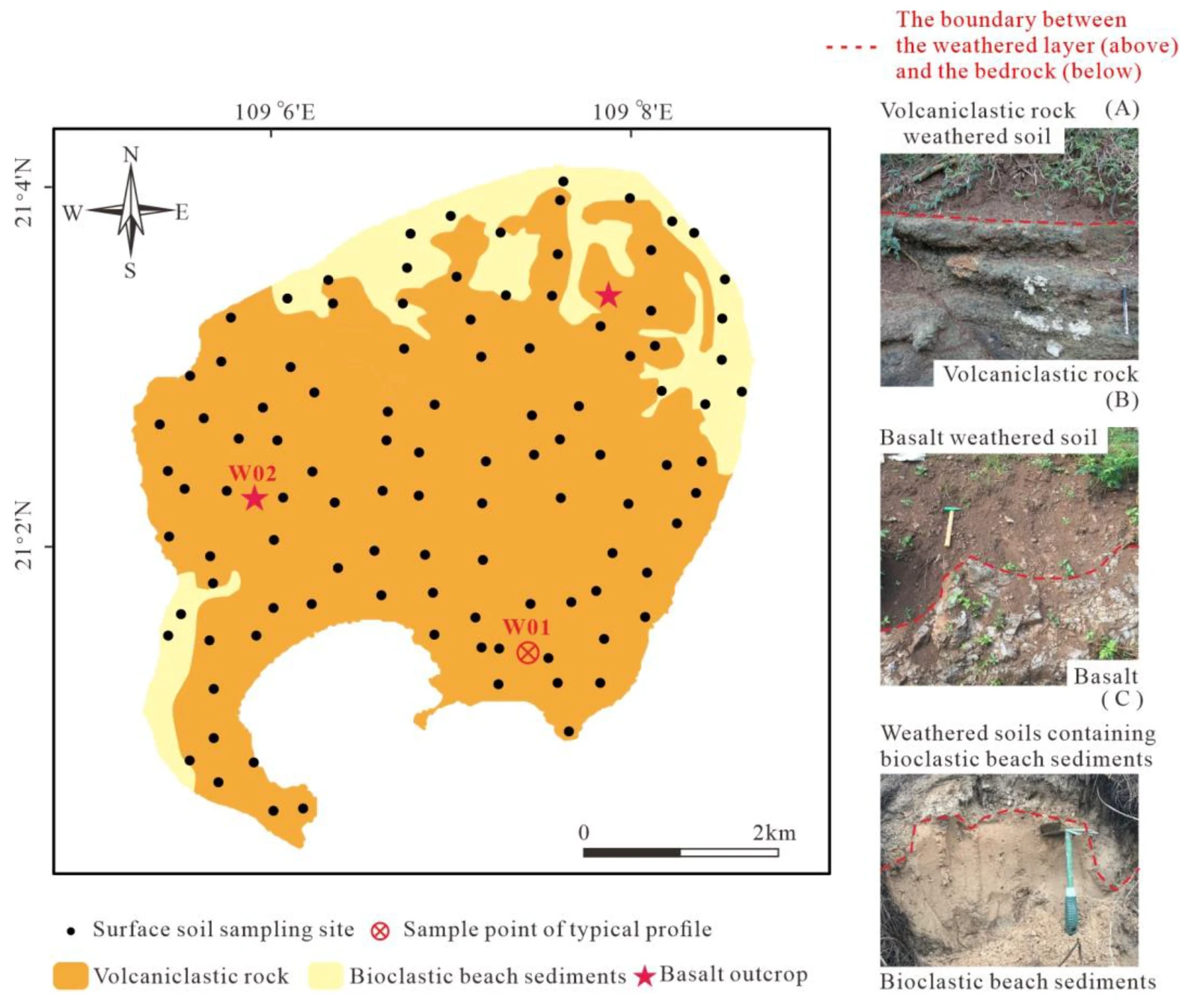
An island sampling map sits beside three labeled photographs showing weathered soil above different parent materials.
Research sampling map and field photographs of Weizhou’s volcaniclastic rock, basalt and bioclastic beach sediments, from Bi, Fu and Fu, Land 14(1), 35, Figure 2.
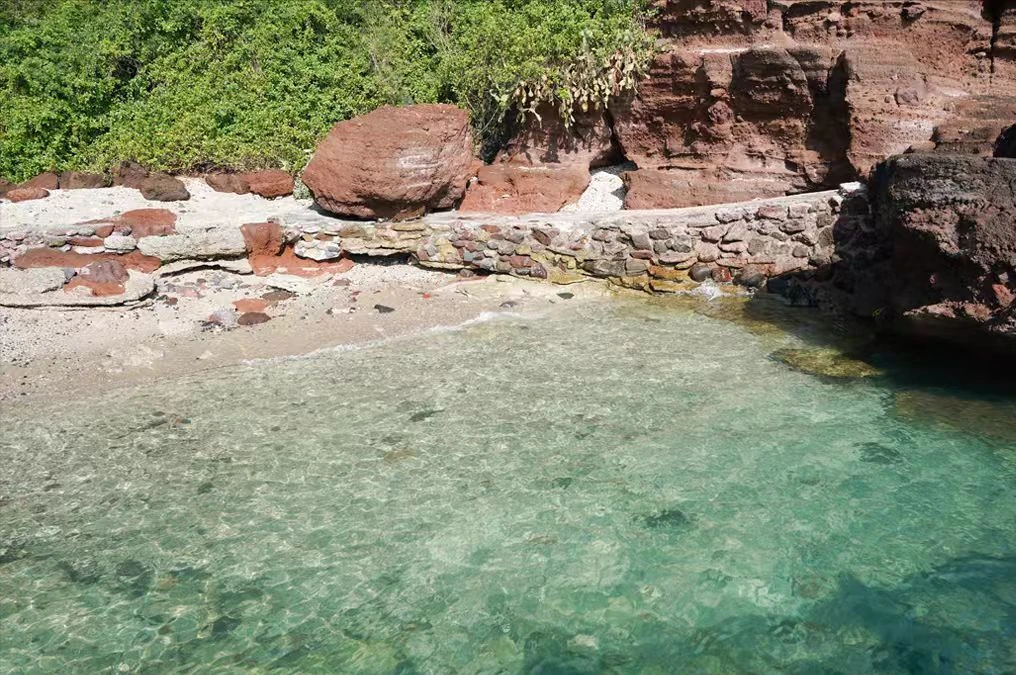
Reddish layered rock and a low stone path border clear shallow seawater.
Coastal rock faces, waterline and visitor infrastructure pictured beside CNTO Singapore’s account of Weizhou’s Eyu Shan volcanic park.

When magma encounters water

The Nanwan research describes phreatomagmatic activity: explosive interaction between magma and water. Fragmentation and deposition can produce a record very different from smoothly flowing lava.

Layering, grain differences and embedded pieces belong to that story of broken and deposited material. Water took part in making volcanic deposits long before waves began reshaping the resulting shore. Fire and water meet within the island's formation history as well as along its present coast.

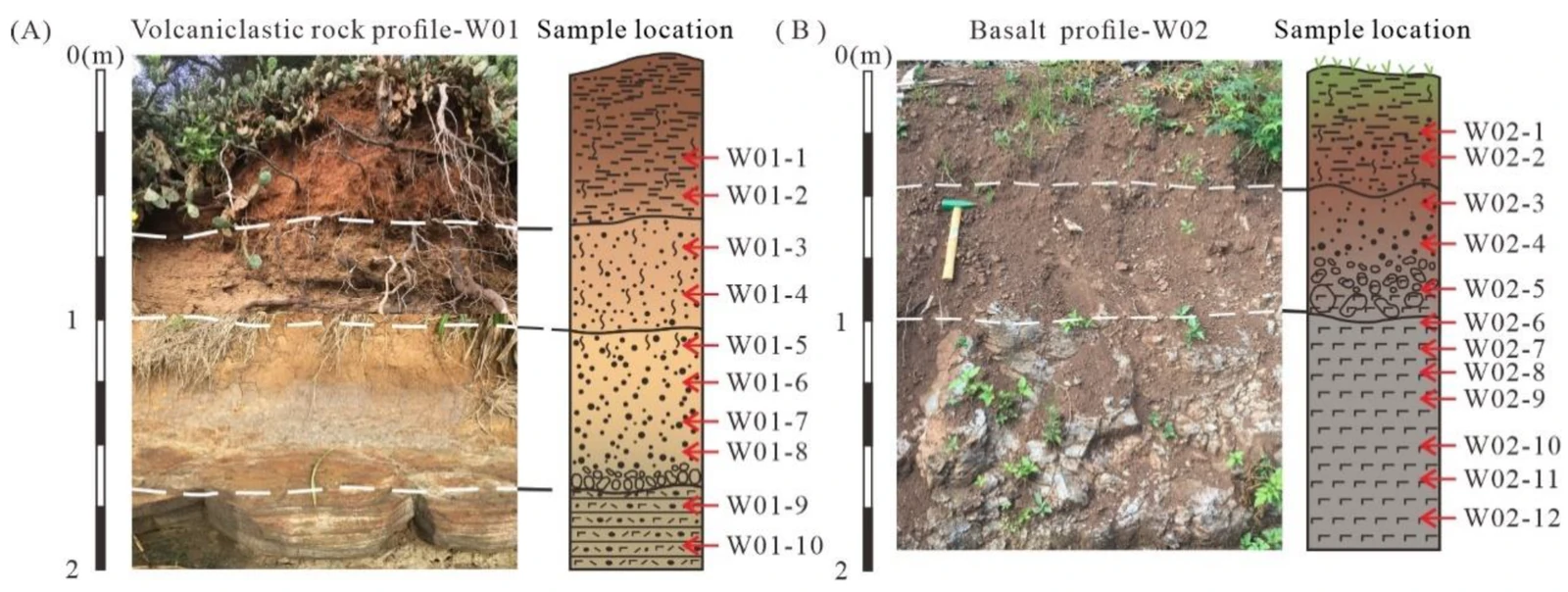
Two exposed soil-and-rock sections appear beside labeled diagrams and depth scales.
Research profiles W01 and W02 compare volcaniclastic-rock and basalt weathering on Weizhou; W01 is identified as Wucaitan. Bi, Fu and Fu, Land 14(1), 35, Figure 3.

Nanwan also records removal

The same study describes the Nanwan crater's seaward side as extensively modified by marine erosion, contributing to the bay's present form. Construction and removal both shaped the coastline.

The inherited properties of the rock meet the continuing work of the sea. A headland or opening can be the surviving part of a landform altered over a long period. Nanwan's outline carries this later history of erosion alongside the deposits from which the island was built.

Samples carrying a date

The 2006 researchers used optically stimulated luminescence dating on sandstone fragments enclosed in volcanic deposits. They proposed an age of around thirty thousand years for the Nanwan eruption they studied. The estimate concerns that event and those samples within the island's longer geological sequence.

Later petrological research examines the chemistry of basalts and possible deep sources of the magma. Field exposures and laboratory measurements reveal different scales of the same geological history, from fragments enclosed in a deposit to models of processes deep below the surface.

The sea continues the work

Weizhou's shoreline brings volcanic construction and marine alteration together. Differences in texture, colour and shape preserve traces of how deposits formed and how the coast has changed. Interpretive signs connect visible features with the research behind their explanation.

Cliff edges and wave-exposed surfaces remain active coastal terrain, with access governed by permitted routes and local conditions. The rocks are part of a changing island: above the water they record formation and erosion; below it, living communities continue another chapter along the shore.

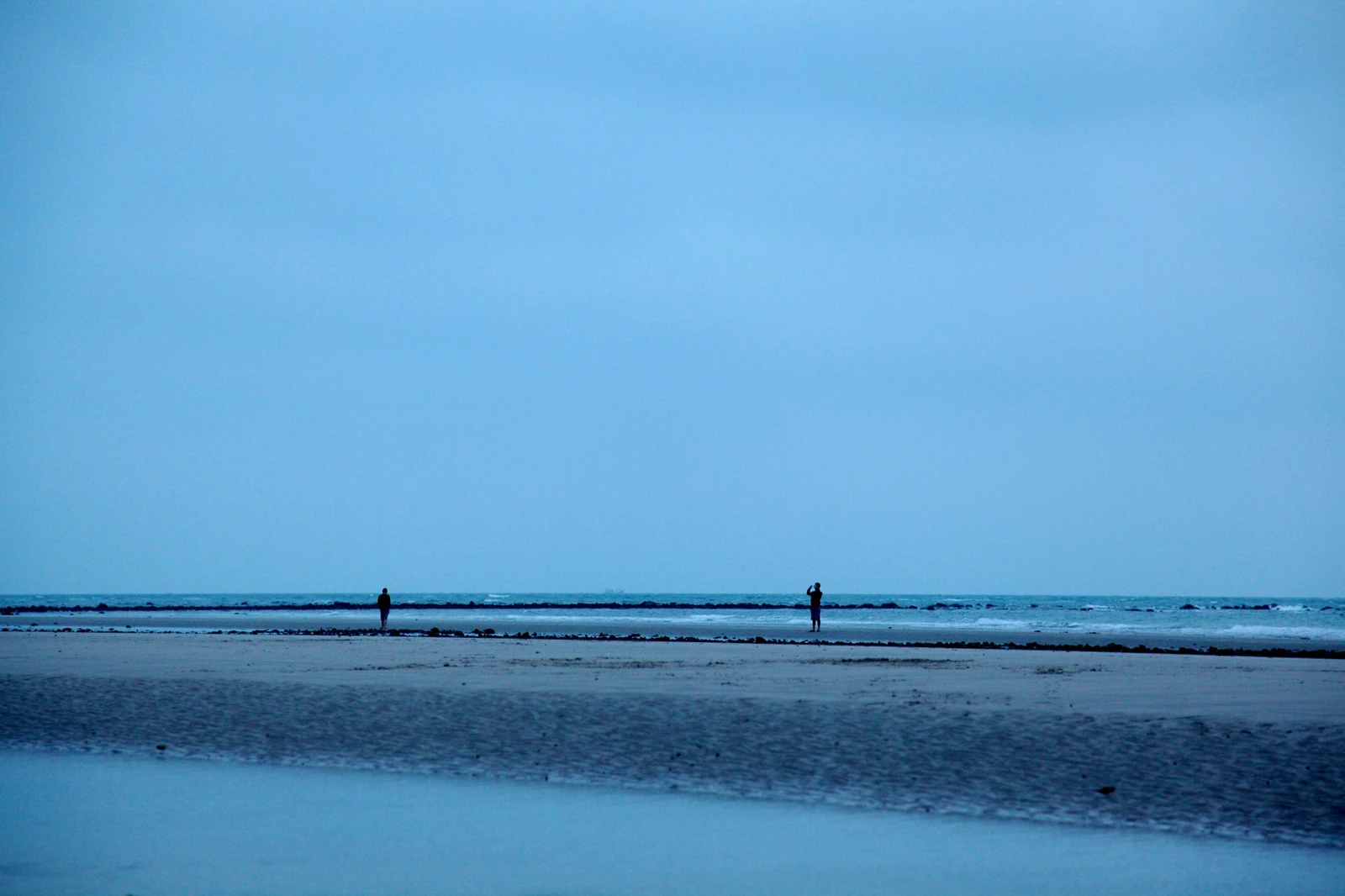
Two distant visitors stand on a broad tidal shoreline under a blue-toned sky.
Weizhou Island’s tidal shoreline, photographed on 2 May 2013.
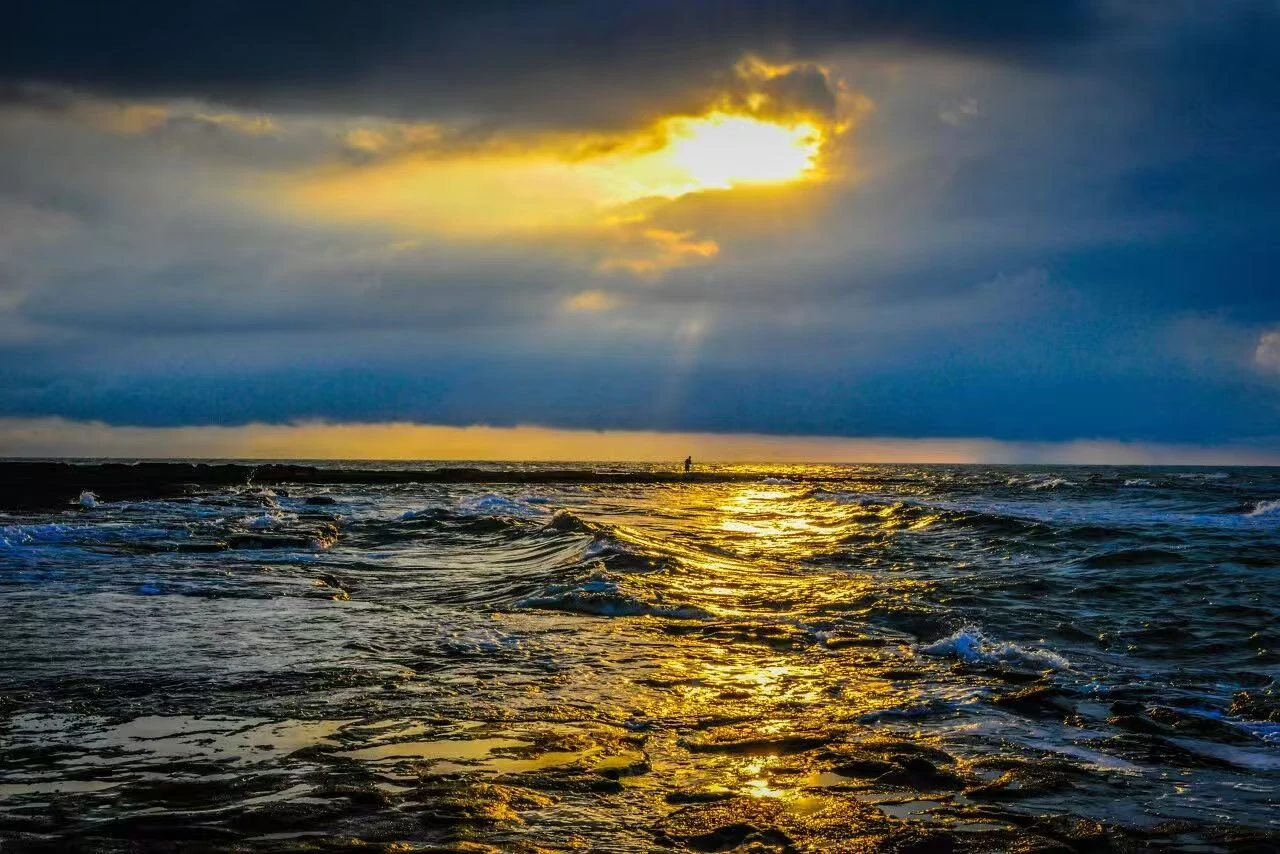
Waves wash over a low rocky shore beneath dark clouds and bright sunlight.
Waves and tides covering and uncovering Wucaitan’s rocky shore on Weizhou, pictured by CNTO Singapore.
Continue exploring · Weizhou Island ↗
Photo credits and rights
  1. Dishui Danping on Weizhou Island, pictured by CNTO Singapore. The layered cliff, dripping water and adjacent beach make several parts of the coast visible in one view. Capture date unconfirmed; photographed access does not establish current safety or opening conditions.China National Tourist Office in Singapore; photographer not stated · Rights information Photo source ↗ Resized and converted to WebP; full composition retained.
  2. Research sampling map and field photographs of Weizhou’s volcaniclastic rock, basalt and bioclastic beach sediments, from Bi, Fu and Fu, Land 14(1), 35, Figure 2.Ran Bi, Wei Fu and Xuanni Fu, Land 14(1),35, Figure 2 / CC BY 4.0 · CC BY 4.0 Photo source ↗ Rights information ↗ Resized and converted to WebP; full composition retained.
  3. Coastal rock faces, waterline and visitor infrastructure pictured beside CNTO Singapore’s account of Weizhou’s Eyu Shan volcanic park.China National Tourist Office in Singapore; photographer not stated · Rights information Photo source ↗ Resized and converted to WebP; full composition retained.
  4. Research profiles W01 and W02 compare volcaniclastic-rock and basalt weathering on Weizhou; W01 is identified as Wucaitan. Bi, Fu and Fu, Land 14(1), 35, Figure 3.Ran Bi, Wei Fu and Xuanni Fu, Land 14(1),35, Figure 3 / CC BY 4.0 · CC BY 4.0 Photo source ↗ Rights information ↗ Resized and converted to WebP; full composition retained.
  5. Weizhou Island’s tidal shoreline, photographed on 2 May 2013.Lun Joe · CC BY 2.0 Photo source ↗ Rights information ↗ Resized and converted to WebP; full composition retained.
  6. Waves and tides covering and uncovering Wucaitan’s rocky shore on Weizhou, pictured by CNTO Singapore.China National Tourist Office in Singapore; photographer not stated · Rights information Photo source ↗ Resized and converted to WebP; full composition retained.