The Grand Bazaar street runs for about 730 metres through Tianshan District. Arches and tile make a visitor think of Xinjiang before any object is examined. The street itself is a planned public room in a modern capital. A purchase made under those arches is evidence of today's trade. It does not date the building, or the thing sold, to the old Silk Road.
From the journal
Making, in the middle of the capital
Ürümqi's Grand Bazaar is a designed street where instruments, cloth and food are still made in public.
In the same city · Ürümqi ↗A market with a recent plan
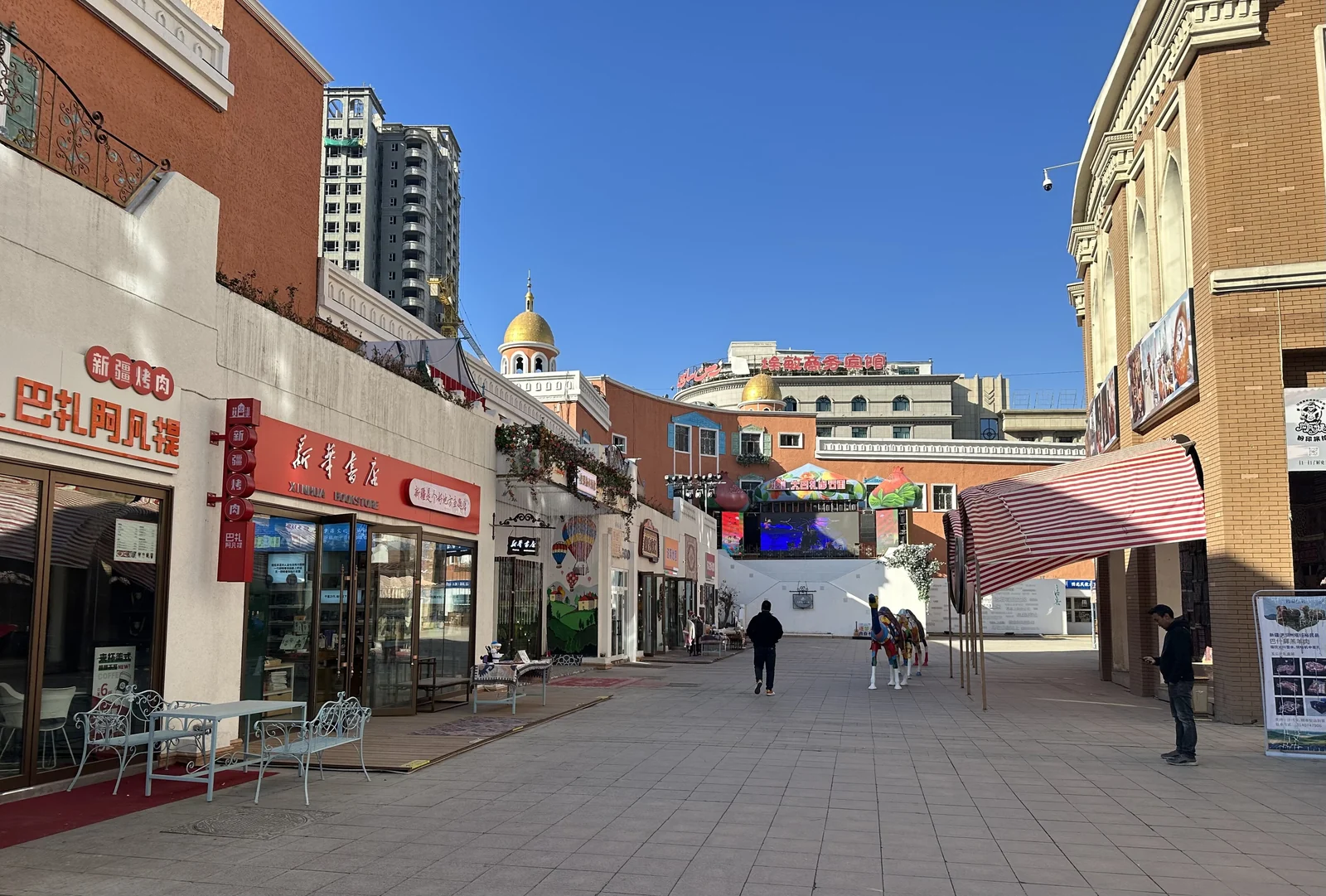
Watch the tool, not only the window
The regional culture department's 2023 list describes this street as a place for instruments, carpets, pottery, clothing and other crafts, with space set aside for making as well as selling. That distinction matters. A finished piece in a window and a person still at a bench are different kinds of attention. Food stalls sit in the same walk, so the capital's introduction can include taste without pretending one snack explains a cuisine.
One room in a large city
Ürümqi spreads far beyond the bazaar, into ordinary neighbourhoods, universities and roads that leave for the mountains. This article keeps to the room where a newcomer can see hands at work. Kashgar's old city and Hotan's Tuan Cheng are also inhabited craft streets, but they are not the same city and not the same renovation. The useful link is the act of making in public, not a single style of arch.