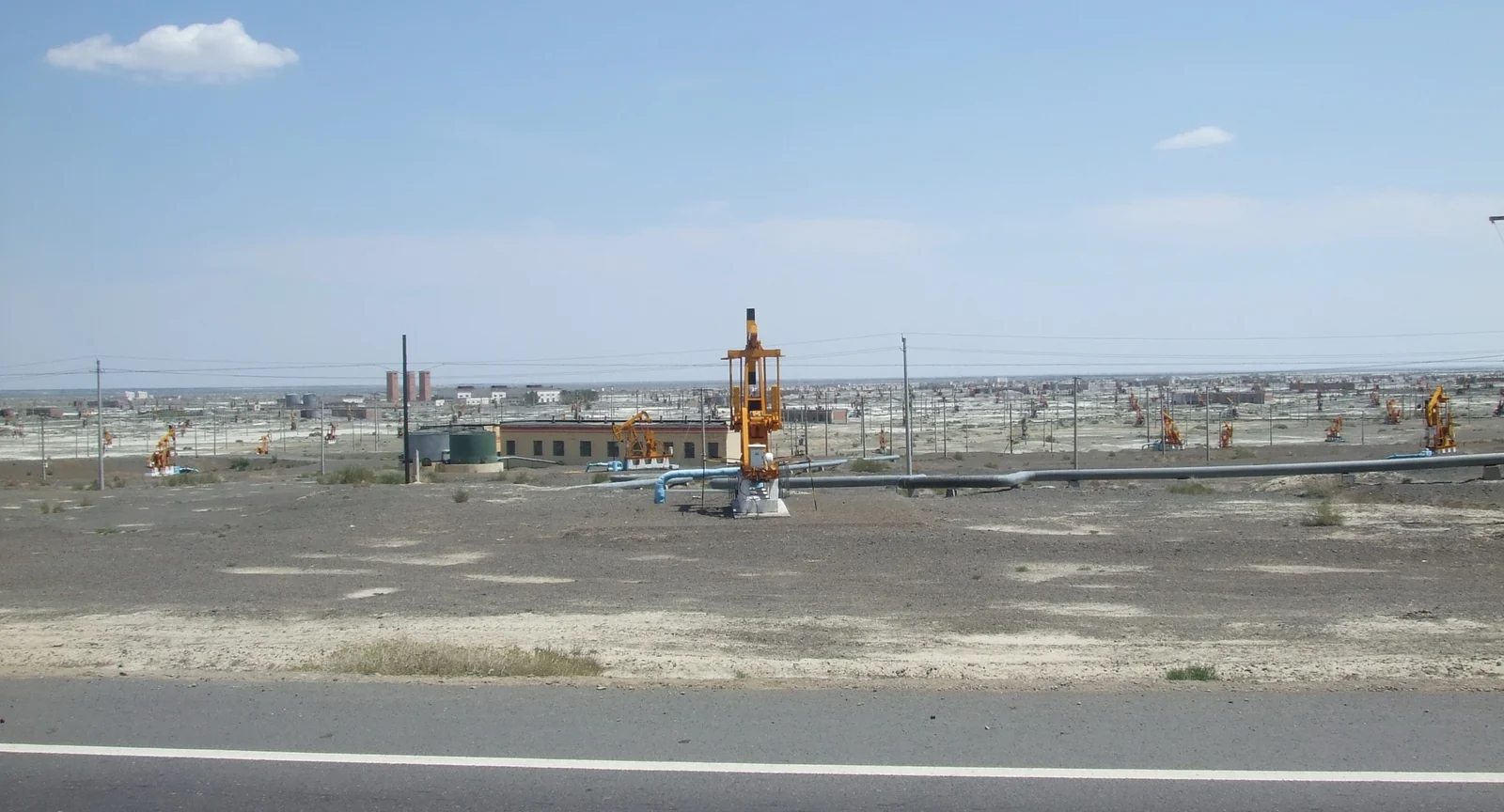
On 29 October 1955, Karamay No. 1 well produced industrial oil. A feature published through the regional people's congress dates the city to July 1958 and calls it a city born of oil. Those sentences locate the place. The drilling-crew story in the same feature stays with that feature. The two dates are enough to see why the streets exist.
From the journal
A city after the well
Karamay's public story can begin with two dates: industrial oil in 1955 and a city government in 1958.
In the same city · Karamay ↗Two dates are enough
Not an oasis town
The name points to black oil. The site is the dry edge of the Junggar Basin, not a river fan planted with grapes or melons. That is why Karamay belongs in a cultural reading of Xinjiang. The region is not only old walls, orchards and pasture. A twentieth-century city, built because a well flowed, is part of the same map.
A walk added later
The regional culture department lists the Karamay River scenic area as a public place with a small craft hall. Shops there include work from well outside the oilfield. The riverfront does not replace the well. It shows what the city made for ordinary evenings after the field was already the reason for the streets. A visitor can hold both: industry as origin, and a promenade as later urban life.