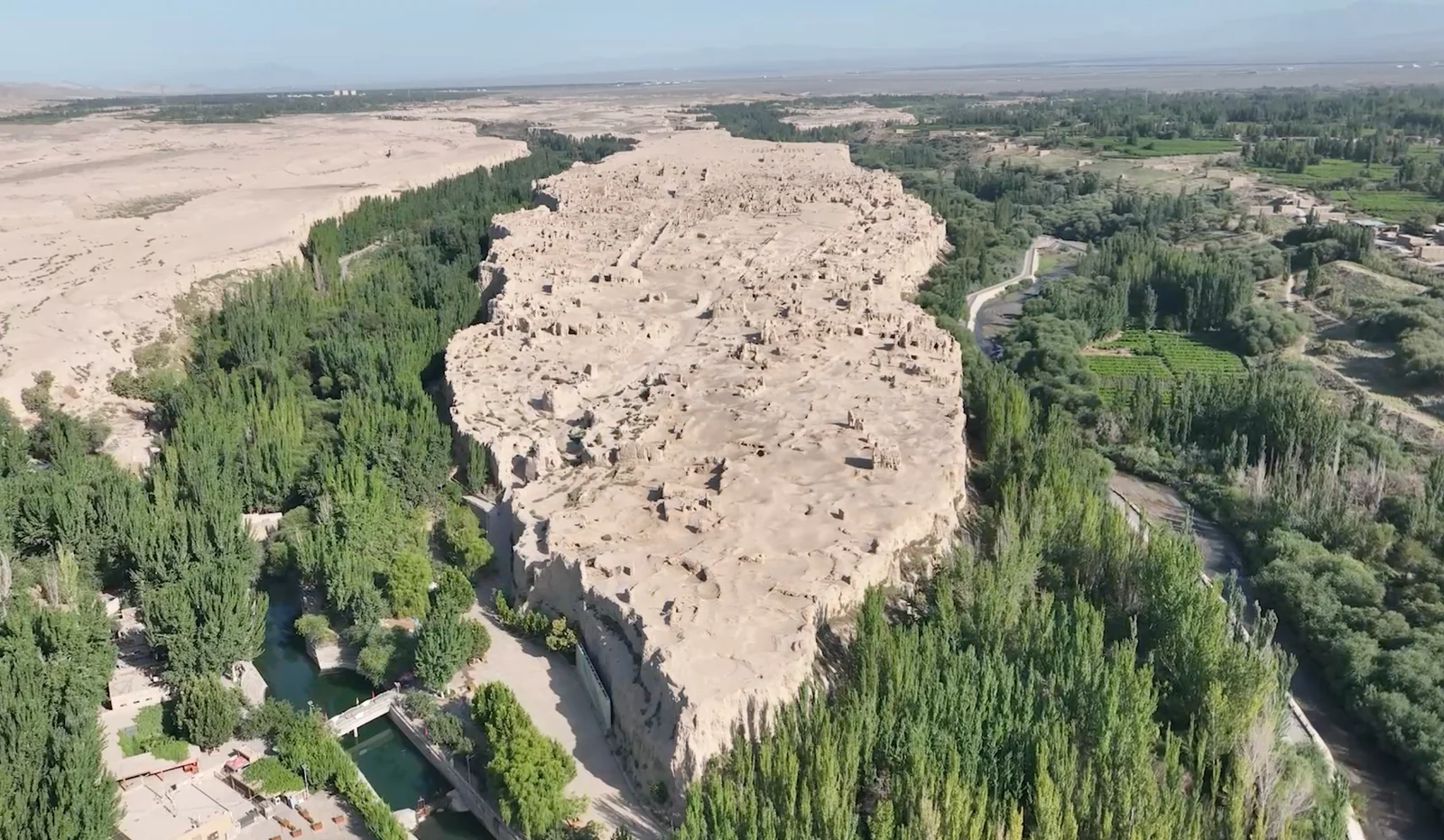
Yar sits on a terrace in the Yarnaz valley, about ten kilometres west of Turpan's centre in the city's account. Channels split on the north side and meet again to the south. Cliffs fall away, in that account, by as much as about thirty metres. The municipal page quotes the Hanshu: the seat of Nearer Jushi was Jiaohe, so called because the river divided and ran beneath the walls. The name is a description of water before it is a monument.
From the journal
A city cut downward
Yar City stands on a terrace between two channels, with rooms made by digging rather than by building up.
In the same city · Turpan ↗The river explains the name
Rooms left standing in the earth
The same heritage account describes the method as cutting down. Builders marked the walls, then dug the rooms, yards and lanes out of the terrace. What remained was the wall. Dry weather and the compact earth helped the negative city survive. Wind, flood and earthquakes have also damaged it, and reinforcement campaigns are part of its recent life. A smooth repaired surface and an old cut are not the same age.
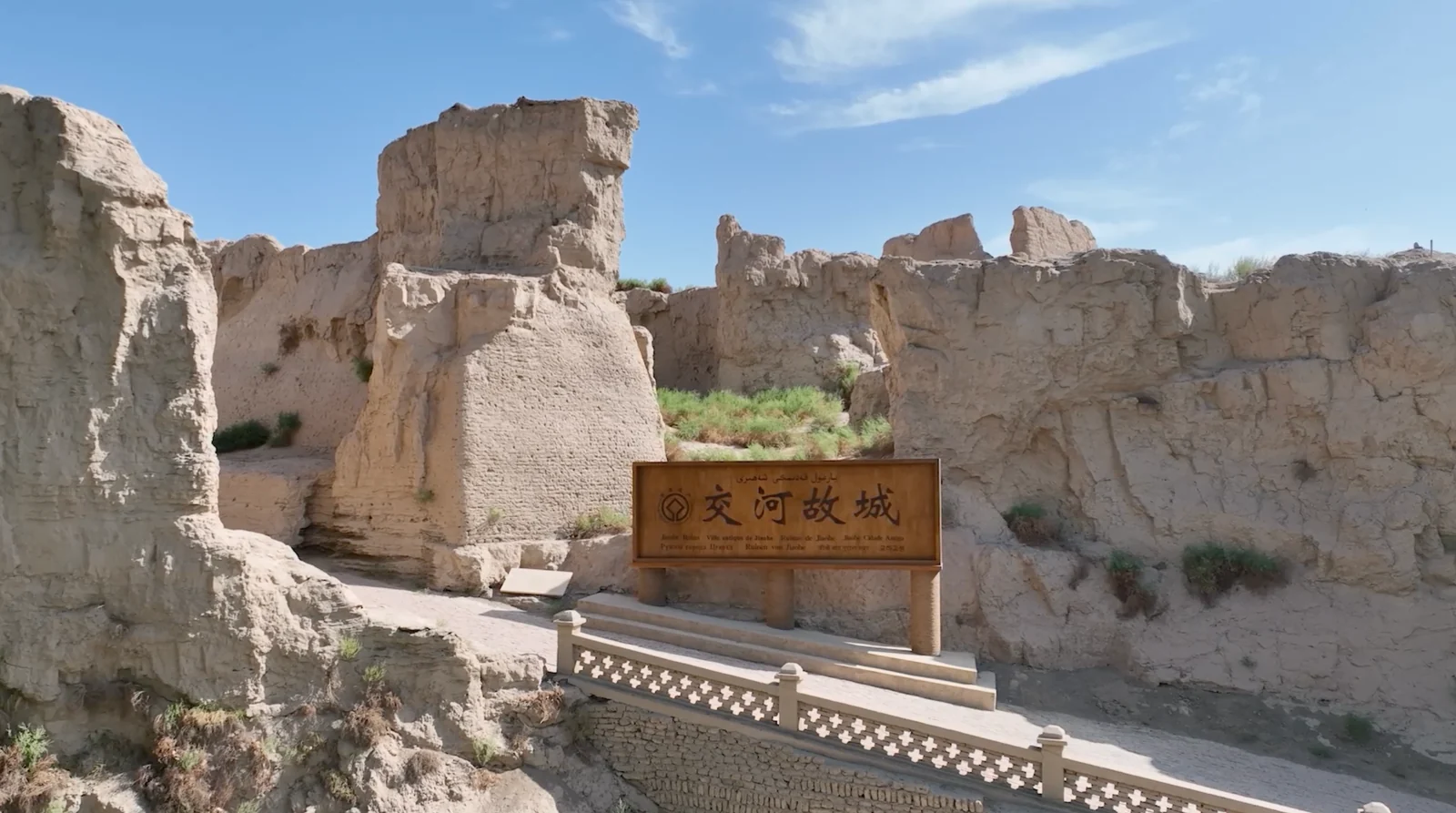
Not the same ruins as Qocho
UNESCO lists Yar as component 1442-006 and Qocho, or Gaochang, as 1442-005. They are two inscribed cities in one basin. China's cultural-heritage authority notes that religious buildings along the corridor record the coexistence of many faiths, and Qocho has yielded Church of the East painting as well as Buddhist material. This article stays with the terrace and the cut. Qocho's walls, and the cave paintings of the region, need their own visits and their own pages.