The national listing for the craft of digging karez, declared from Turpan in 2014, names four parts: a vertical shaft, an underground channel, an open channel and a storage pool. Work begins in the zone where groundwater can be reached and is dug upstream into the water-bearing layer. Water seeps into the dark channel and runs out by gravity. The open ditch is slow. The pool at the end lets the water stand before it is turned onto fields.
From the journal
From shaft to pool
A karez is a sequence of holes, a dark channel, a ditch and a pond, made so that water spends less time in the sun.
In the same city · Turpan ↗Four parts, in order
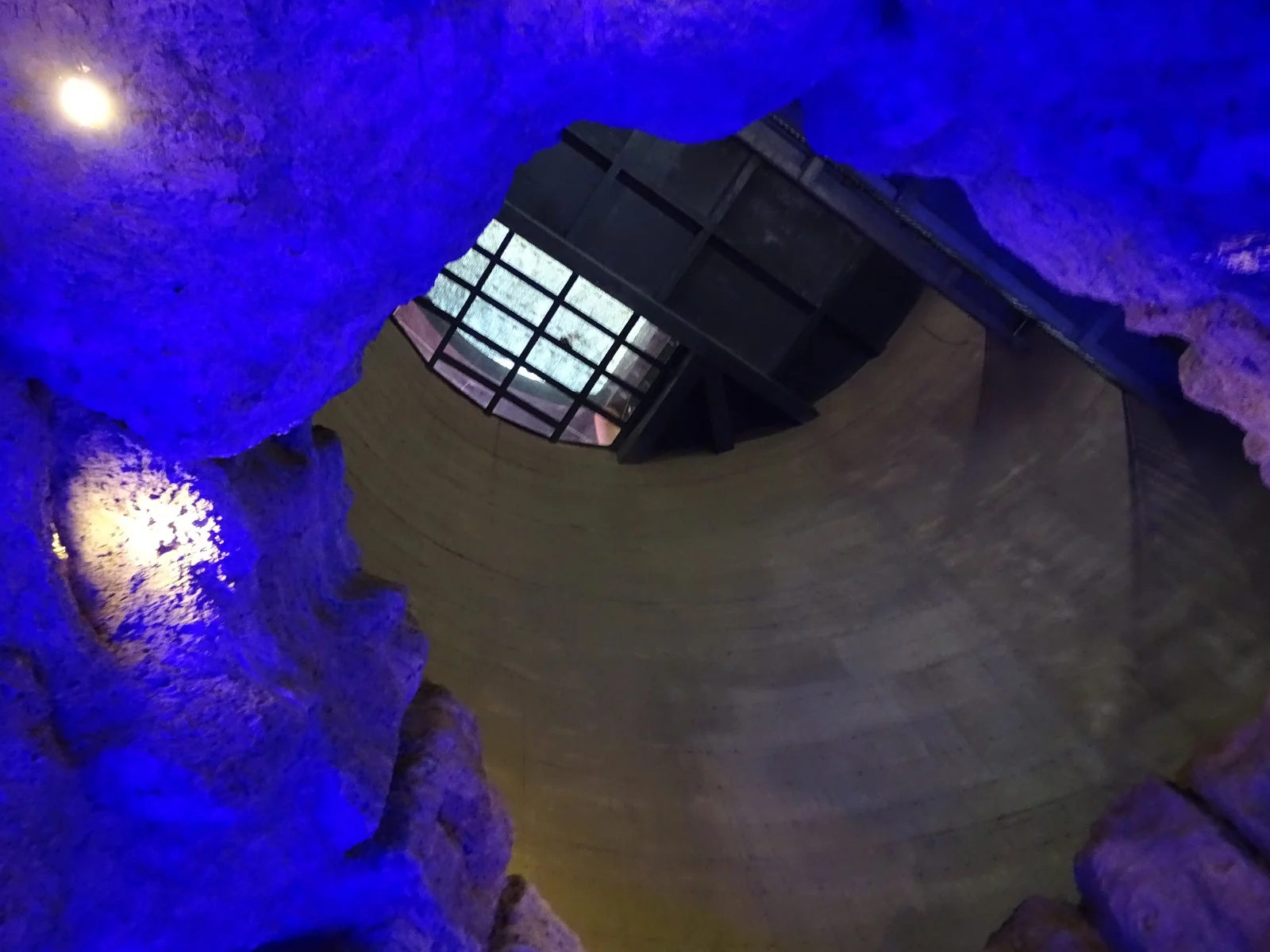
The point is to stay underground
Turpan is an extremely dry basin. The craft listing itself says that karez digging opened wasteland into oasis here. The listing's own explanation is practical: water in the dark channel is less exposed, and its temperature stays steady. Shafts are also how diggers enter, remove earth, look along the line and return later for repairs. A line of mounds on the surface is the visible residue of that work, not the canal itself.
One channel is not the system
A city page about the Karez Paradise park describes a place where visitors walk in a short underground passage, see shafts, and then vines watered by the same idea. It dates one displayed channel, Miyim Bay, to 1720. That is a teaching section. It is not a census of every karez in the basin. The craft is also recorded in Hami. The representative place on the national list remains Turpan.