From the journal

At Tradruk, Pearls Draw an Image

Tradruk’s pearl thangka turns the line of a religious image into an arrangement of small objects, adding another material to the world of Tibetan scroll art.

In the same city · Shannan ↗
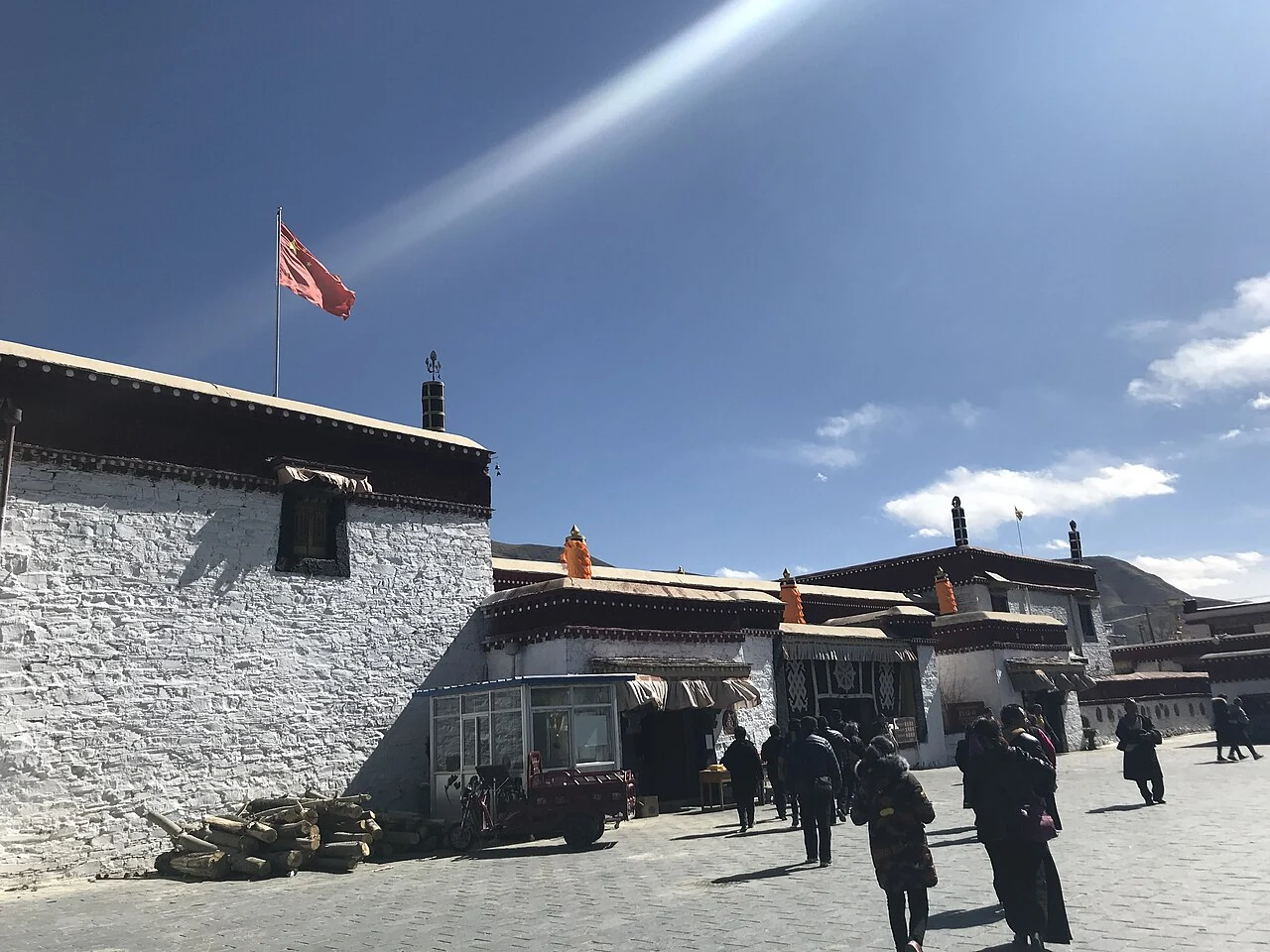
People stand in a courtyard below the roofs of Tradruk.
Tradruk’s courtyard introduces the architectural setting of its collections.

An image within an architectural setting

Tradruk, known in Chinese as Changzhu, is part of the religious landscape around Nêdong in Shannan. Its assembly hall and chapels gather images within a substantial architectural enclosure. A September 2026 local account compares the lower hall’s arrangement with Jokhang and describes a hall supported by many pillars.

Within this setting, one celebrated object changes the scale of attention: a thangka depicting Avalokiteshvara at rest. Its image is constructed with pearls and other precious materials, so the eye moves from an architectural space to a surface made of small, carefully arranged elements.
The image is assembled

The local account gives the work’s dimensions as two metres by 1.2 metres and dates it to the transition between the Yuan and Ming periods. It attributes the commission to a queen of Nêdong. The description records pearls strung to form lines, accompanied by turquoise, coral, gold and other materials.

The technique changes the relationship between drawing and object. A line has volume and catches light through the individual elements composing it. A close view would reveal repeated small forms; from farther away, those forms join into an image. The work belongs to thangka’s wider material range, alongside painted, woven and embroidered examples.

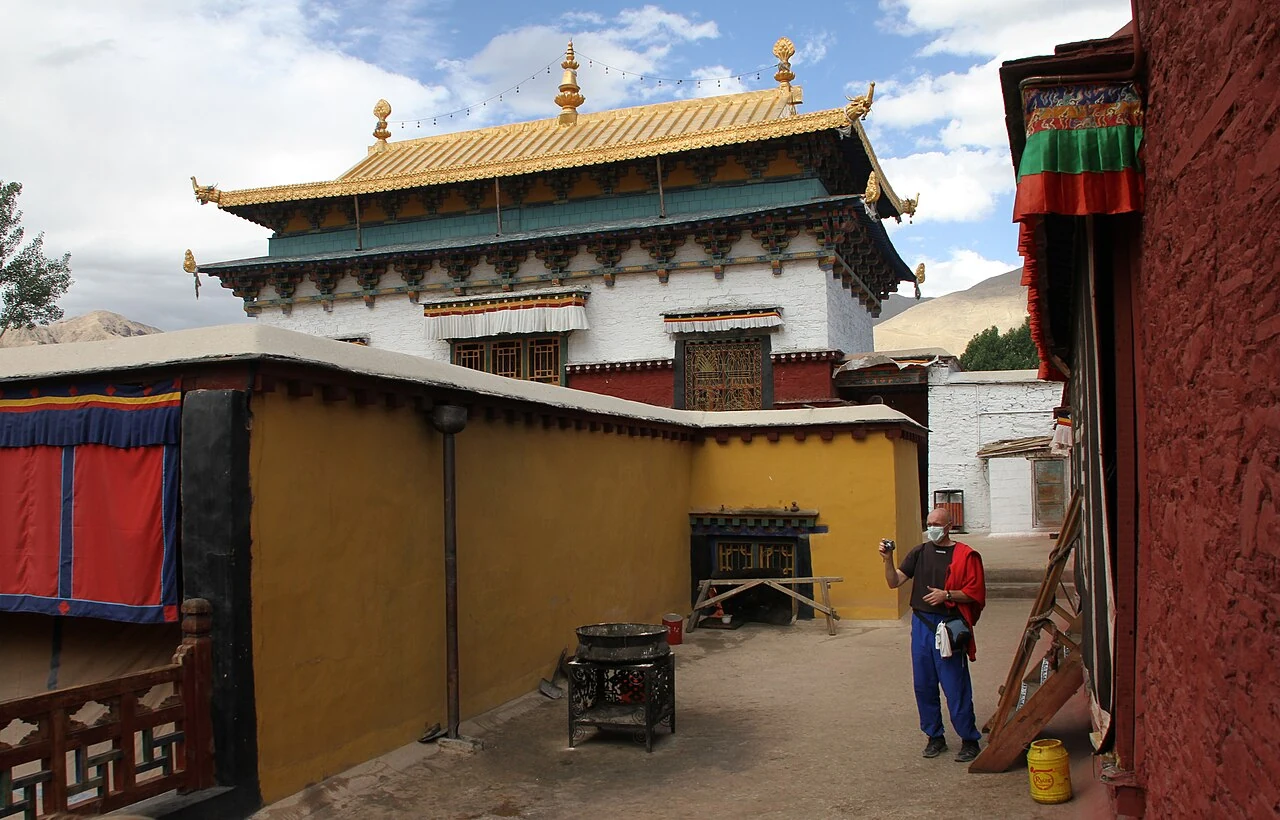
A gold-roofed building faces an open court at Tradruk.
A closer courtyard view connects the halls with their surrounding open space.

Objects and buildings require different care

Tradruk’s heritage includes both movable objects and the building that shelters them. A 2019 official conservation report recorded work on the temple’s roof. Such care belongs to another scale than the handling of an intricate textile image, yet the two are closely connected: an object’s surroundings are part of the conditions in which it survives.

The pearl thangka makes this relationship especially vivid. Its religious subject, assembled surface and architectural setting each contribute to the way it is understood. Tradruk’s importance emerges through these connected scales, from the great mass of the hall to the small materials that make an image visible.

Continue exploring · Tradruk Temple ↗
Photo credits and rights
  1. Tradruk’s courtyard introduces the architectural setting of its collections.Esiymbro · CC BY-SA 4.0 Photo source ↗ Rights information ↗
  2. A closer courtyard view connects the halls with their surrounding open space.Gerd Eichmann · CC BY-SA 4.0 Photo source ↗ Rights information ↗