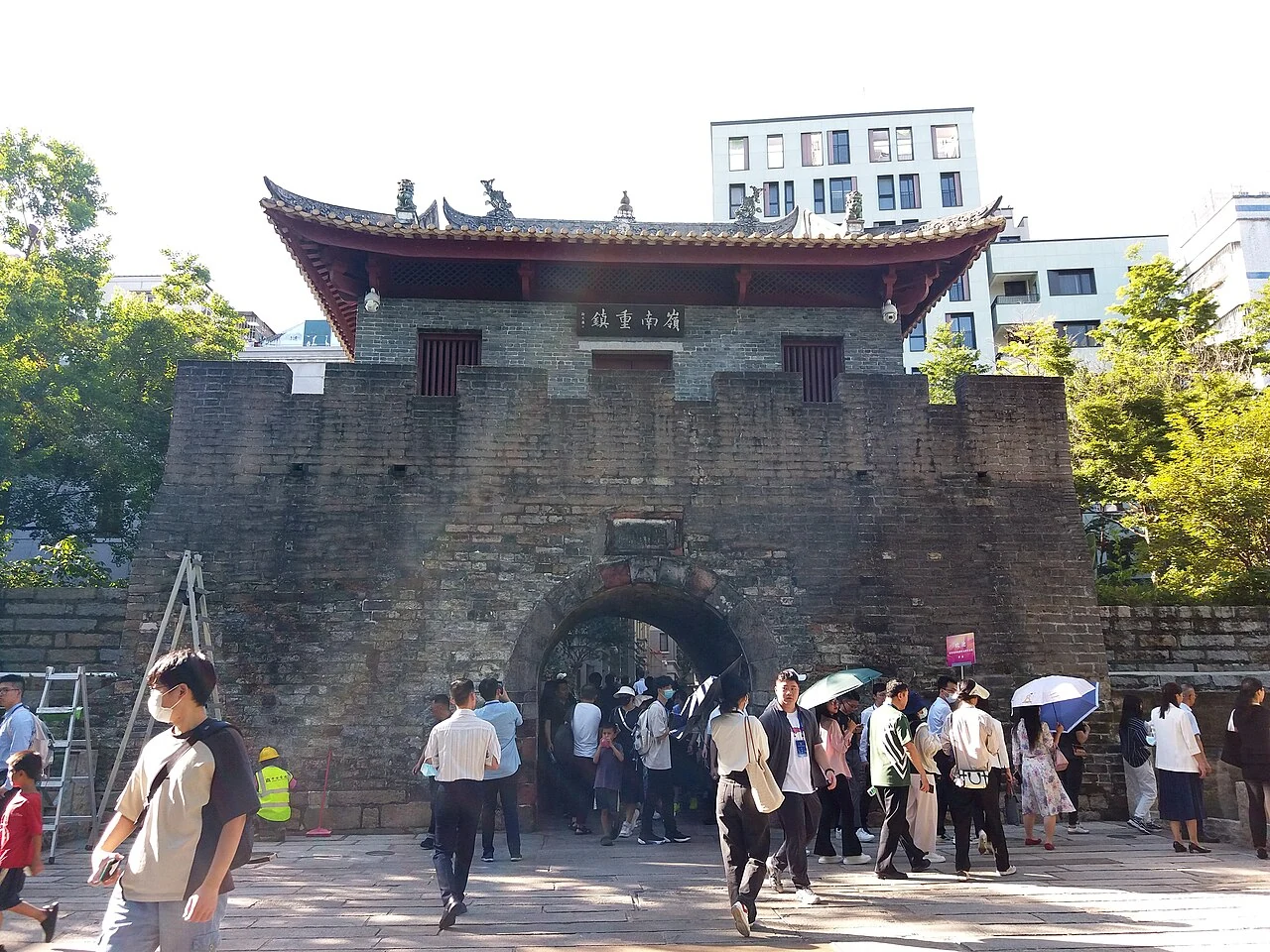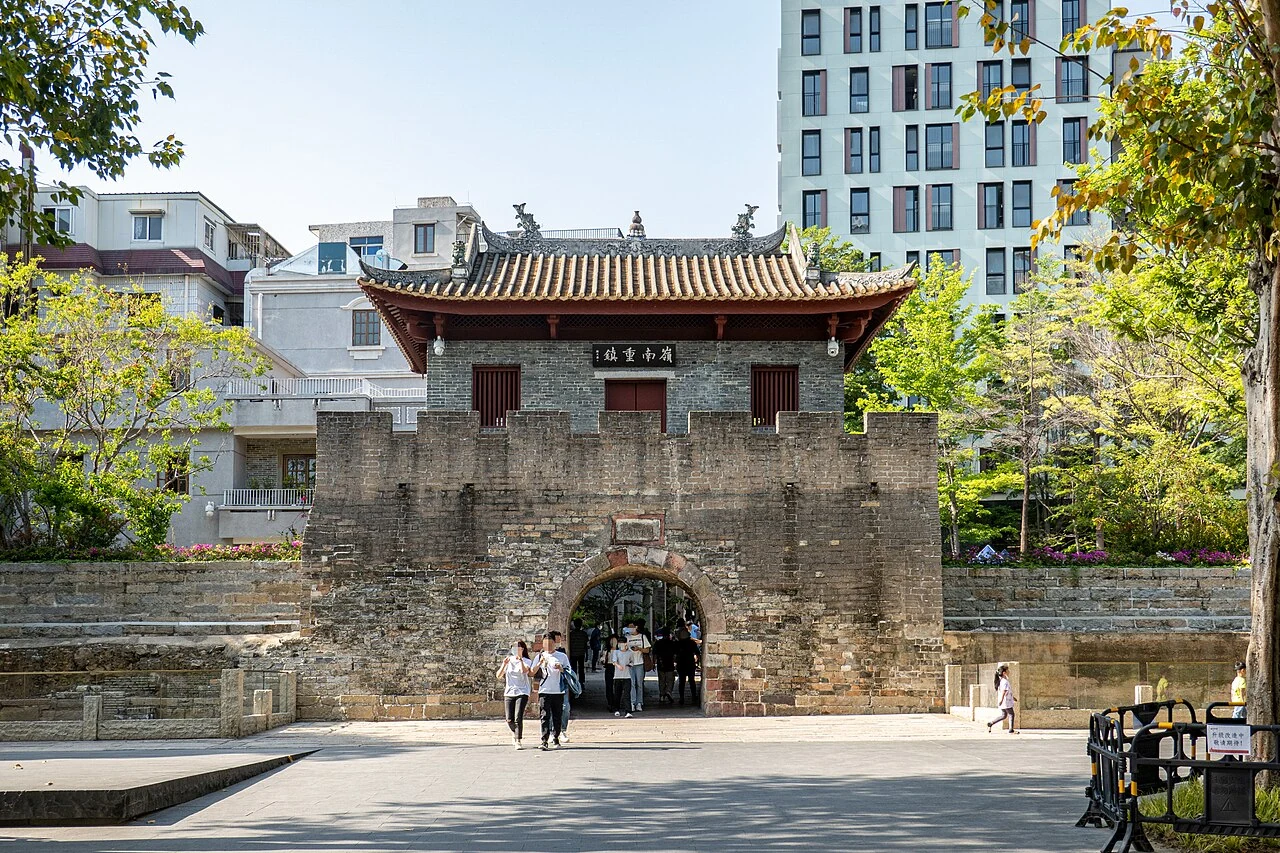
A town that held the county offices
Long before Shenzhen's Special Economic Zone, Nantou was a place where government offices gathered. In 331 CE, during the Eastern Jin dynasty, the seats of Dongguan Commandery and Bao'an County were established in the Nantou area. A commandery governed several counties; Nantou therefore belonged to an administrative landscape much larger than a single settlement.
The names and boundaries changed over the centuries. In 1573, territory was separated from Dongguan County to form Xin'an County, and Nantou became its seat. The county town brought official business into a place also used for residence and exchange. Its history runs through the repeated work of governing a coastal region.
When the county seat moved away
Xin'an was renamed Bao'an in 1914. The county offices remained in Nantou until December 1953, when the county seat moved to Shenzhen town. The move changed the relationship between these two places: an older center of administration gave way to a different urban focus.
The names still echo across the present city. Bao'an is now familiar as a district name, while Nantou sits in Nanshan District. The old county geography and today's districts are different layers of that history. Nantou Ancient City Museum brings the longer sequence together through objects and displays, starting with the region's early administrative beginnings.
A neighborhood keeps changing
Today's Nantou also belongs to the history of Shenzhen's dense urban neighborhoods. Its current reuse brings shops, food, creative work, exhibitions and places to live into the streets. Older buildings and new interventions occupy the same small area, making the passage of time visible in an ordinary walk.
That changing neighborhood adds another chapter to the former county town. Government offices once concentrated activity here; later residents and businesses gave the streets other uses. The story continues at street level, among buildings that have been repaired, altered or put to work again.