Shenzhen before the skyline
Shenzhen is often introduced through a short timeline: a small place becomes a special economic zone, then a city of towers and technology. Dapeng Fortress offers another beginning. On the eastern side of the municipality, a walled settlement makes the coastline's older strategic role visible in streets, gates, and family residences.
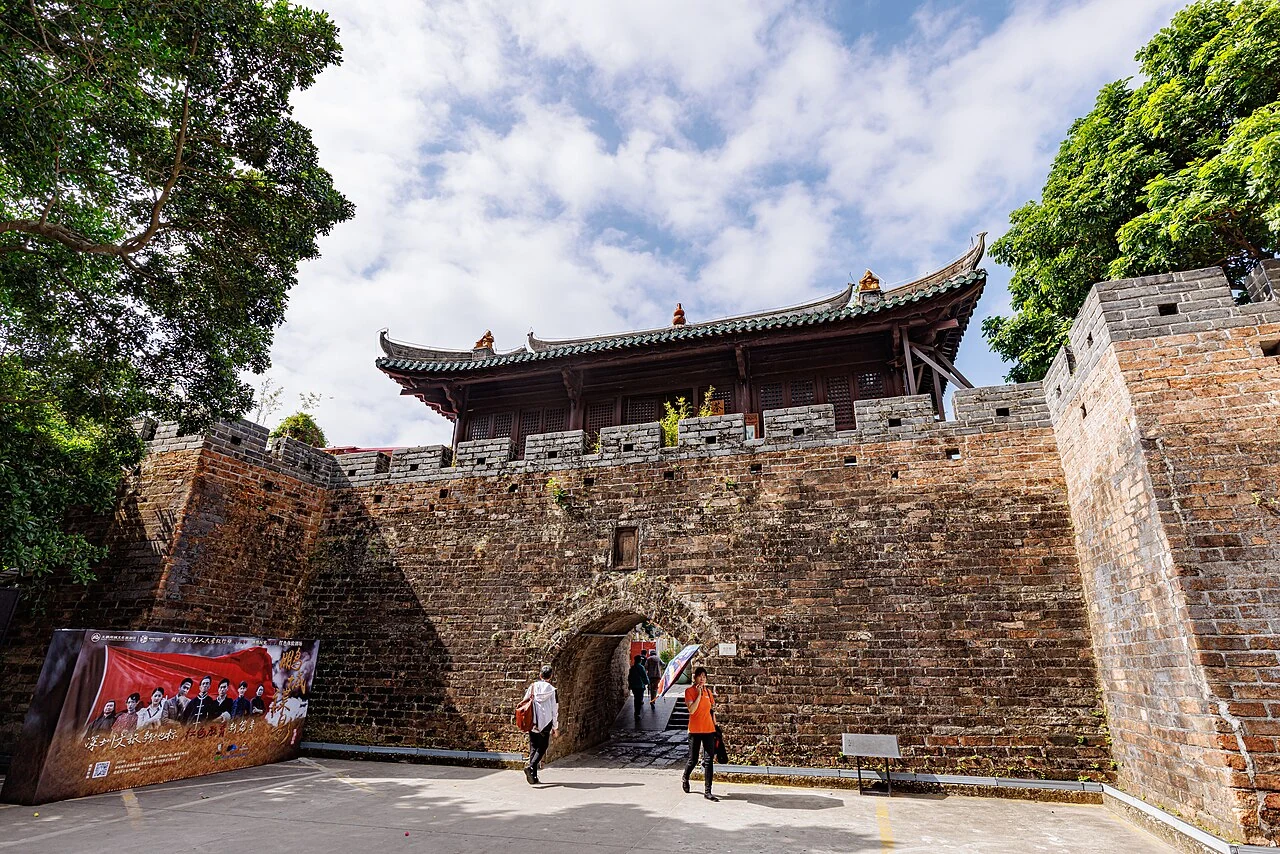
The fortress was established in 1394 during the Ming dynasty. Its full name, Dapeng Shouyu Qianhusuo, identifies it as a defensive institution. The government history page describes it as a maritime-defense stronghold through the Ming and Qing periods. The walls were not scenery arranged for a later visitor; they belonged to a system meant to guard a coast where movement by sea mattered. The place-name also connects with Shenzhen's nickname, Pengcheng, or Roc City.
A defense town was also a home
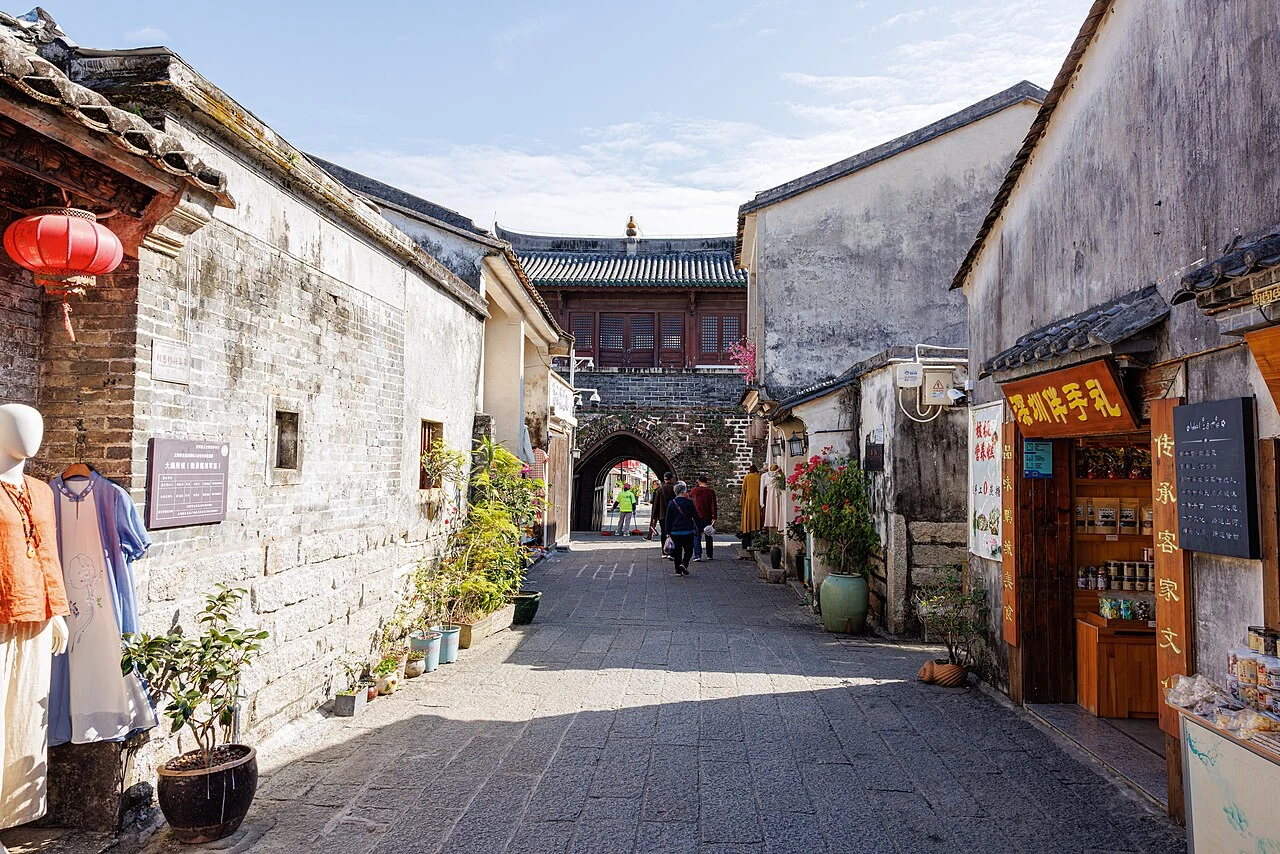
Inside the walls, the story becomes domestic as well as military. The museum's site information identifies the South Gate, the residence of Lai Enjue, a Qing commander of the Guangdong naval forces, and houses such as Yiwenlou and the Dai family residence. Their courtyards, brick walls, stone bases, and timber structures show how office, lineage, education, and home could occupy the same compact town. A fortress held people who served its defense, but it was also a place where families lived and future generations were raised.
The coast had shaped settlement, administration and defense for centuries before Shenzhen's rapid growth in the late twentieth century. The fortress makes that longer history tangible. A lane connects the gate with a residence; within the residence, another threshold leads to a courtyard and the rooms around it. Military and household space share the same small urban fabric.
Read the walls as lived space
The built fabric also rewards attention. A gate is both a passage and a controlled opening. A large residence says something about rank and institutional life, while a smaller house records another scale of domestic space. A courtyard brings light into a deep plan and creates a shared interior outdoors. These are simple architectural facts, but together they make the old settlement legible to a visitor unfamiliar with Chinese military history.
Yiwenlou adds education to this setting. A building used for learning stood within a place organized around coastal defense and family homes. The distance between a city wall and a schoolroom could be a short walk, bringing the different concerns of a community into the same streets.
The transition from South Gate to lane, courtyard, and residence shows how a coastal defense town also worked as a lived settlement. Dapeng's walls hold a history older than the skyline; the homes inside them make that history human.