From the journal

At Sera, Learning Takes the Form of an Argument

Standing questions, seated replies and the sound of a handclap give Sera’s debate court a visible rhythm rooted in study.

In the same city · Lhasa ↗
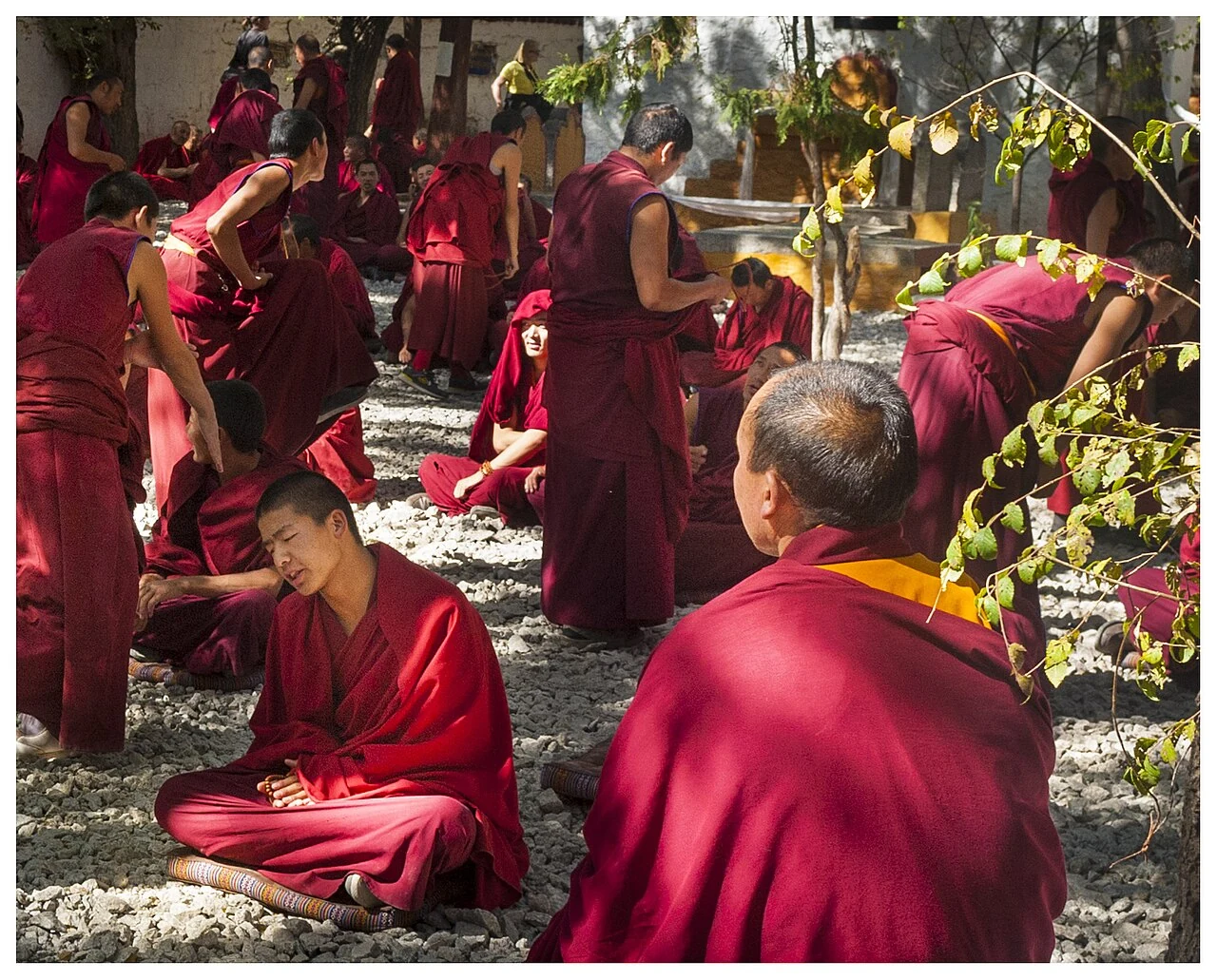
Standing and seated monks gather in small debate groups beneath trees at Sera.
Small groups give Sera’s debate court a visible pattern of question and response.

A question has a posture

In a 2015 Xinhua report from Sera, students gathered in small groups on a gravelled court beneath trees. One monk stood and questioned while another remained seated to reply. The movement of an arm and the sound of palms meeting punctuated an exchange whose subject was Buddhist learning.

That arrangement gives the scene its striking appearance. A standing questioner can move and gesture, while the seated respondent maintains another kind of attention. The physical contrast makes an argument visible, even to someone unable to follow the language or recognise the passage under discussion.
Gesture belongs to a course of study

Sonam, a Sera monk interviewed in the report, connected debate with the major works studied in Tibetan Buddhist education, commonly grouped as the Five Great Treatises. Questions and answers draw on a body of learning that has to be remembered, interpreted and defended.

The handclap belongs within this exchange. It marks a moment in the argument and helps sustain the participants’ attention. Seen only as a spectacular gesture, it can obscure the intellectual work that gives it a purpose. The court is a place where students test what they understand against another person’s questions.

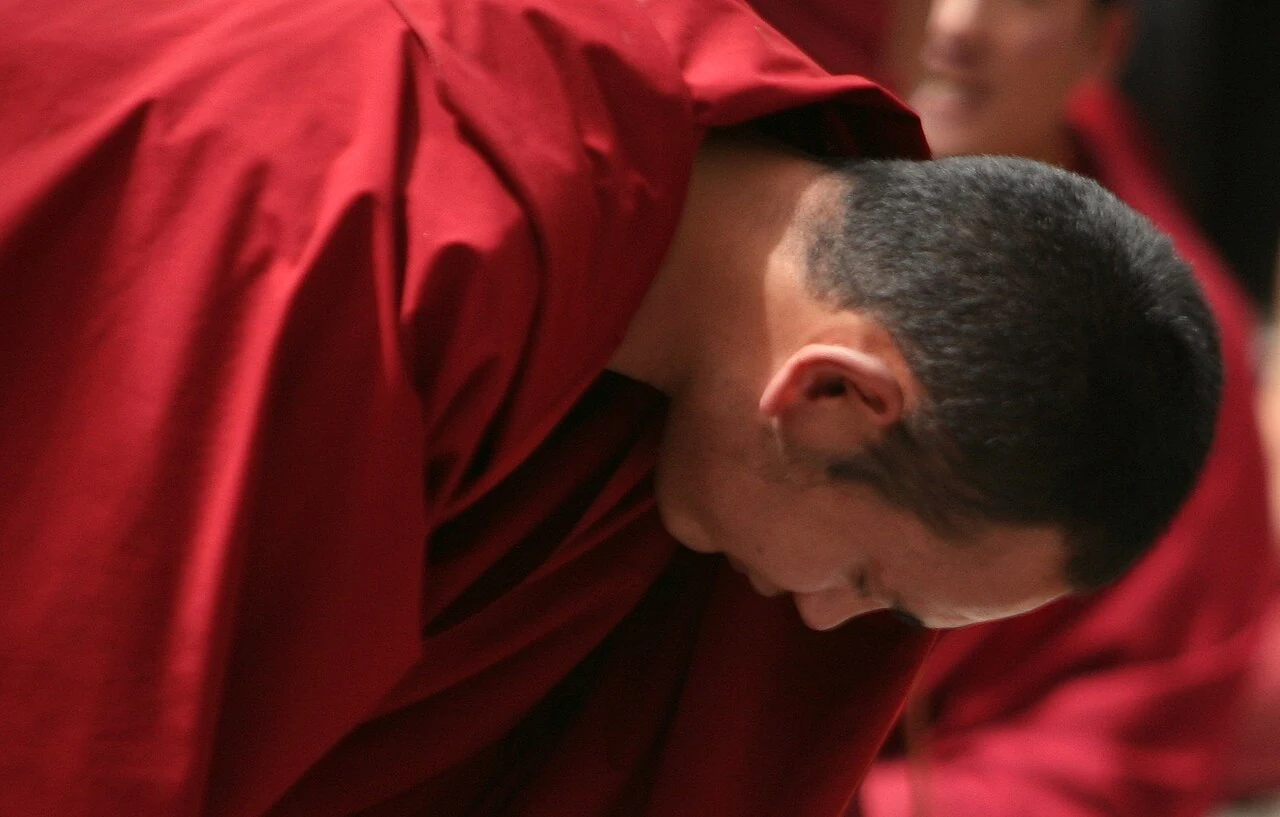
A monk listens during debate practice at Sera.
A listening participant at Sera, photographed in 2007.

A daily method with a formal role

Debate also has a place in advanced examinations. The same report identifies it as a necessary part of assessment for the Geshe Lharampa degree. The skills developed through regular exchange consequently belong to both everyday study and a formal educational progression.

Sera’s court brings these relationships into one setting: text and memory, question and response, bodily movement and concentrated thought. The most immediate impression may be a sudden clap, but the longer story is a method of learning through another person. The argument continues because a reply creates the conditions for the next question.

Continue exploring · Sera Monastery ↗
Photo credits and rights
  1. Small groups give Sera’s debate court a visible pattern of question and response.Göran Höglund (Kartläsarn) · CC BY 2.0 Photo source ↗ Rights information ↗
  2. A listening participant at Sera, photographed in 2007.Thomas.fanghaenel · CC BY-SA 3.0 Photo source ↗ Rights information ↗