A site with a long life
Sanxingdui was first noticed in 1929. Since then about twelve square kilometres have been surveyed and eighteen thousand square metres excavated. The main remains are dated from about 4800 to 2800 years before present, across five phases. More than fifty thousand objects of gold, bronze, jade, pottery, ivory, silk and shell have been recovered. The site is not a single royal tomb; it is a walled settlement with workshops, ordinary houses and a separate sacrificial area.
The face that is not a face
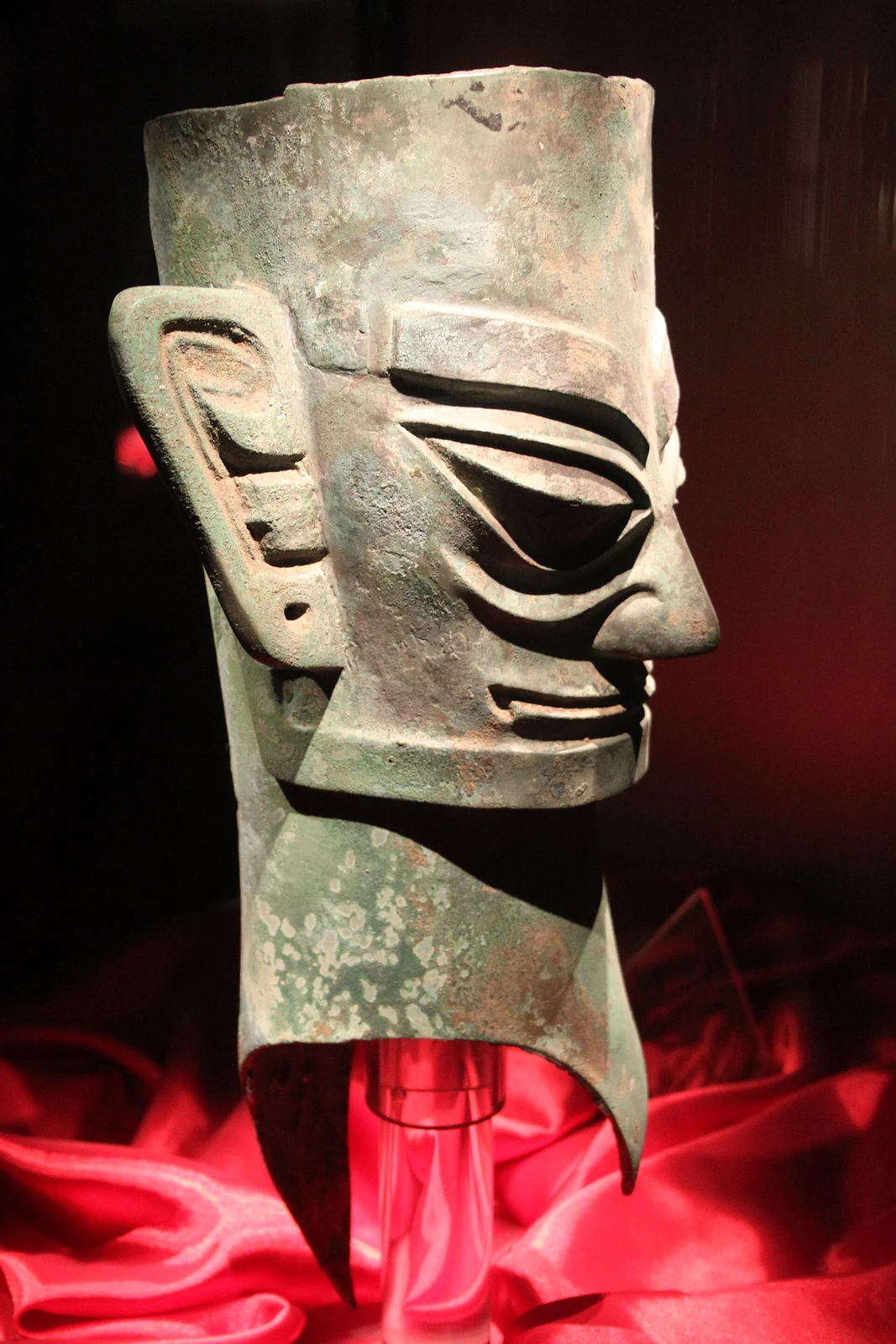
The largest bronze mask came from pit 3 in June 2021. It is 131 centimetres wide, 71 high and 66 deep, and weighs 65.5 kilograms. The eyes project on cylinders, the mouth is wide and the ears are large. A silk residue was found at the right eye, a trace of cloth that once touched the metal. The mask was never a portrait of a particular person. It is a ritual object, built to be seen from a distance and to make the wearer or the space look larger.
Three rings and a workshop
The settlement's main remains cover 3.6 square kilometres inside a wall. Archaeologists describe three nested city rings: a small palace and workshop zone, a middle residential zone and an outer zone with the sacrificial pits. The bronze standing figure is 180 centimetres tall, or 260.8 with its base, and was found in the same ritual landscape. The objects show both a distinct Shu style and contact with the Central Plains. Jinsha, in Chengdu, continues the same world after Sanxingdui's decline.