A 2025 city-walk report describes a striking pottery jar in Chamdo Museum: a narrow neck rises above two joined, rounded lower bodies marked with geometric patterns. The shape invites a visitor to look twice. It is one vessel, yet its lower half appears doubled, giving the object a balanced, almost paired form. The report dates it to roughly four or five thousand years ago and connects it with the Karuo archaeological site. The visible details—neck, paired bodies and pattern—provide a starting point for understanding a distant household object without inventing its original use.
From the journal
A Double-Bodied Jar, and the Difference Between Original and Replica
A 2025 city-walk account describes the twin-bodied pottery vessel shown at Chamdo Museum as a replica. Its original, excavated at Karuo, is held by the Tibet Museum—a distinction that opens a story about archaeological objects and display.
In the same city · Chamdo ↗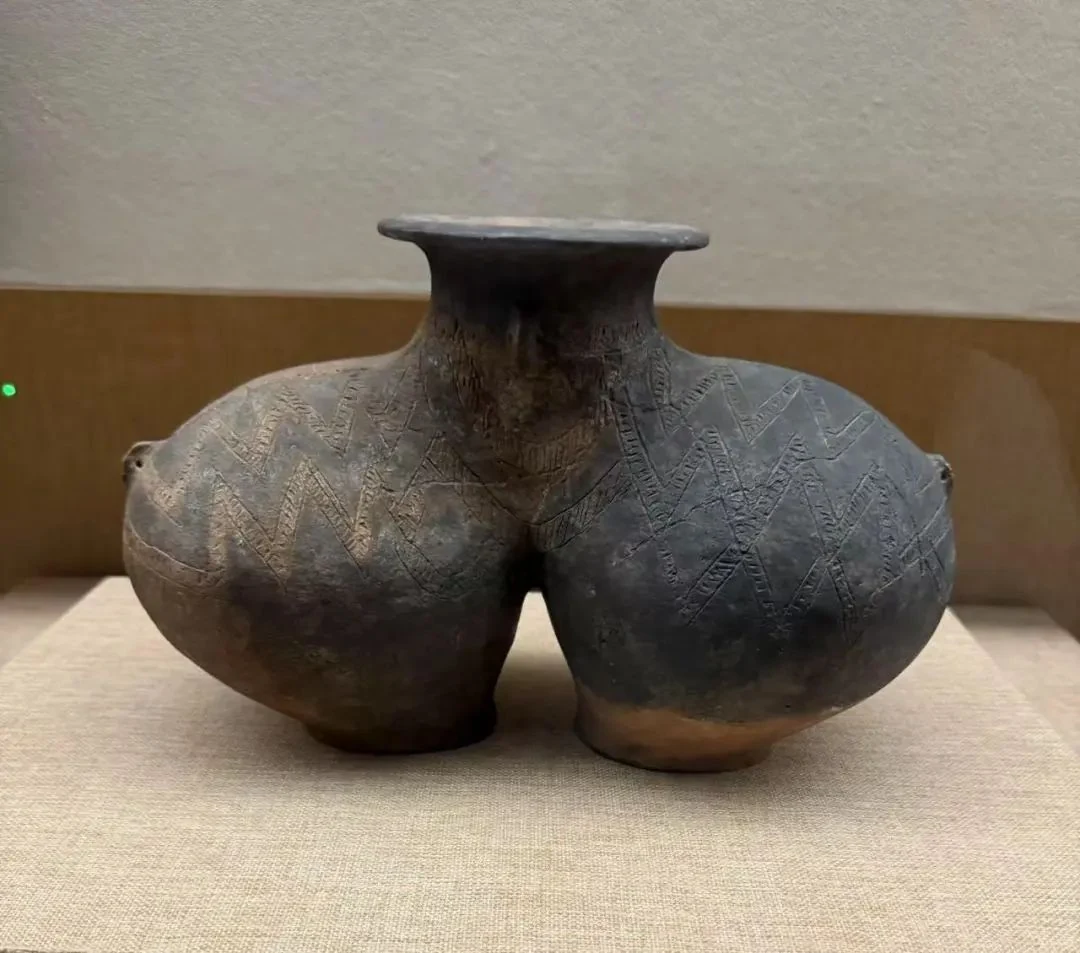
A vessel shaped as two joined bodies
The museum copy and the excavated original
The same account makes an essential distinction: the twin-bodied jar displayed in Chamdo Museum is a replica. The original was excavated at Karuo and is held at the Tibet Museum. That difference is not a footnote. A replica lets a regional museum present the form locally, while the original remains part of another institution’s collection. Visitors can still study the vessel’s profile and decoration in Chamdo, but should not mistake the object on view for the excavated artifact. The report gives no material analysis or excavation record, so this article follows only its stated attribution and display history.
Karuo brings the object into a place
The jar’s link to Karuo grounds it in the archaeology of the Chamdo region rather than leaving it as an anonymous ancient shape. The report places the object within a broad period of four to five millennia ago, but does not offer a more exact dating method. That range should be retained as the published account gives it. What the display can communicate is the intimacy of craft: a vessel made with a narrow opening, joined volume and repeated geometric marks. Its replica form carries those visible decisions into a contemporary gallery, where the label’s distinction between copy and original helps the visitor read the object responsibly.
From pottery to a caravan ledger
The city-walk report also describes a second-floor display on the Tea Horse Road: a rusted stirrup, a worn leather bag, an old caravan ledger and projected images of a caravan crossing mountain terrain. These objects suggest how a museum can move between very different scales of time. The jar belongs to an archaeological past measured in millennia; the travel objects bring the visitor closer to the material routines of trade. The article does not identify every object’s provenance, so they are best read as pieces in the gallery scene the report records. Together, the two displays invite attention to what museums make visible—and to the labels that tell us what kind of object we are seeing.