A village, not a row of monuments
Majianglong is one of Kaiping’s heritage villages, where towers belong to a larger settlement of homes, paths and cultivated land. Official tourism descriptions place its buildings in a green village setting; UNESCO’s property account treats villages and agricultural landscape as part of the listed serial property. That combination matters. The towers were not designed to be seen alone against an empty backdrop. Their scale becomes clearer beside ordinary houses and the terrain that shaped daily work.
Bamboo changes the view
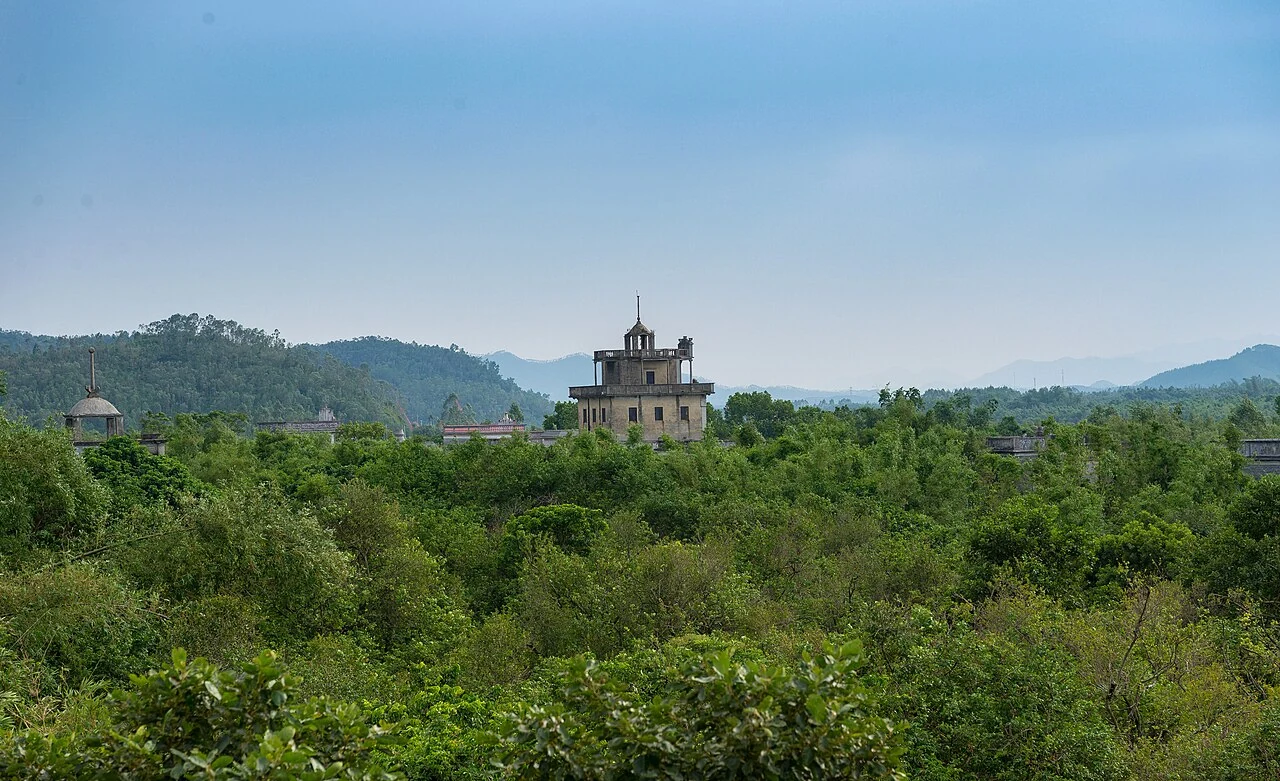
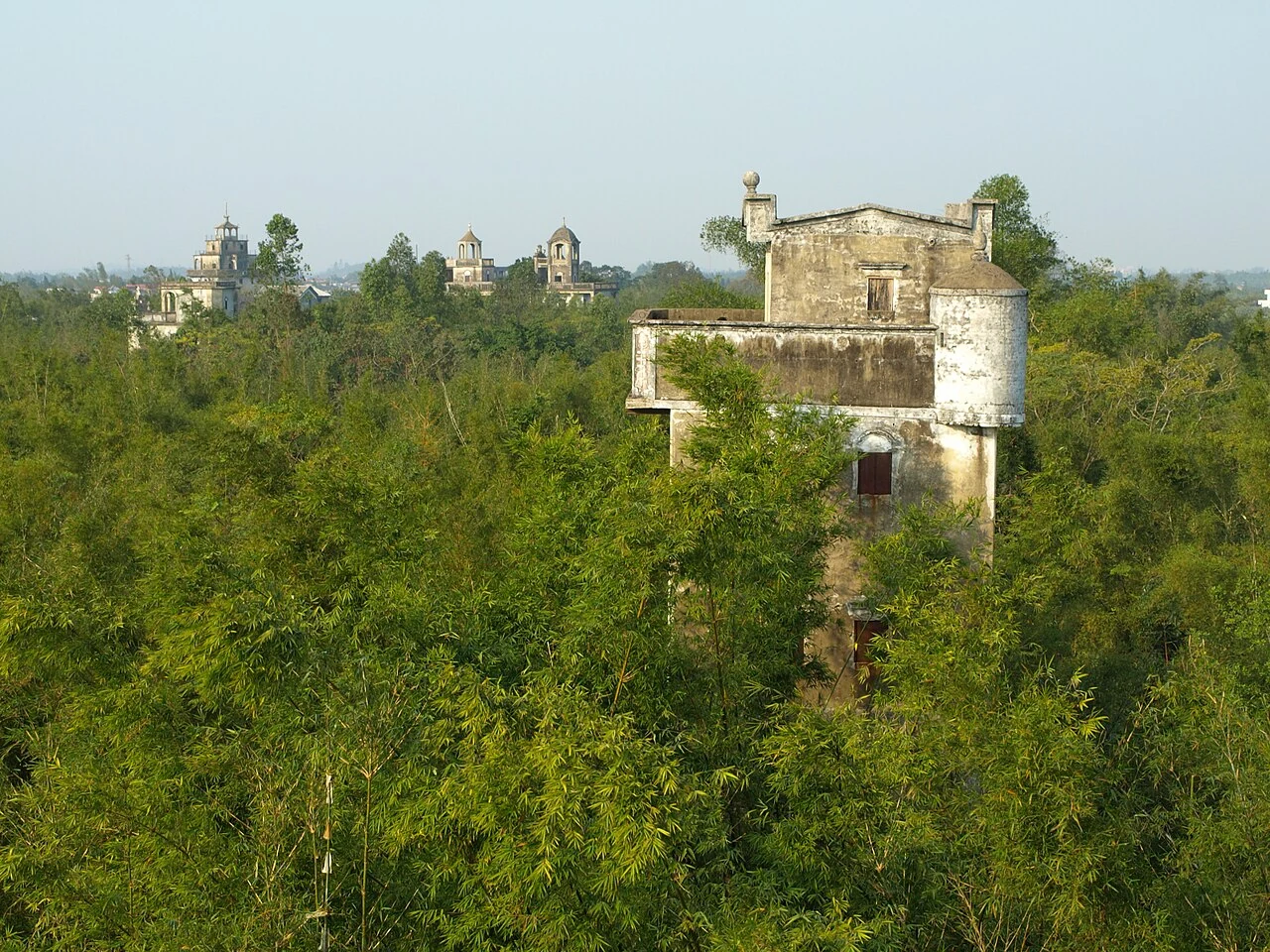
At Majianglong, bamboo and trees shape the way towers appear. A canopy can partly screen a building, then reveal it along a path or clearing. The village is read through movement: a glimpse through leaves, a turn in the lane, a tower rising behind a home. Greenery is not merely decoration; it mediates distance between architecture and viewer. The village’s atmosphere grows from that exchange between built form and living landscape, where plants frame and soften the hard lines of brick and stone.
Landscape as working ground
UNESCO describes the Kaiping property as a relationship among towers, villages and surrounding agricultural land. The relationship is visible in the fields, water and paths around the towers: architecture coexists with cultivation, movement and household life. Fields, water and paths are evidence of how the settlement functioned. Architecture had to coexist with cultivation, movement and household life. A wider view can preserve those links: a tower among tree cover, a path leading toward homes, or cultivated ground extending beyond the village edge.
Protection within a living village
At Majianglong, towers, homes and greenery appear in changing relation along village paths. Trees soften the masonry outlines while cultivation and daily life continue around the buildings. Kaiping’s towers are internationally recognized, yet their meaning remains grounded in local places and a wider landscape. Here, architecture is not set against nature but fitted into a settlement where trees, buildings and cultivation occupy the same view. The village setting is not background; it is part of what the towers mean.