From the journal

The River View Has an Industrial History

Liuzhou’s industrial museum offers a route from large machines to the environmental work behind an attractive urban landscape.

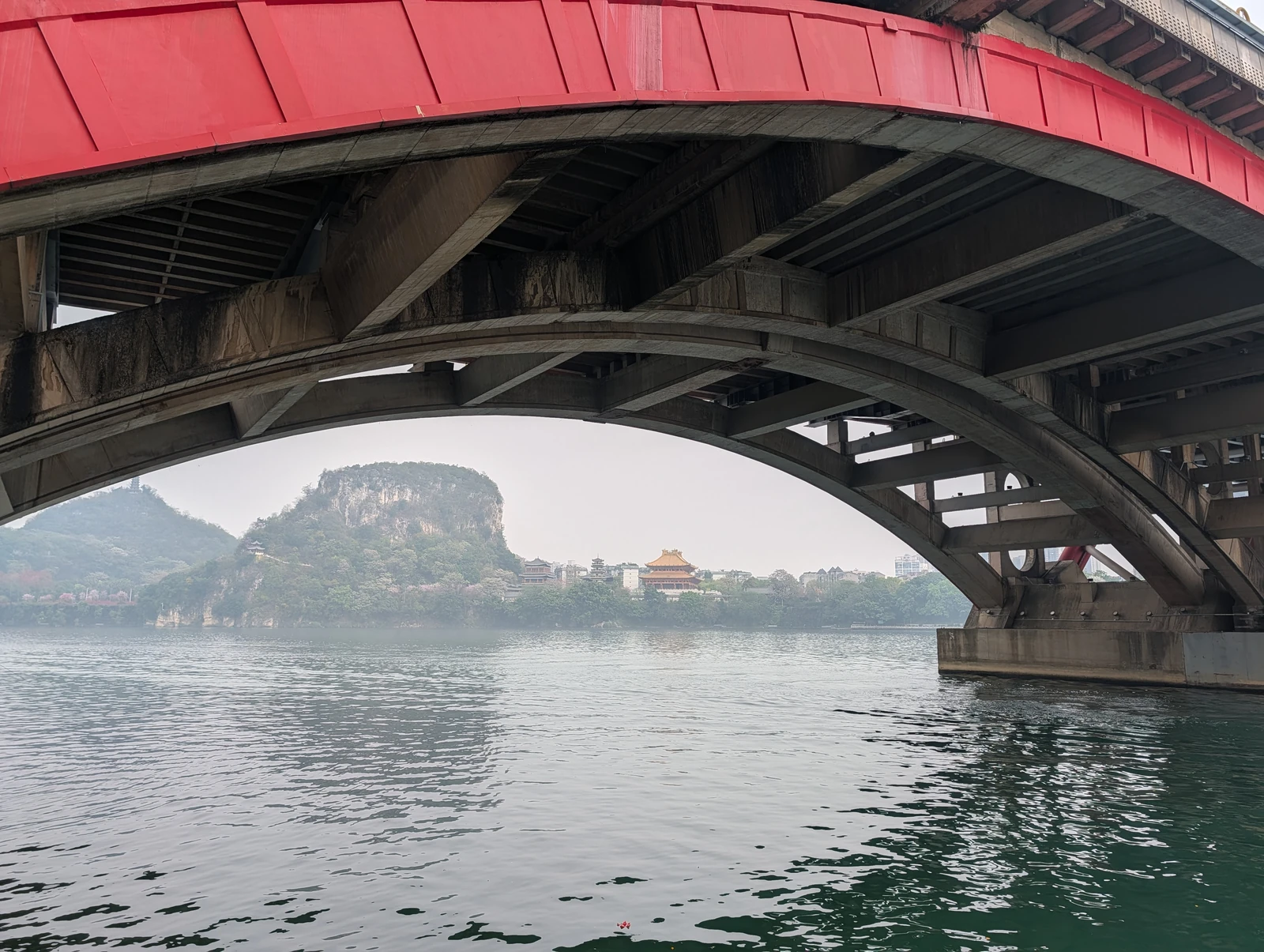
The underside of Wenhui Bridge frames the Liujiang riverbank and a wooded hill in Liuzhou.
Wenhui Bridge and the Liujiang riverbank, Liuzhou. Source-reported photograph date: 2026-04-06.

A former factory becomes a place to read work

The museum building belongs to the industrial story it tells. In a July 2022 Guangxi Daily interview, its deputy director identified the site as the former Liuzhou No.3 Cotton Textile Factory, converted into the Industrial Museum in May 2012. The change gave a place of production a new task: interpreting production for the public.

The museum’s ecological-livability exhibition places production within the wider work of making a habitable city. Its former factory building and the river landscape outside connect Liuzhou’s industrial and urban histories.
A locomotive is only the beginning

The museum's outdoor collection list includes a Liugang steam locomotive, a Dongfeng 4B diesel locomotive, a hot-metal vessel, presses and machine tools. The objects represent distinct operations within production: the locomotives moved materials, the vessel contained hot metal, and presses and machine tools shaped materials in different ways.

Made in Liuzhou, used in Liuzhou

The museum describes its historical collection as equipment and products used or produced in Liuzhou since 1902. Local manufacture sits beside technology and materials brought into the city.

Manufacture, ownership, operation and donation record different relationships between an object and Liuzhou. Together they trace the machines' paths through working environments and into a collection.

Environmental history belongs inside industrial history

The museum’s ecological exhibition addresses pollution associated with rapid industrial development and later efforts to control acid rain.

The outdoor list also includes a wastewater pipe and a blast-furnace downpipe. These objects belong to the systems surrounding production: each pipe connects a source to a destination. Environmental infrastructure is therefore part of Liuzhou’s material and industrial history, even when it falls outside the frame of an ordinary city photograph.

The Liujiang as a measured environment

A 2015 study in Environmental Science investigated seasonal water chemistry and carbonate-weathering processes in the Liujiang. Measurements followed changing conditions within the river system.

The study adds a measured environmental history to the museum's account of production and pollution. The river running through the city connects industrial surroundings with the geological and seasonal processes of a wider landscape.

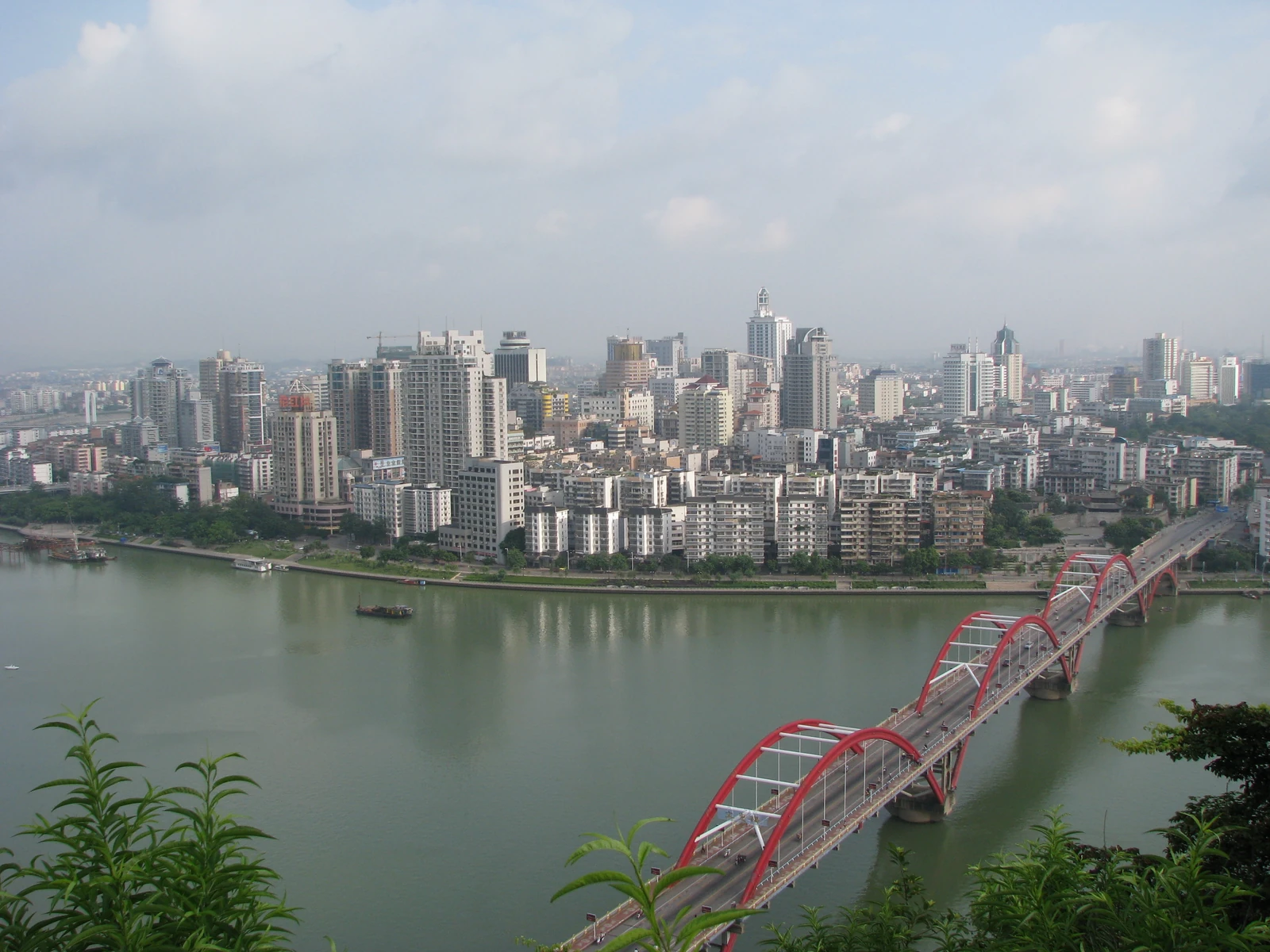
High-rise buildings and a red bridge line a broad curve of the river in Liuzhou.
Central Liuzhou and Wenhui Bridge seen from Half Mountain in a photograph dated 20 June 2009.
Continue exploring · Liuzhou ↗
Photo credits and rights
  1. Wenhui Bridge and the Liujiang riverbank, Liuzhou. Source-reported photograph date: 2026-04-06.Jeremy Thompson · CC BY 4.0 Photo source ↗ Rights information ↗ Resized and converted to WebP; full composition retained.
  2. Central Liuzhou and Wenhui Bridge seen from Half Mountain in a photograph dated 20 June 2009.Jim · CC BY 2.0 Photo source ↗ Rights information ↗ Resized and converted to WebP; full composition retained.