Chajima Hall is identified in a 2019 cultural report as the main building of Leiwuqi Monastery in Chamdo. That description gives the hall a place within a larger religious complex rather than treating it as a standalone monument. A separate government-reposted profile offers a construction chronology: it says the monastery was founded in 1285, the three-storey hall was completed in 1326, and a gilded roof was finished in 1328. Those dates should remain attributed to that profile; the material reviewed for this article does not include a heritage survey that independently confirms each milestone.
From the journal
Chajima Hall: A Painted Center at Leiwuqi Monastery
Two official reports describe Chajima as the main hall at Leiwuqi Monastery, give a traditional building chronology, and record local thangka painters helping repair murals. The dates remain attributed because a conservation record was not available.
In the same city · Chamdo ↗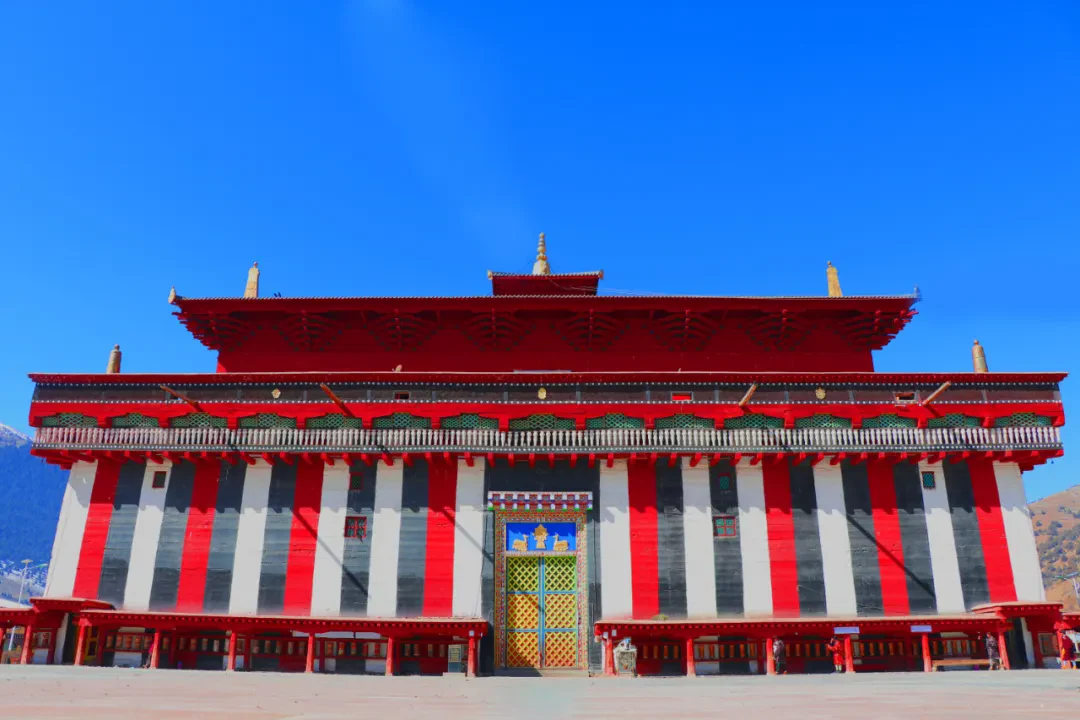
The main hall at Leiwuqi
Murals and the painters who repaired them
The 2019 report describes local thangka painters taking part in the repair of Chajima’s murals. This detail connects the hall’s painted surfaces to living artistic knowledge in the area. It does not identify every painter or specify pigments, methods, or the conservation standard used, so the account cannot support a technical reconstruction of the work. Still, it shows that the murals were not presented as untouched relics: they required care, and local painters were involved in restoring them. The hall’s history therefore includes not only construction, but also later acts of attention to its interior images.
A chronology preserved in reports
The reported dates—1285, 1326 and 1328—describe a sequence rather than one founding moment: establishment, completion of the three-storey hall, and completion of its gilded roof. The distinction helps readers understand how a religious building can take shape over time. Because the chronology comes from a government-reposted profile whose claims have not been independently checked against archival or architectural documentation here, it should not be treated as a settled scholarly dating. The account remains useful as a record of how the site’s history is currently presented in public material.
A building kept in use
Putting construction and mural repair beside each other changes the scale of the story. Chajima is described both through medieval dates and through a later restoration involving painters from the region. The first account looks backward to the making of the hall; the second shows a community of specialists responding to its surfaces. Neither report supplies a full architectural survey or a detailed conservation file. Together, however, they establish a careful outline: Chajima is presented as Leiwuqi Monastery’s principal hall, its chronology is reported in three stages, and its murals have received local repair work. That outline leaves space for future documentation without confusing a published profile with the building itself.