A town along the Tan River
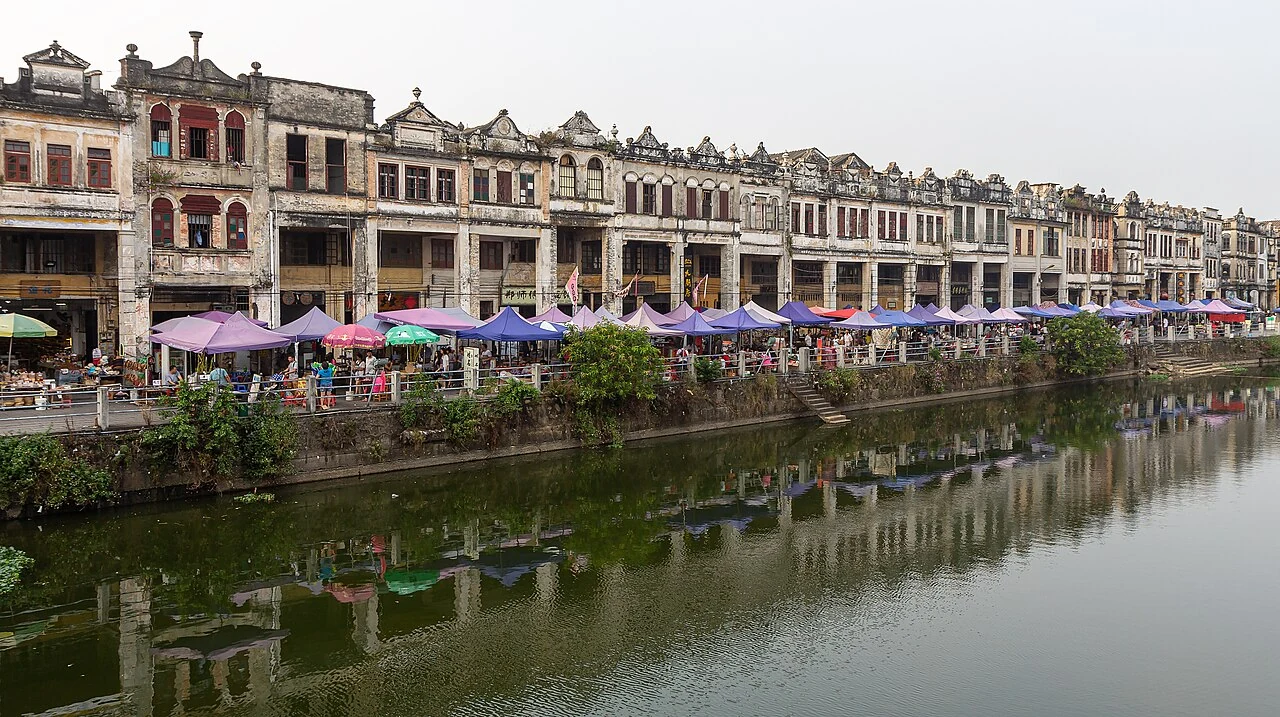
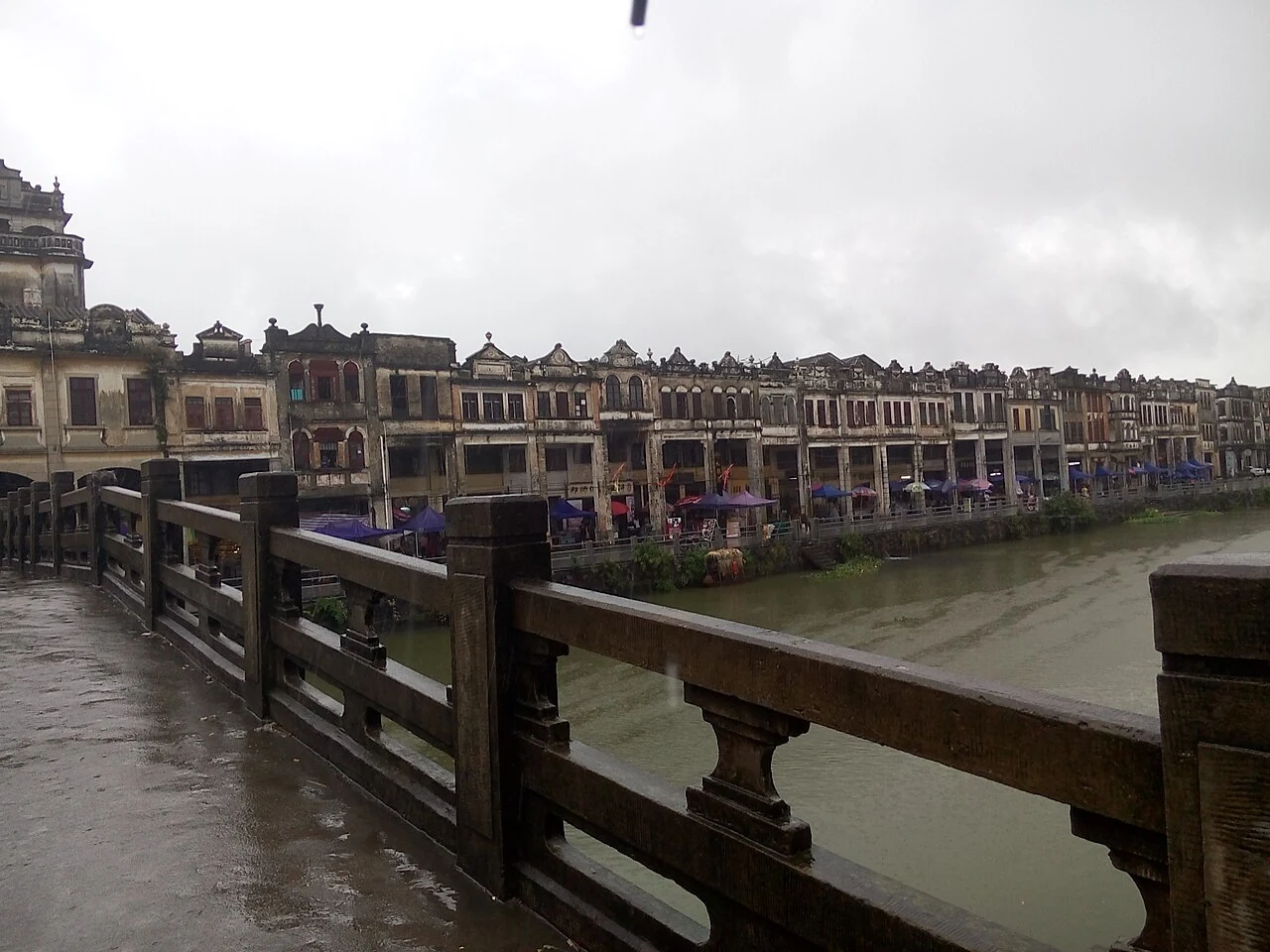
Chikan grew beside the Tan River, a waterway that helped connect markets and settlements across Kaiping. A 2024 Kaiping government feature traces the town’s rise from a river landing into a commercial center. The river gives the arcaded street a larger context: boats and goods once moved through a landscape where water was a route of exchange. The architecture reflects that outward connection, but it also serves people moving along the street below.
What makes an arcade
In an arcade building, the ground floor is set back to create a covered pedestrian passage while upper floors project over it. Repeated overhangs turn separate buildings into a continuous sheltered edge. Chikan’s arcades made commerce and movement share a narrow strip: shops faced the street, while passersby could continue beneath upper storeys. The form belongs to a wider southern coastal vocabulary, yet the continuous frontage along Chikan’s river town gives it a distinctly local rhythm.
A planned commercial street
The government feature says Chikan was replanned in 1926 with help from planners from Guangzhou and describes the arcade streets as a commercial landscape. This suggests the town was not only an organic river settlement; its street form was deliberately shaped. Arcades align trade, shelter and town image. Repeated façades and shaded passages make the planned street structure visible along the full frontage.
Old fabric, new use
Kaiping’s official reporting describes restoration work and the town’s reopening in 2023. Restoration is most legible at the scale of materials and thresholds: repaired brick, timber, shopfronts, shaded walkways and courtyards. Chikan remains a place to read architectural layers, not merely a backdrop for nostalgia. Restoration and commerce meet at the thresholds, where older street structures carry new uses from shop entrances to the long sheltered passage.